
A ONE-OFF: 5/23/26
First an Explanation, Then a Profile of the British/Greek Photographer Platon and a Gallery of Some of His Work

I apologise for not having written a LETTER FROM BERLIN this week.
There were two reasons for that.
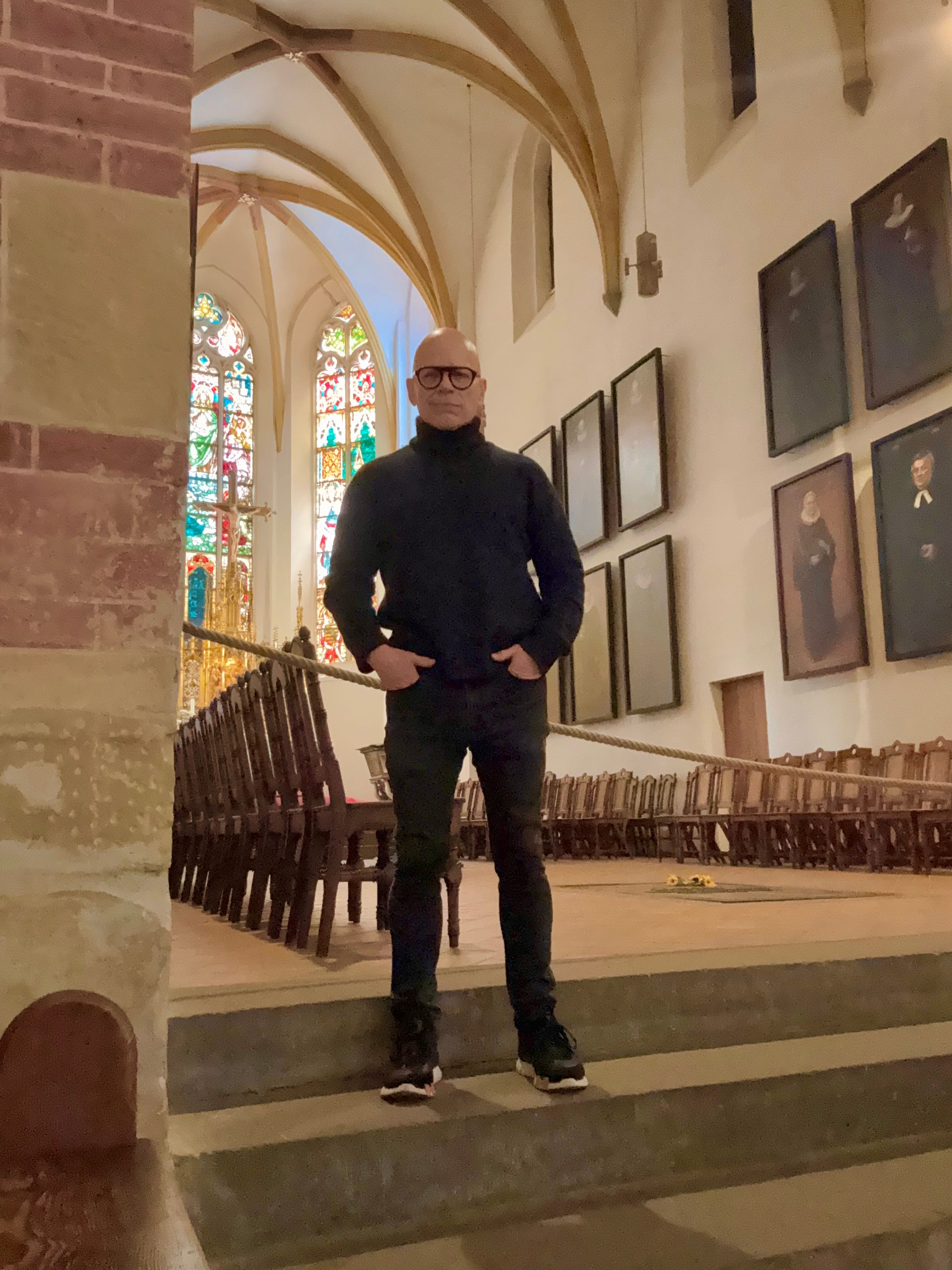
I traveled to Leipzig to visit Bach’s tomb at St. Thomas Church. I write to Bach. I have for years, preferably with Glenn Gould playing him while I hum along with his own humming along. I am writing to Gould and Bach and humming along right now. Back at the end of March when I had to pivot after my backpack and computer and passport and other personal items were stolen in that cafe in London because I couldn’t get into Paris with a US Emergency Passport - where I had planned to be these last couple of months - I knew at some point during my stay here in Berlin, where my pivot would take me, that I would make this pilgrimage within my pilgrimage.
It meant a lot to me. It was one of the reasons I came to Berlin. It offered me the opportunity to go stand on those steps above - that’s Bach’s burial site behind me with those flowers atop it - and whisper a tearful thank you. I had just whispered it and dried my tears when I set up my iPhone camera propped up on my new backpack which held my new computer and Emergency Passport there on a St. Thomas pew before me then posed for this moment in my life that was enabled because of the awfulness of experiencing that theft. I long ago learned to redefine trauma as an opportunity. This visit happened because that trauma did. I had to find a way to get over the theft by forgiving the thief but I had no idea that part of a deepening forgiveness would be found in the gratitude for his giving me this moment by taking away a passport and a computer and a backpack.
I will write more about this day and other experiences I had this week in a LETTER FROM LEIPZIG that I’ll post probably on Monday, or maybe on Tuesday during the two-hour train trip I’m taking to Weimar, another pilgrimage within my pilgrimage to the city where Bauhaus was born . I'm going to the Bauhaus Museum there. I mean, come on. How can I be in Germany and not set foot in Weimar with all its other history and connotations.
I have also been on deadline this week for a magazine story that took precedent over my weekly deadlines here at Substack for this column. I interviewed my old friend, photographer Greg Gorman, who so often was also my professional colleague during my career at Conde Nast and Andy Warhol’s Interview, for a profile on Greg in the new magazine published by global luxury real estate firm Coldwell Banker.
I can pretend I don’t care about that kind of work anymore, but I do. Deeply. It still matters to me when I get the intermittent assignment. I put almost all my writerly energy now into this Substack column. I actually love the deadlines and discipline it has put into my life and am so very thankful for the readership and those of you who are Paid Subscribers. I’ve even been told by editors for whom I worked and still long alas to please that I am now doing my best work as a writer here. But when I still occasionally write these profiles, I realise there is a reason I built a 40-year career writing them. I’m not only good at it, but I care about being good. That’s never really left me: that care I feel. I care about these Substack columns, too, and can spend three or four days getting its LETTERs just right in their Bach-like march of sentences, melodic, mathematical, their own hum humming along with Glenn Gould and Sebastian and me.
This is my second profile of a photographer for Coldwell, the company’s luxury magazine. My first one in its premiere issue was about Platon. So instead of a LETTER this week, I thought I’d let you read that one which was published months ago.
Here it is below with a few of the photos that ran with it. I hope you enjoy it. I’ll be back with that LETTER FROM LEIPZIG and a PILGRIM’S PROGRESS gallery soon. And tomorrow our Paid Subscriber community will receive its A POEM FOR A SUNDAY.
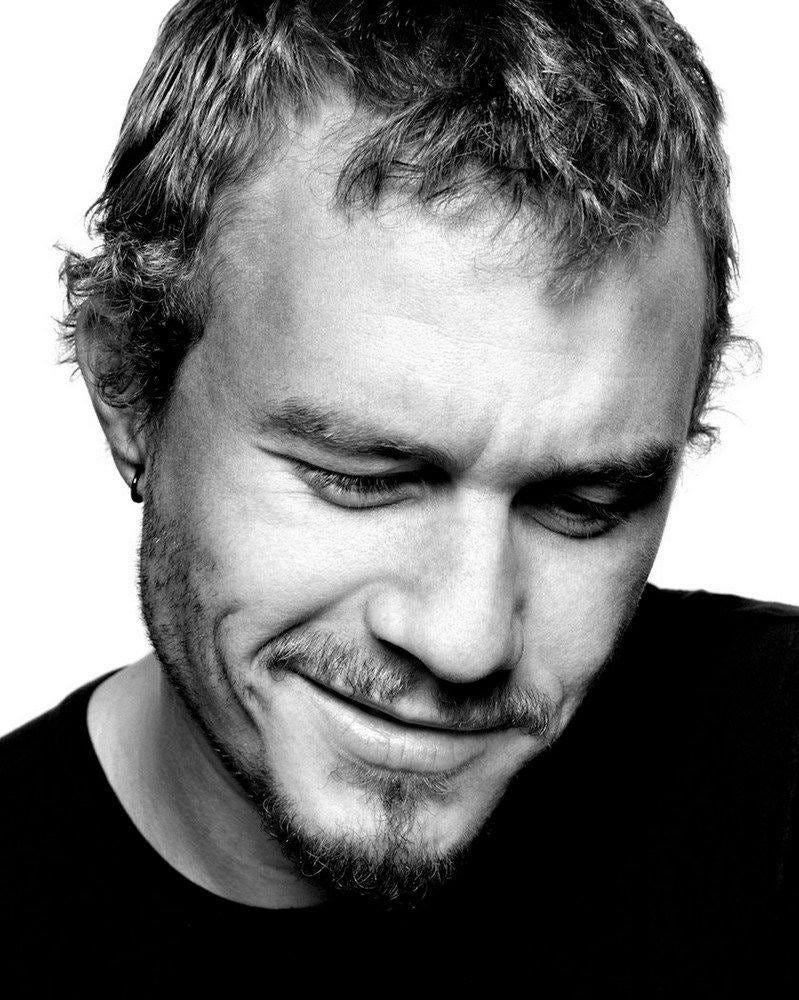
HEATH LEDGER. “This was a weird shoot,” said Platon. “He really had a hard time making eye contact with me. He was very sweet but he seemed nervous. A beautiful, sweet human being but he was struggling at the time. There was lots of scratching. At one point we talked about acting and I told him, ‘It’s only my opinion but I really do think you’re one of the greatest actors of your generation.’ And he looked down at the floor as I took this picture and laughed at himself and the absurdity of celebrity, about the craziness of it. What everyone’s impression of it is on the outside is so different from the inside. When he left, I thought he doesn’t seem to be enjoying life. He died a few months later. And it was only when he died that I found out how much he really was struggling at the time.”
###
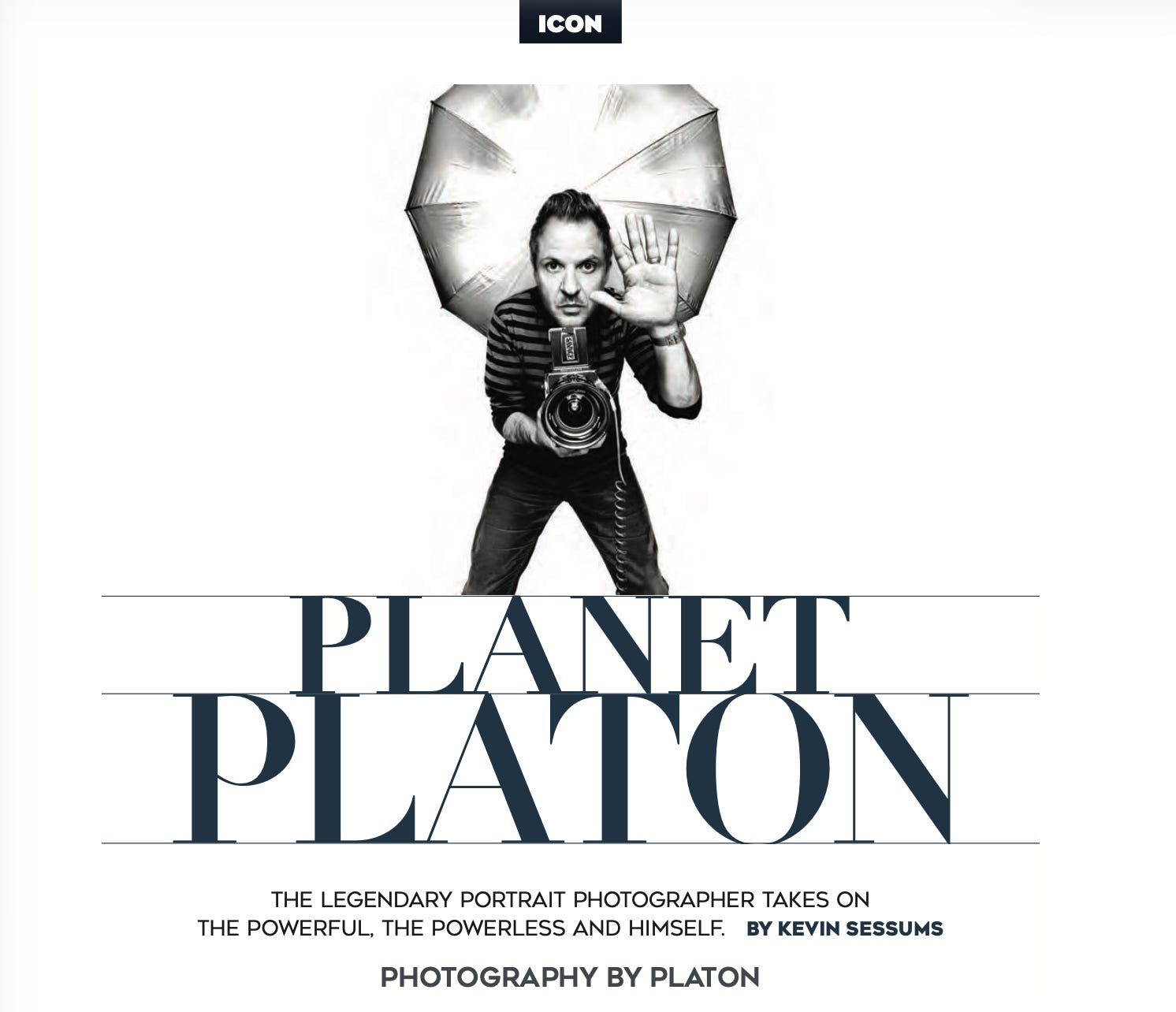
I always arrive at a Zoom call early prepared to wait a bit for an interview subject who is likely to have a busier life than mine. But at the precise moment the call was scheduled, Platon popped up on my computer screen. A thoughtful precision is, in fact, the mark of a Platon portrait. It matters not whether it is a person vested with too much power, a celebrity delineated by too much fame, or a lowly villager in Greece, his homeland, whose only luxury is to have lived a life beneath its ancient sun so that the rugged geography of such a place becomes the rugged geography of such a face. First impressions are an integral part of a photographer’s professional life, the opening act of the performative intimacy about to be crafted with some light and a shutter and a lens. So it makes a kind of narrative sense that the first impression that I had of the man - not the photographer - was just that: the guy is thoughtful, precise.
“One of my first ever shoots when I was still a student was to photograph the legendary film director, Mike Leigh,” he tells me when I compliment his punctuality. “Makes beautiful films. Amazing face. Kinda always grumpy. But has this wonderful wit. I was so paranoid about being late and not professional that I set five alarm clocks all around the house to go off four hours early. I have never really lost that. I don’t set five alarm clocks anymore but I do care as much as I did that day. And I still get nervous before a big photo session not because I’m not confident in what I do, but I am so invested in the moment. It can be with someone who’s a president or it can be someone who is completely unknown and has been robbed of all power in a human rights situation. It’s the same. I don’t know what they are going through. I don’t know what they’re feeling or what struggles they’ve had that morning. So I can’t make a judgment if they’re difficult or seem to be reserved. I have to be alert and present and engaged and observant to catch everything and to go beyond that first barrier of resistance. That takes a lot of emotional commitment.”
Platon balances his work with celebrities and politicians who wield their fame and power sometimes in questionable ways with the work he does with the human rights causes dear to his heart. But should all judgment be left at the studio door when he’s photographing Donald Trump or Vladimir Putin, both of whom he’s photographed for the cover of Time’s Person of the Year issue? “The illusion of supremacy” is a term that Martin Luther King, Jr., spoke about which resonates with Platon’s own world view. But isn’t he shaping the illustrative aspect of it - its image - which is in service to that illusion?
“I’m Greek,” he said, although he immigrated to England in 1972 when he was 8 years old with his father, who was an architect and illustrator, and his mother, an art historian. “As a young child in the village where lived I listened to stories about Greek mythology. It was just part of the conversation. Each story has a kind of message of how you should steward your life forward. There is often something hidden inside those stories, a message of some sort. The story of Icarus was always one of my favorite stories. When I was a kid I just liked the story,” he says of the mythic boy, the son of an architect as well, who also loved light but loved it so much that he tragically flew too close to the sun. “As I started to go from my village life to London to get educated and then I started to permeate this bubble of power through photography, I had - I have - no desire to acquire any of that power. I have been around so many entourages and hangers-on,” he continues. “It’s gross. It distorts the human character. I have always said to myself that I don’t want to be a hanger-on. I don’t want to cling to this. What I want is to capture a moment that is as true to the sensation I’m feeling as possible. We are all seduced by power. And I have been seduced by it too many times, I confess. It’s amazing to be in the room with the President or a movie star like George Clooney or to be with Prince. I do feel the pull. But I try to keep myself in-check by reminding myself not to get too close to the sun. It’s dangerous.”
The illusion of power can be limned with the realty of its reliance on regimental danger which was displayed for him when he and his bags of equipment were searched at gunpoint before being led into Putin’s private fortress-like dacha to which he had been unexpectedly taken as if in a kidnap caper after having set up their meeting for the Kremlin. Putin kept him waiting for a while until he arrived with the entourage and the hangers-on in-tow. Platon was alone - no assistants - with only his signature apple box on which he poses both the powerful and the powerless. He nervously, nose dribbling from the Moscow cold, struck up a conversation with Putin about the Beatles since he knew they shared a love of them. He asked him who his favorite Beatle was. Putin’s favorite: Paul. Platon asked him his favorite Beatle song. Putin told him to guess. “Back in the USSR”? Wrong:“Yesterday.” He told Platon to think about why he would chose that one, implying that to him even a forlorn love song can have a geopolitical subtext, then dismissed his entourage and his hangers-on leaving only Platon and his apple box with him in the room. Once they began their session, the photographer got so close to him he could feel his “cold breath” on his arm, he once told an interviewer from Foreign Policy. Platon returned to Russia to photograph human rights activists who had experienced more than the display of the danger that Putin put on for him and posed them on that same apple box on which Putin had posed.
The Beatles were the bridge to Putin but Miles Davis is the muse who connects Platon to his work. “For me the Miles Davis album, Kinda Blue, is as near to perfect as music can ever be. There’s a spaciousness to it. A discipline that’s also free. If there is a heaven, it is the sound of heaven to me. When you listen to that music, everything calms down. In my world before a shoot everything is very stressful and chaotic. There’s a million problems that we are solving. And I’m also dealing with a lot of weird energies from the entourage we’re meeting before The Person walks in. If we’re doing a human rights project, we’re dealing with frightened people and security issues. There is a different set of problems. I want to listen to something at those moments to help me calm down so I can feel the details and be delicate with myself first and then I can be gentle with my subjects and not clumsy. Because when you’re nervous it’s like a shot of adrenaline going through your veins and it can make you clumsy. How can you be delicate and gentle and kind and curious when you’re rushing with nerves and anxiety and stress? A big part of my job is managing my stress, managing my energy. I always put on Kinda Blue about half an hour before someone walks in the room if we’re in my studio. It helps my team. It helps me. Because it is the sound of concentration. It helps in tidying up your mental dashboard.”
“You mentioned kindness. When Richard Avedon was about to photograph Henry Kissinger, Kissinger leaned in and whispered to him, ‘Be kind.’ Should kindness actually play a part in a photographer’s work?” I ask him. “Or does being kind get in the way of it?”
“I’ve worked with Kissinger quite a lot. What he is saying is that he feels vulnerable in front of you. Here I am a man, he must think, who has acquired incredible power in my life and suddenly here I am feeling powerless. At the end of my first shoot with Kissinger, I was just beginning with this idea of also recording people’s voices because before that I was mostly keeping a diary of my shoots. So I said to Kissinger, ‘Would it be all right if we turned out all the lights in this room and I just asked you some questions about life?’ He said sure. So there we were in complete darkness. I could hear his breathing. He’s got this epic deep voice. I’m sitting on on the floor at his feet. He’s sitting on the apple box. I’m actually leaning on his knee. I said, ‘Tell me about Sinatra.’ I’m a huge Sinatra fan, too, so I’m excited to meet someone who knew him. There was a pause. More deep breathing. Then he goes, ‘Picture this. I’m at the Sands in Vegas. I’m on the front row at a table with the Rat Pack around me. Count Basie’s Orchestra is ready. Quincy Jones is conducting. The room is so tense. It goes silent. The lights go dim. A tiny spotlight hits the corner of the stage and this shadowy figure walks onstage immaculately dressed. He walks up to the mic. The spotlight follows him. No one dares breathe in the room. Still: silence. The guy puts his hand in a pocket of his dinner jacket and pulls out a cigarette. He puts his hand in another pocket and takes out a Zippo lighter. Flicks it. Lights his cigarette. Closes the lighter. Puts it back. Takes a drag from the cigarette. Blows the smoke into the light and the light catches the smoke. He leans into the mic. He says, ‘Good evening, Vegas.’ And the crowd goes wild.’ I said, ‘Dr. Kissinger, why did you tell me that specific story?’ He said, ‘Because that’s power I wish I had.’”
“Have you ever photographed that apple box all by itself. It could be like one of those still lifes Irving Penn photographed for Vogue.”
“No, I never have,” said Platon. “But that’s a great idea. Maybe it will be my next self-portrait.”
The selfless self-portrait: thoughtful, and precise.
###
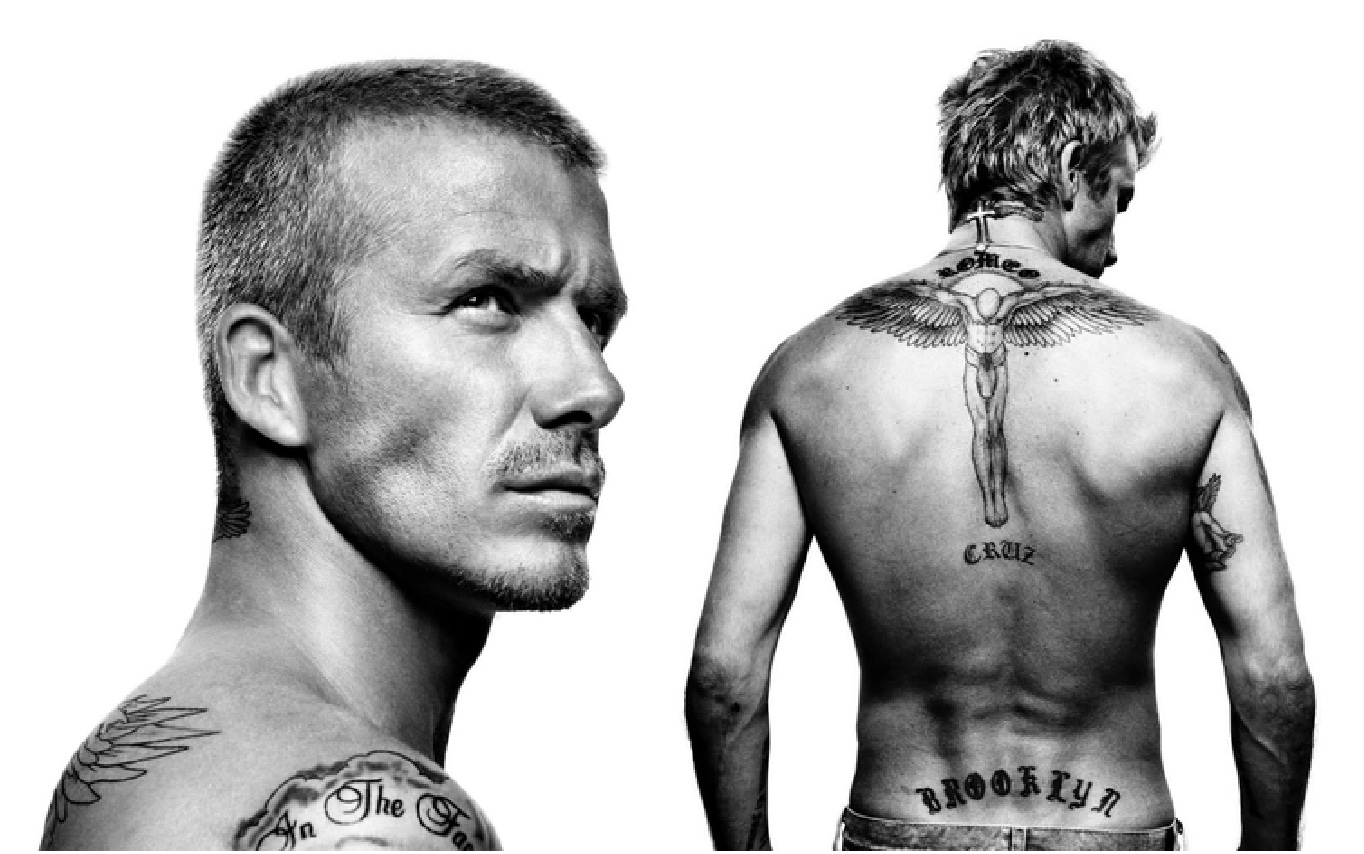
DAVID BECKHAM. “One of the most successful celebrities in history. I have never met anyone who understand better how this game works. He plays it perfectly which includes learning from his mistakes. Plus, he’s so handsome. He’s just a beautiful man He knows where his light is when he’s being photographed and how his body looks. So I did’t have to guide him too much. But it was all a bit too much looking at this beautiful man. I’m a straight guy but I’ve never seen anything so beautiful in all my life.”
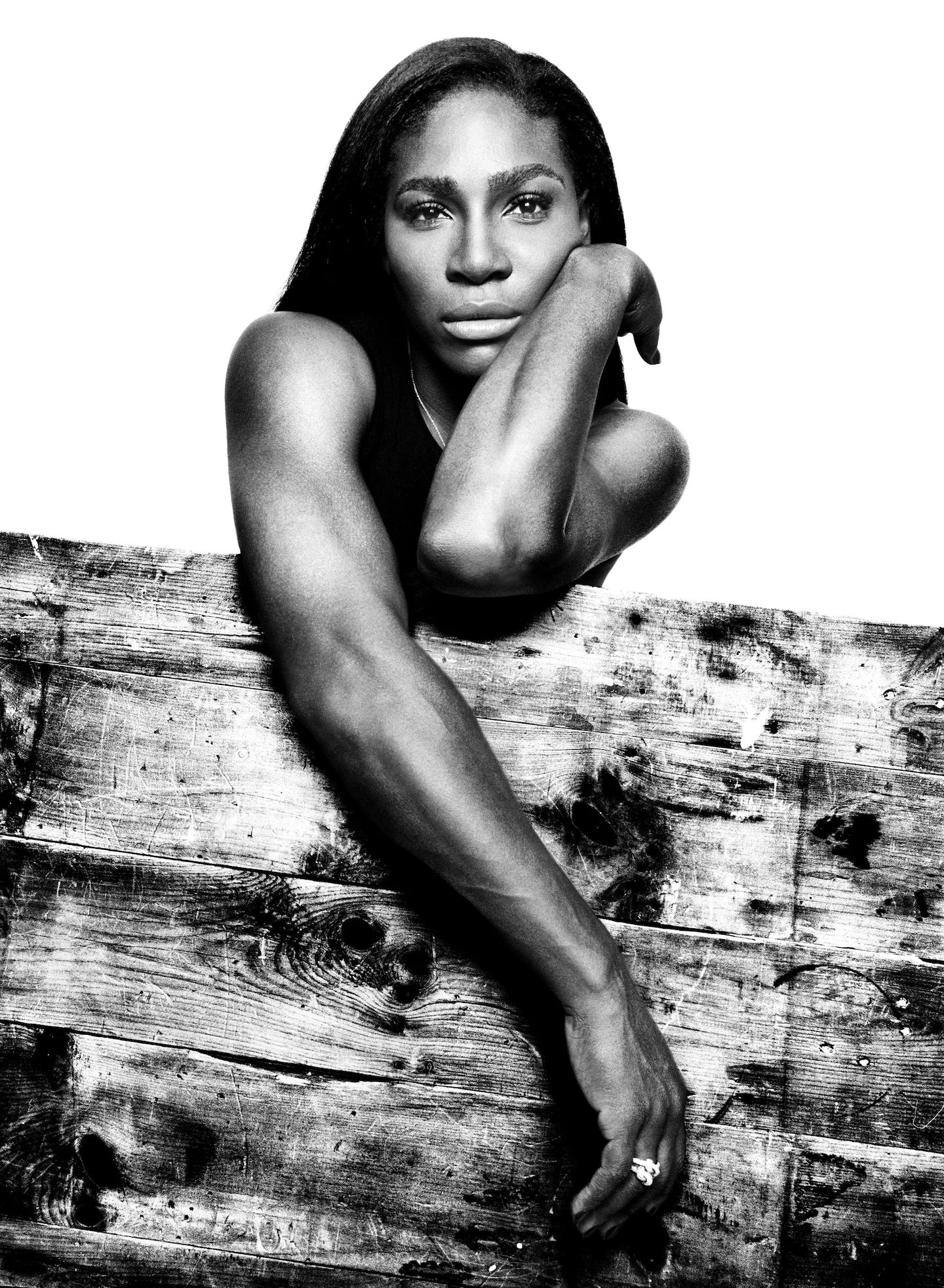
SERENA WILLIAMS. “This was a really difficult shoot. We were supposed to photograph her as the ultimate athlete. That’s how the shoot was set up. Th day before the shoot she was in the the finals of the US Open. It was going to be a big victorious moment. But she lost. She would have broken a record of some sort if she had won so she was devastated. They almost cancelled the shoot because she was not in the right frame of mind. I mean, no one wants to be photographed when you’re feeling like a failure. I persuaded her team to go ahead and do the shoot. So what I photographed instead was someone so vulnerable. You can see it in her. Her body language that day was not that statuesque strength that she is known for. She’s gentle and floppy and in many ways more sensuous. As I took this picture, I said to her, ‘Where do you got from here?’ She told me, ‘Don’t you worry. I’ll be on court at 6 a.m. tomorrow morning training again. And I promise that I will come back as the champ. She did.’ Everyone thinks it is the shoot of the loser, not the winner. I actually think, no, it is the shot of the winner. Because real winners pick themselves up really quickly and do the work needed to win again.”
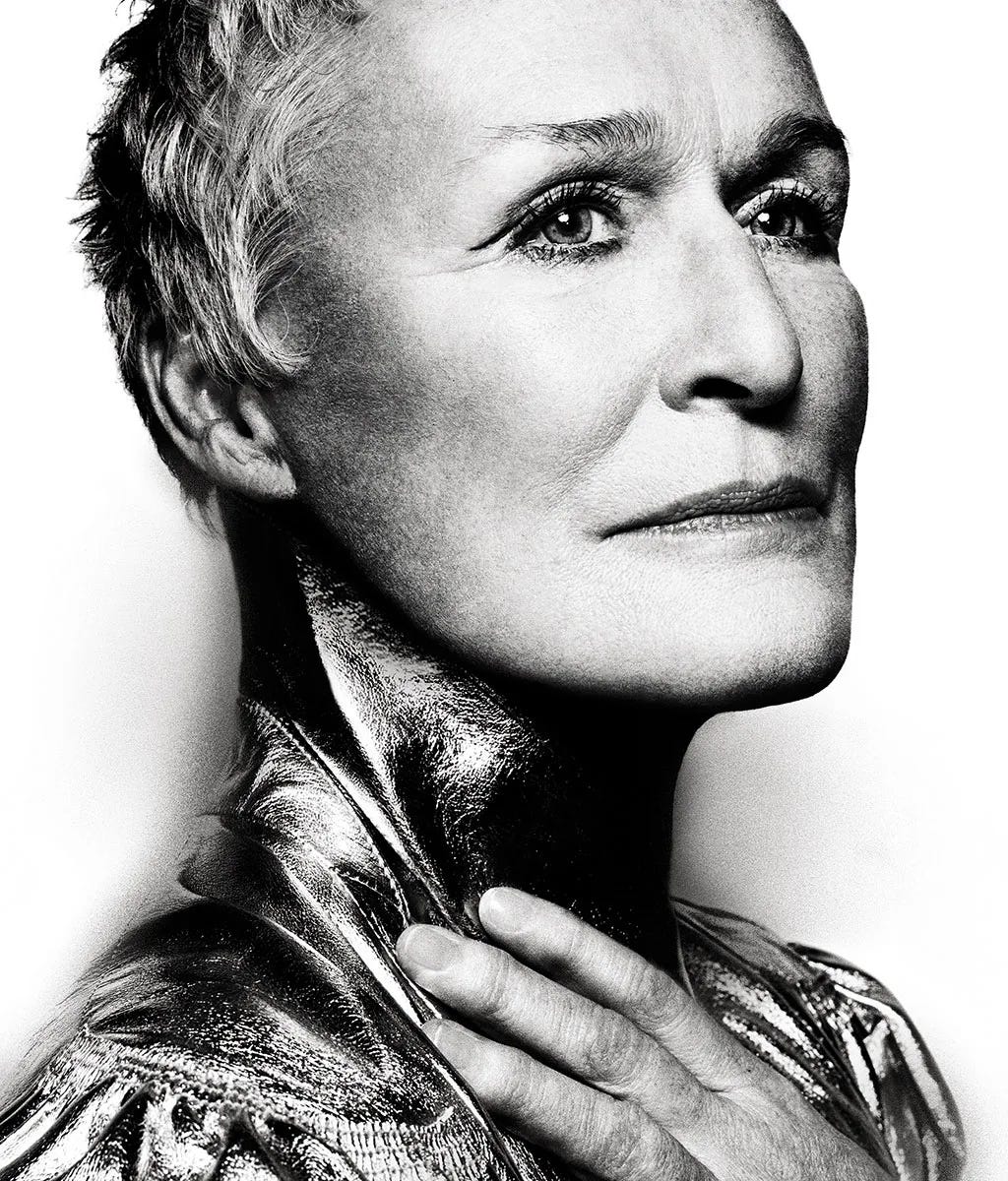
GLENN CLOSE. “Glenn was a lovely lady. It was a very emotional, powerful shoot. You mentioned in our conversation about Kissinger telling Avedon to be kind when he was about to take his portrait. She really appreciated the atmosphere of respect on my set because I think she was feeling a little vulnerable when she came in. I don’t know why. We’re all human. I would feel vulnerable going into any shoot myself. It was a nice experience to look after her as best I could. This moment of her touching her neck … psychoanalyst say that’s a kind of self-soothing thing. Depends. Sometimes it’s about protection because your neck is very fragile. But that one little gesture says a lot.”
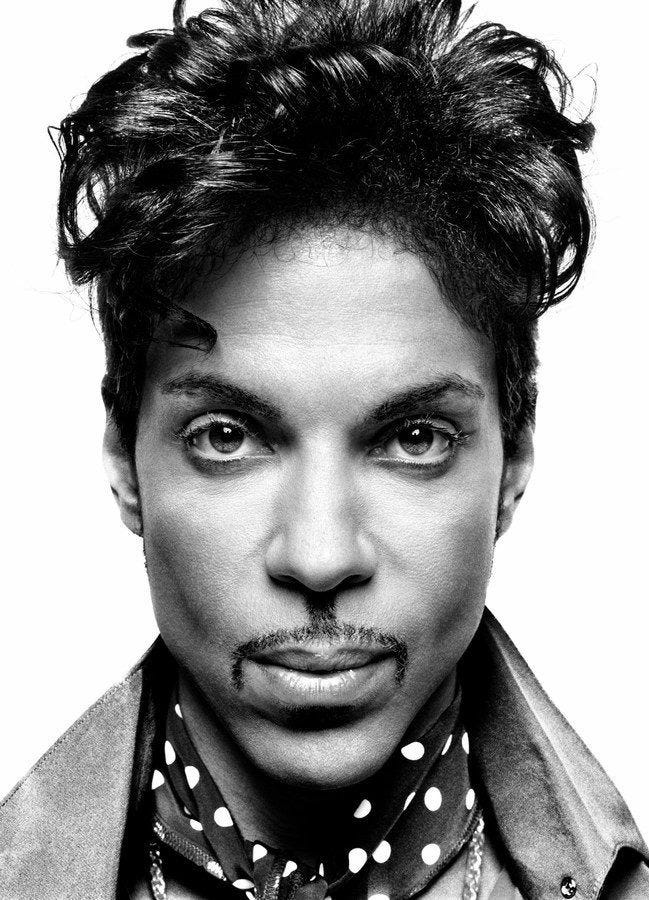
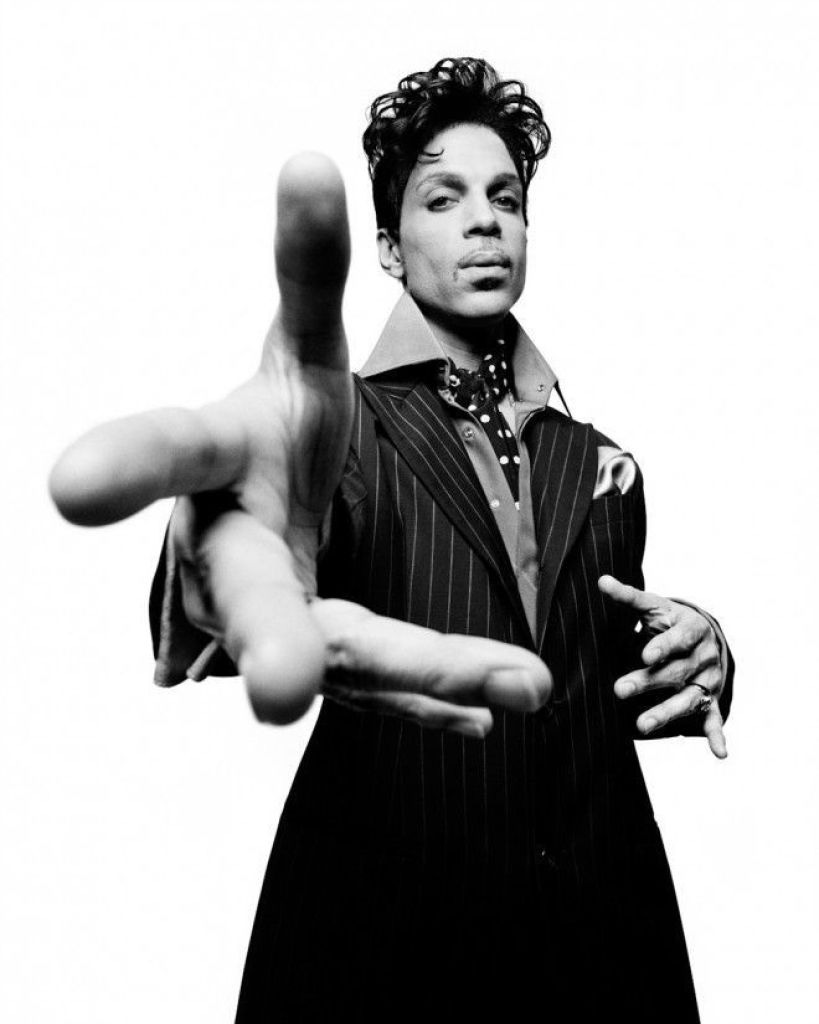
PRINCE. “Prince was the most mystical person I’ve ever met in my life. The shoot didn’t last long. He was 8 1/2 hours late. And I was on time. Pacing up and down. By the time he walked in, I was emotionally exhausted. It was backstage at a stadium in Tennessee where he was going to perform. He was late to perform for the crowd, let alone me. So the crowd was banging and shouting, ‘Prince ! Prince!’ You could feel the thumping because we were underneath the stage. With that tense atmosphere, he came up to me … and .. well, talk about in control. This guy was calm, chilled … whispered, if that makes sense … Complete control of his artistry and consequently the crowd. I remember saying to him after the shoot, ‘Prince, you ‘re so mystical. Can you slip me the answer? What’s the meaning of life?’ He puts his arm around me and says, ‘I have it.’ So he puts his hand inside his lapel of the jacket he’s wearing in the picture and finds a hidden pocket. He takes smoothing out and places it in my hand and then finally goes onstage and starts playing. I look down at my hand and it’s a Jehovah’s Witness pamphlet. I thought: Is that it? Okay. The next day I was going home on my flight and I thought I should read this pamphlet. I’m not a Jehovah’s Witness but I did get it from Prince. So I started turning the pages and it’s the usual stories. Community. God. Pictures. Bits of text. It’s like a little booklet. Then I noticed something funny in the binding. When I got to the center off it I discovered that he had wedged his guitar pick there. Written on the pick in purple letters was, ‘With love always, Prince.’ If I hadn’t read that pamphlet, I wouldn’t have found it. I think the message was that you’ll only get the pick if you’re curious enough to read the pamphlet. Most people would have probably thrown it away and never bothered to look at it.”
Serena. My close friend and photographer to so many notables Guy Webster (RIP) said “It’s difficult to catch true beauty on film. “ Planton did with her. Thanx for your continued dedication to your craft
As a fellow enthusiast of both Bach and your wonderful writing, would you consider in the future a post on this subject alone? ( asking for a friend!) .