
PILGRIM'S PROGRESS: 5/7/26
A Gallery of My Life in Berlin

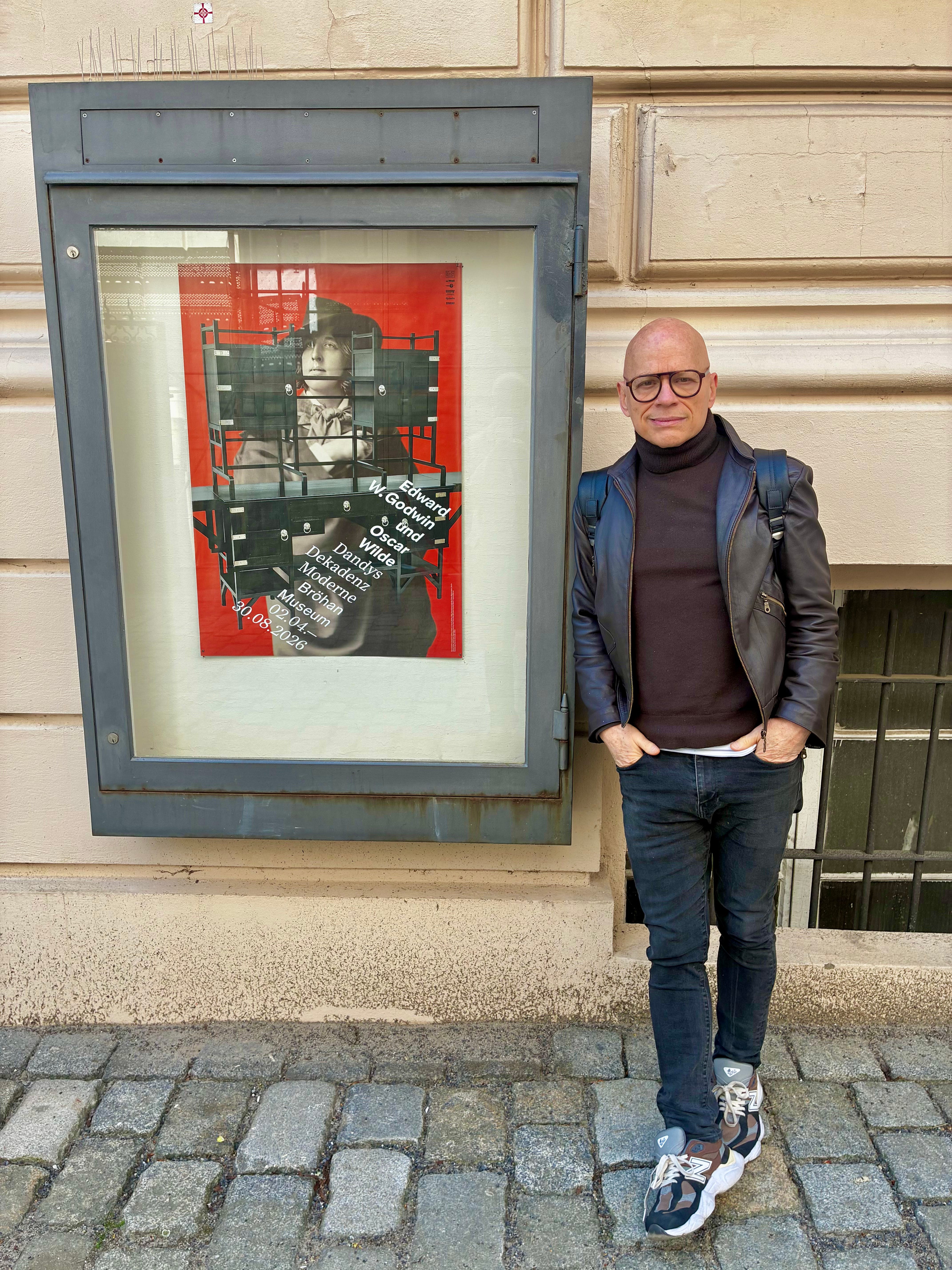
1.
I recently saw this Godwin/Wilde Dandyism exhibition at the Bröhan Museum which runs until August 30th. It made me miss my own collection of furniture when I had a home, most of it midcentury modern, which I acquired over many years but which was part of my purposeful dispossession that I hoped might lead to a more mindful life. What I have learned most recently on this pilgrimage is that the only two possessions I really need, in fact, are this MacBook Air and my passport after the two were stolen in March in London. It has come down to those two things because I have come down to these two: I am now only a writer and a pilgrim. That’s it. That’s all. It is just that simple and, because of that specific simplicity, just that varied. When you get it down to paragraphs and places what is left are two of the most complex of impulses: the creative and the adventuresome.
Each day when I face this computer screen in the morning and later wherever I am in the world is a peregrination into the unknown, into the daily perhaps that my life has now become. Today I’ll strap on my backpack after a morning of conjuring these sentences in a Berlin cafe, and … then … set out. Inside the backpack is my new computer and currently a US emergency passport. Sometimes a chocolate bar. A small bottle of water. So, okay, chocolate and water are sort of essentials, too. But everything else - as this Dandyism exhibit inadvertently pointed out to me - is but a detail that delineates one’s style, one’s status.
I spent almost all my life in an attempt to station myself amidst the trappings of station as proof that I had bettered mine. But “trappings” is also the term for the ornamental equipment harnessed to a horse. “Station” is just the term for the place where I catch underground trains now in the cities where I alight for a time which seems somehow, this time in which I live, no longer linear but looped, looping, simultaneous. It thus is no longer as sinister and sinistrous as it once wanted me to think it was as what I considered its expanse, that one long line of it, was closing in, getting too close.
So I stopped knowing what I thought I knew.
I stood my ground.
I stared down that long line that was not there.
And I was shocked to see instead a throb of stillness - the stillness - at its ever-moving heart. It, time, longs to stop. But knows it can’t. It envies us our ability to think we finally do. It was showing me in that moment that it too was seeking simplicity. That is its mission, not its inevitable sprawl but that simple search. It was in that moment that we together, time and I, realised that it was the simplicity to which I daily surrender, a day at a time as much as time finally gets itself. That is now at the ever-moving heart of my life until I do not stop but become a part of the ever-moving heart of its.
Or something like that.
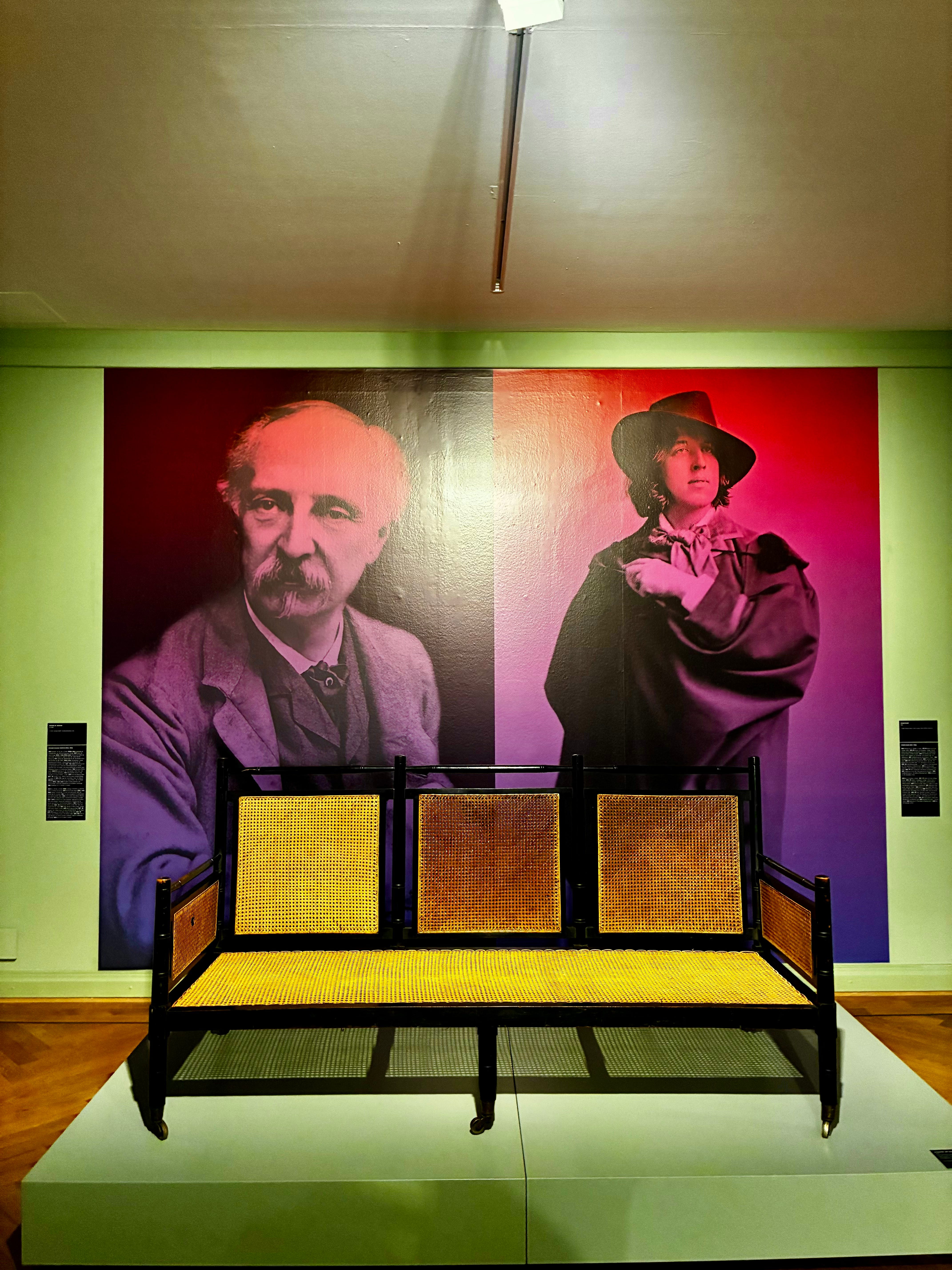
I’m not sure the curators wanted to elicit such or-something-like-that musings as I wandered the other day through the low-ceilinged rooms of the Bröhan overly packed with what Wilde and Godwin considered Aesthetic perfection. The walls there were lined with quotes from each, especially from Wilde’s preface to The Picture of Dorian Gray. He laid out in it his own musings concerning what were his own required essentials that went into shaping one into being a dandy, an Aesthete.
Wilde was a self-defined an art-for-art’s-sake Aesthetic dandy for a charmed but straitened time in his life before his station changed and he found himself cornered, trapped, jailed - not so much because of the moral outrage of others filtered through legality but because of his own unapologetic visibility which he refused to filter any longer through language. As long as he kept it to paragraphs, he seemed to know his place, or certainly signalled that he did.
As I meandered through those museum rooms the other day which displayed how Wilde’s dandyism was visualised through the Aesthetic movement manifested by Godwin’s designs, I came to a deeper understanding ironically that it was that visibility and not morality that was the hallmark of his downfall. The hallmark of the irony was the visualised Aesthetics which served as a way to train the eye to avert one’s gaze from his deeper need to be seen and not just heard.
Godwin and Wilde bonded over the decorative visualisation of what constituted a home, the trappings that harnessed Wilde to his station but not to himself. They are much like his trusty witticisms which trussed him culturally to a public that did not want to face the private man who hid there behind his being a husband and father. But he also hid in plain sight as the writer who could make society’s hypocrisies and wrongs ring with a heightened kind of laughter that lightened its burdens of being built so precariously upon such constructs but not finally his own at bearing up under them.
2.
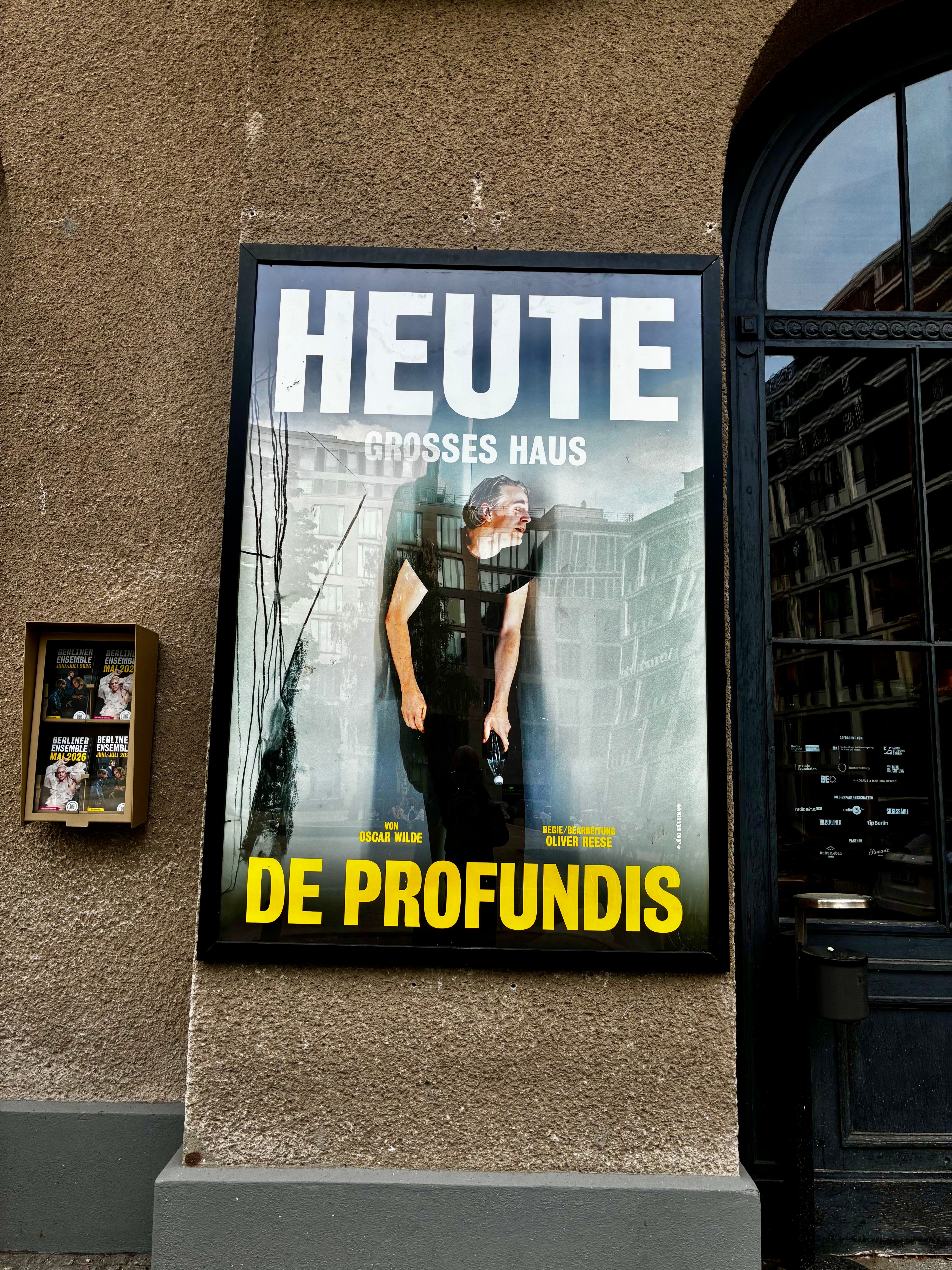
I also saw the above production at the Berliner Ensemble on a night set aside for it to have English surtitles. Directed by OIiver Reese, it was deeply and, yes, profoundly moving, even more so because I had seen the Dandyism exhibit the week before which placed this in the context of that as Wilde’s jailing did to all that had come before it in his life.
I also thought about how he had to face the onslaught of time in his own way in such a place - the play takes place in a closet-like box that serves as his jail cell - to find somehow time’s ever-moving heart in some other iteration in order for his own to survive such an ordeal. He turned therefore to what he knew - language - in order to do it. It had come down to his being two things: a writer and a prisoner. That was it. That was all. If only, I thought, he could have strapped on a backpack at the end of a morning of writing … and .. then .. set out. And when that thought occurred to me in the midst of this remarkable piece of theatre, the tears began to flow for this man who was becoming so visible to us that night more than he could have possibly been in an exhibit of Aesthetic objects.
I had no idea who the actor was in this one-man production. I just showed up to see it because of its subject matter. But two hours later I was not only astonished by the act of memorisation and the level of concentration it took to accomplish what I had just witnessed but also the emotional stamina that it required from him and thus finally from us in the audience. It was a conflation of art and politics that transcended the agitprop into an emotional realm that left me reeling.
When I got home I looked up the actor and realised I was correct to be so deeply moved and impressed by him. He is the current holder of the Iffland-Ring, something I’d never heard of before. Here is what Wikipedia has to say about it: “It is a diamond-studded ring with a picture of August Wilhelm Iffland, prominent German actor, dramatist and theatre director of the late 18th and early 19th century, who played in works of contemporary writers Goethe and Schiller, starting in 1782. The holder of the Iffland-Ring is considered to be the ‘most significant and most worthy actor of the German-speaking theatre,’ in the opinion of the previous holder who has passed it to him by will.” The previous holder was Bruno Ganz who passed it on to the actor now starring in this production in his premiere offering as a new member of the Berliner Ensemble.
His name is Jens Harzer. Above was his sixth curtain call that night. I am one of those shouting, “Bravo!” I will never forget it. I will never forget him.
I am seeing the Ensemble’s production of The Picture of Dorian Gray on Saturday.
3.
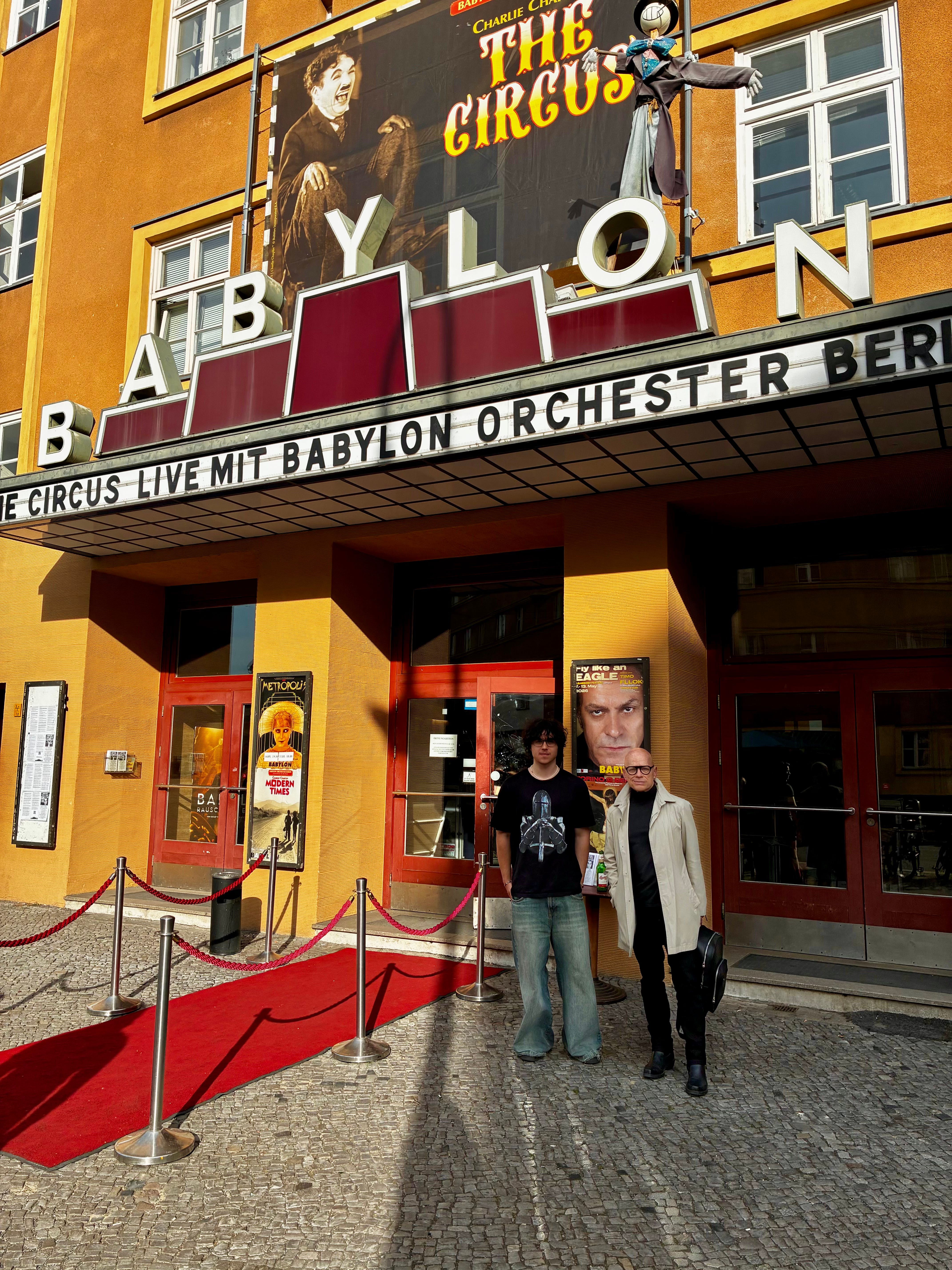
I have a new flatmate for the month of May. The 40-year-old architect I have written about in earlier columns moved out into her new apartment here in Berlin and the next day this 19-year-old French boy named Quentin moved in. He’s completing his final semester of his first year at university with a two-month stint working for a tech company here. A sweet young man. I took him to see this on Sunday as his welcome to Berlin gift from me and as a way to pay kindness forward.
His first day in the apartment he was wearing a t-shirt with Heath Ledger’s face on it as The Joker, the role in director Christopher Nolan’s The Dark Knight which won Heath a posthumous Oscar. I was also asking Quentin about his schooling. He told me he’d gone to a lycée named for Nelson Mandela before university.
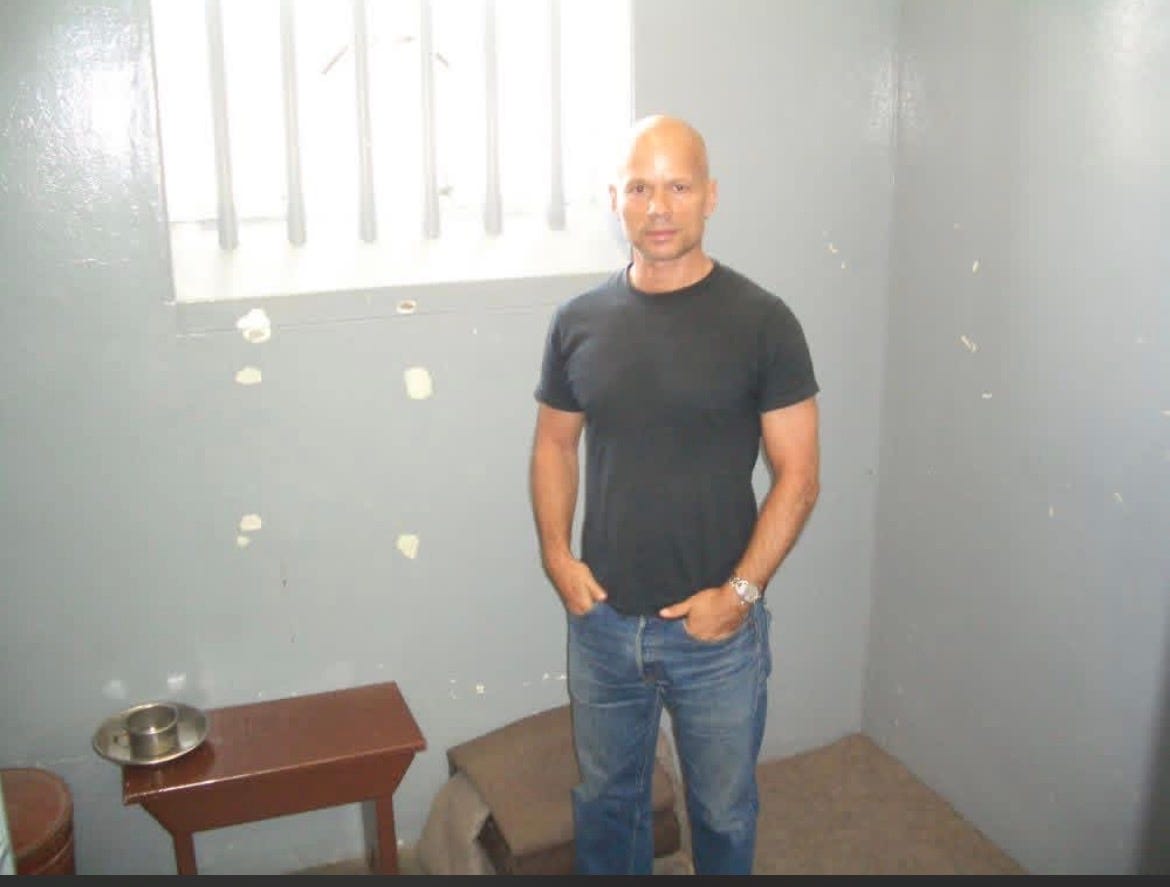
I told him not to freak out but I had a couple of photos to show him. “I’m not sure I live an enlightened life,” I said. “But I do live an everything-connects one.”
Quentin’s eyes widened at the first photo above of my being in Mandela’s jail cell on Robben Island when I was in Cape Town for a couple of weeks on my way to Tanzania to make the summit of Kilimanjaro. It would have been like his showing me one of him standing in Wilde’s cell in Reading Gaol.
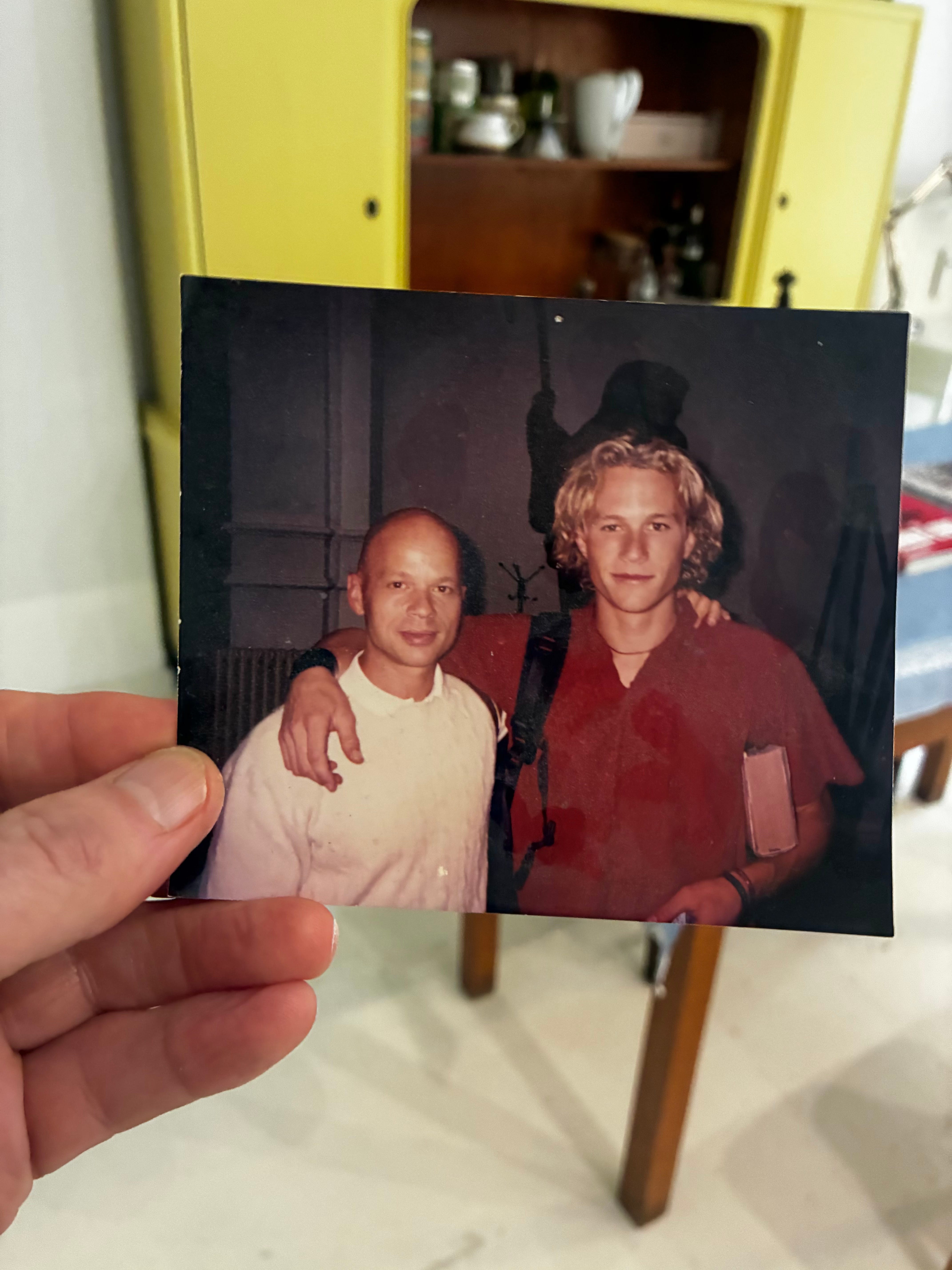
He did kinda freak out when I next showed him the photo below of Heath and me that I put out with other keepsakes when I arrive at a new room in which I live for a matter of months along my pilgrimage. It was taken in Prague while I was doing a cover story on him for Vanity Fair when he was shooting one of his first films, A Knight’s Tale. “This photo is a talisman for me for lots of reasons,” I told Quentin. “For one thing, it helps keep me on the path of recovery as I continue on my pilgrim’s one. Recovery is the pilgrimage that underlies all the others for me.”
“You’ve lived a life,” he told me.
“I’m living one,” I said.
We next talked about some stuff that helped us bond with each other even more in spite of the 51 years difference in our ages. I then told him how moved I always am when I meet people his age with their whole lives in front of them.
“I was 19 like you when I moved to New York City,” I said, remembering when I innocently thought of time as that one long line stretching out in front of me. “God, man, the hope I had. Hope’s the fuel. It was for me. I had no idea back then I’d be this 70-year-old man talking about hope to a 19-year-old French boy in Berlin I’m living with for a month,” I said. “But that too somehow gives me hope. So thank you for that. Thank you, Quentin.”
“You’re welcome,” he said and headed back to his bedroom.
I headed back to mine and put the photo of Heath and me back on the dresser.
Quentin began to hum to himself across the hall.
Time and I sat on my bed and listened.
[TO VIEW AND READ ABOUT THE REMAINING IMAGES IN THIS WEEK’S GALLERY, PLEASE CONSIDER JOINING OUR PAID SUBSCRIBER COMMUNITY FOR ONLY $5 A MONTH OR $50 A YEAR. I PROMISED MYSELF I’D CONCENTRATE ON WRITING AND DOING THE WORK AND HOPE THE READERSHIP AND SUBSCRIBERS WOULD FOLLOW. I WILL REMAIN HOPEFUL. THANK YOU FOR THAT, TOO.]