
PILGRIM'S PROGRESS: 6/17/26 *
A Gallery of My Life These First Few Days in Provincetown

1.
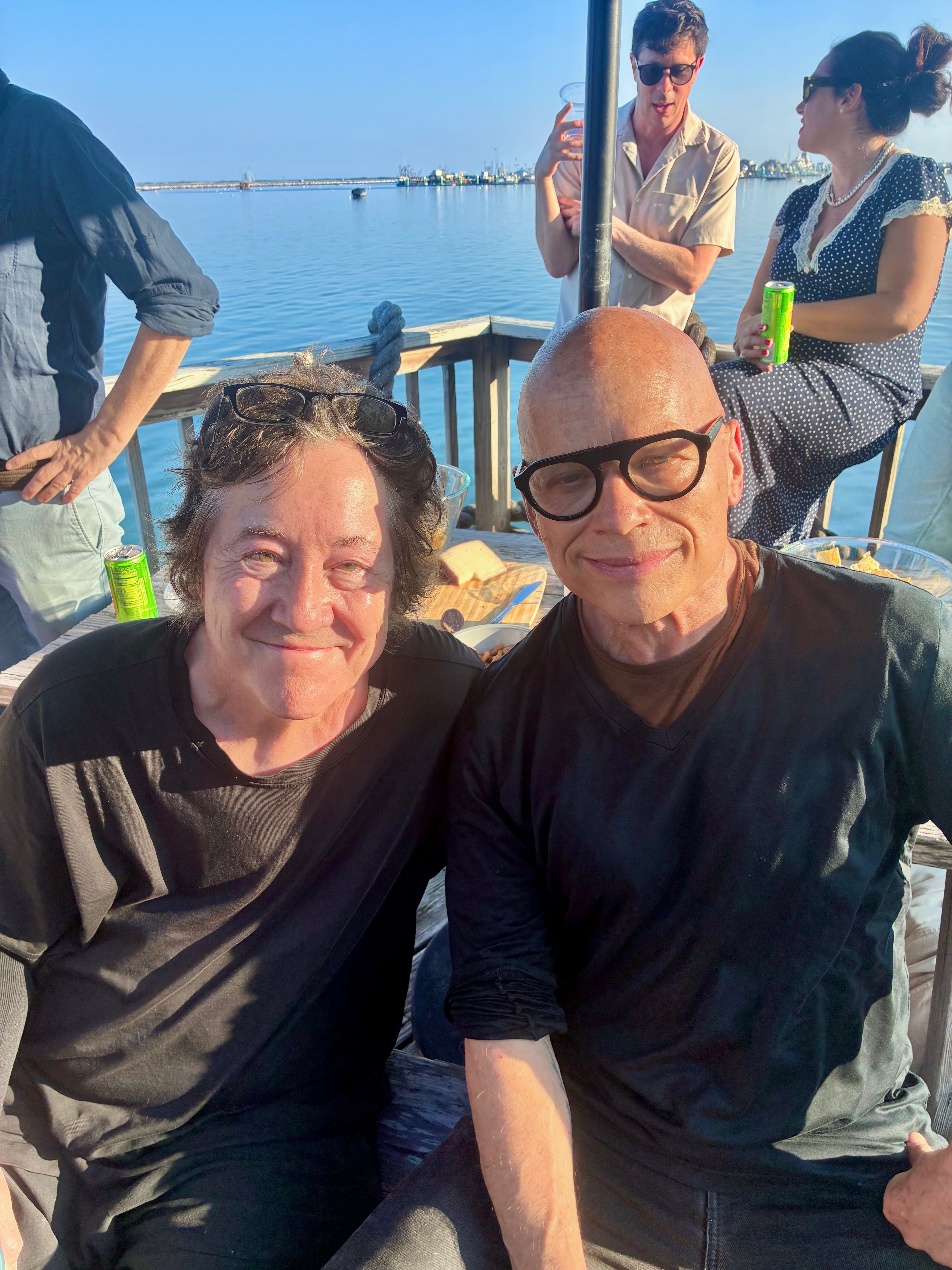
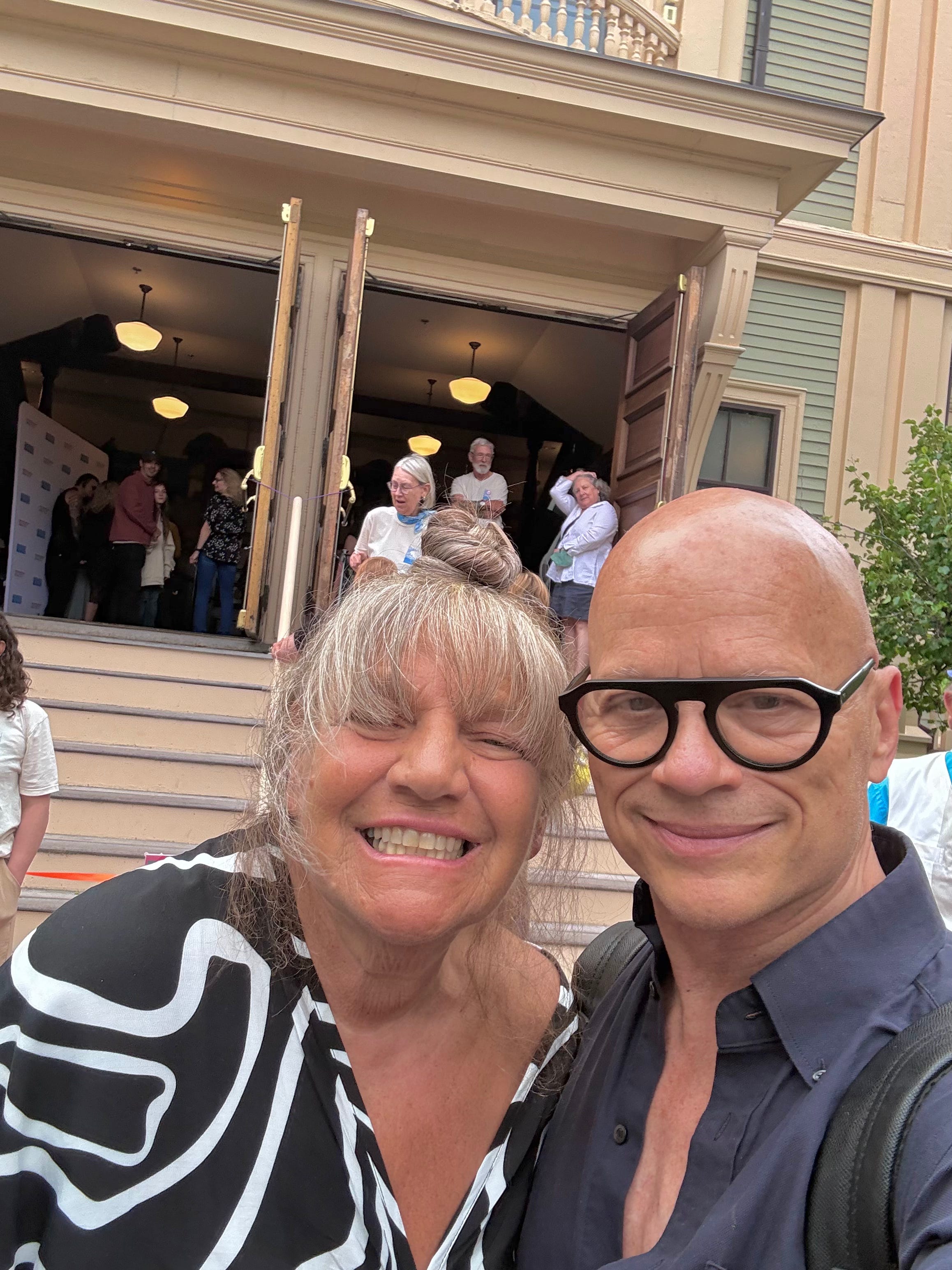
My arrival in town last week coincided with the Provincetown International Film Festival. My first cocktail party was on the far end of the deck at Poor Richard’s Landing. I lived at Poor Richard’s my first three summers during my decade of summers alighting here in the special light that itself alights so gloriously at that come-on-now-come-on curl of Cape Cod where the earth has chosen to linger when it could have decided to end it all right about here. The party was given by Christine Vachon. That’s Christine with me above. She has her own Substack now which is an adjunct to her popular social media posts about her experiences in airline lounges in airports around the world. The day before it was announced by The Academy of Motion Picture Arts and Sciences that Christine and her producing partner at Killer Films, Pamela Koffler, would receive honorary Oscars this year as recipients of the Irving G. Thalberg Award at the Academy’s dinner on November 15th. Other Honorary Oscars are being given to actress Glenn Close, director Ridley Scott, and animator Floyd Norman who was the first African American animator to work at Disney when he started there in 1956. All early evenings when the late summer afternoons let them have their way here have a quiet celebratory air to them for being able so magically to coexist then coalesce before dusk descends through the bothness of their light. But the news of Christine’s Oscar gave the cocktail party a quiet celebratory air all its own right alongside it.
Christine and Pamela’s film Late Fame, which screenwriter Samy Burch has updated from a 1895 novella by Viennese Modernist Arthur Schnitzler, was part of the festival. Directed by Kent Jones, the film stars Willem Dafoe as a poet who is rediscovered by a downtown New York coterie eager to discern new cultural barometers befitting the kind of reserve where their coolness is kept. I wanted to see the film - and will when it is released more widely - but I already had a ticket for the infamous 1932 MGM pre-code Joan Crawford film, Letty Lynton, directed by Clarence Brown, which was screening at the same time. The Crawford film hasn’t been seen really since 1936 after the studio lost a plagiarism suit regarding the film’s script. I should have gone to Christine’s movie. I loved the Adrian costume designs for Letty Lynton but left after about an hour into it when Crawford’s title character murdered her lover because I just thought the whole thing rather awful. The only way I am getting to keep my gay card in this gay town after walking out of a restored Joan Crawford film is by citing those Adrian designs as my reason to stay as long as I did.
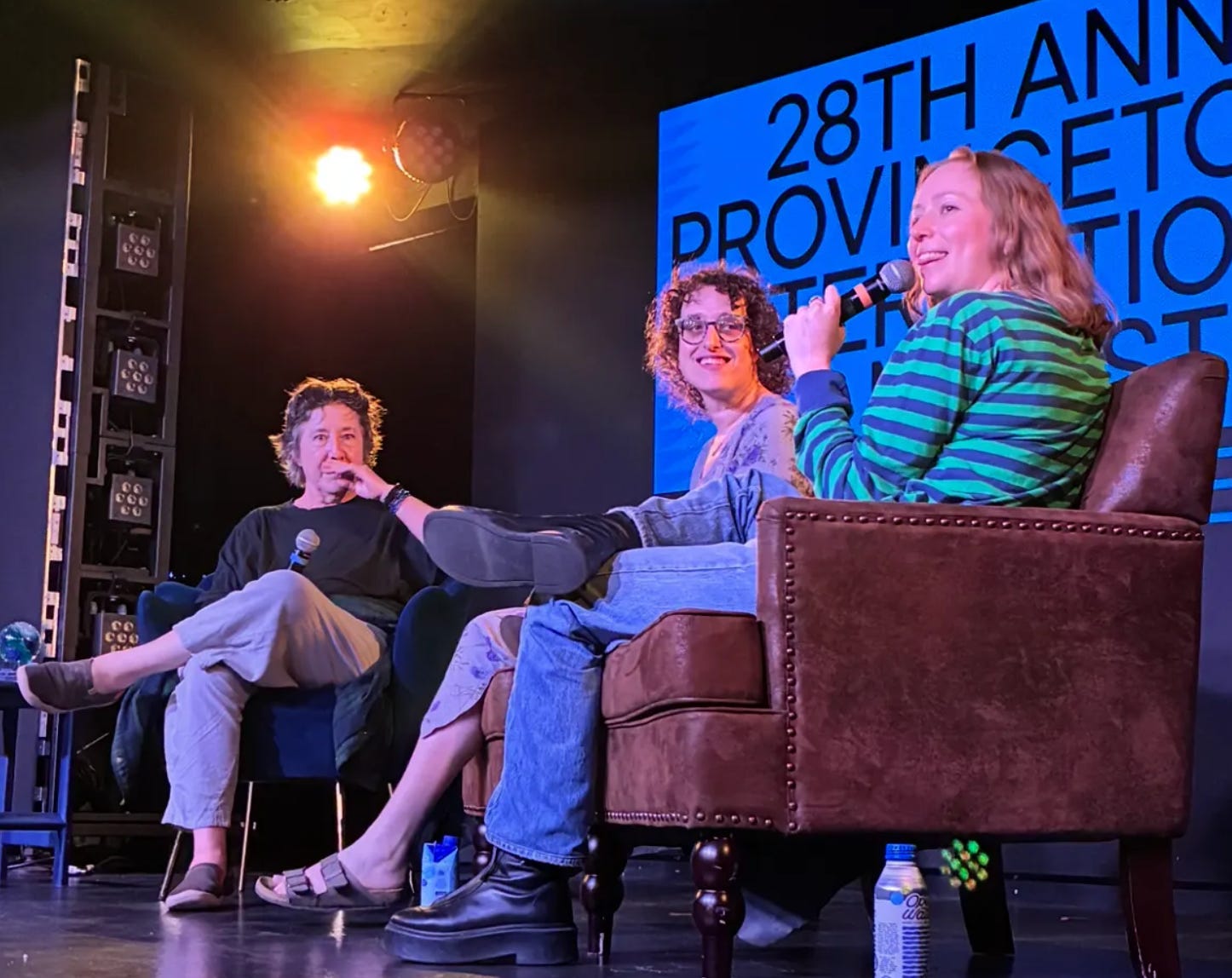
The morning after the cocktail party, I settled into a front row seat to watch Christine moderate a conversation with director and screenwriter Jane Schoenbrun and Hannah Einbinder, who co-stars in Jane’s new film, Teenage Sex and Death at Camp Miasma, with Gillian Anderson. The slasher film for brainiacs who brandish a sharpened sense of irony as their weapon of choice had its world premiere as the opening film of the Un Certain Regard section of the Cannes Film Festival last month and received a six-minute standing ovation and subsequently the Queer Palm. Hannah and Jane also received the Ptown Film Festival’s Next Wave Awards. I saw the film on Saturday and, feeling all of my 70 years in the midst of the gaggle of queer youth in the audience who were eating it up, I felt, too, our generational divide deepen. The audience seemed to be filled with the same folk who rediscovered the poet in Christine’s movie, which was just another meta level to attach to a film already overly layered with them. Jane is a transgender woman and they did make me aware with the film’s queer sensibility that the transgender experience is itself a meta one, a concept - no, a reality - that had not occurred to me before. But which layer of the meta experience we all face is the real one for each of our own lives? That is the question that lingered at the end of the film like this curl at the nape of a cape, this end of the earth that isn’t, where we’d all congregated to ask it awash in the bothness of its light.
2.
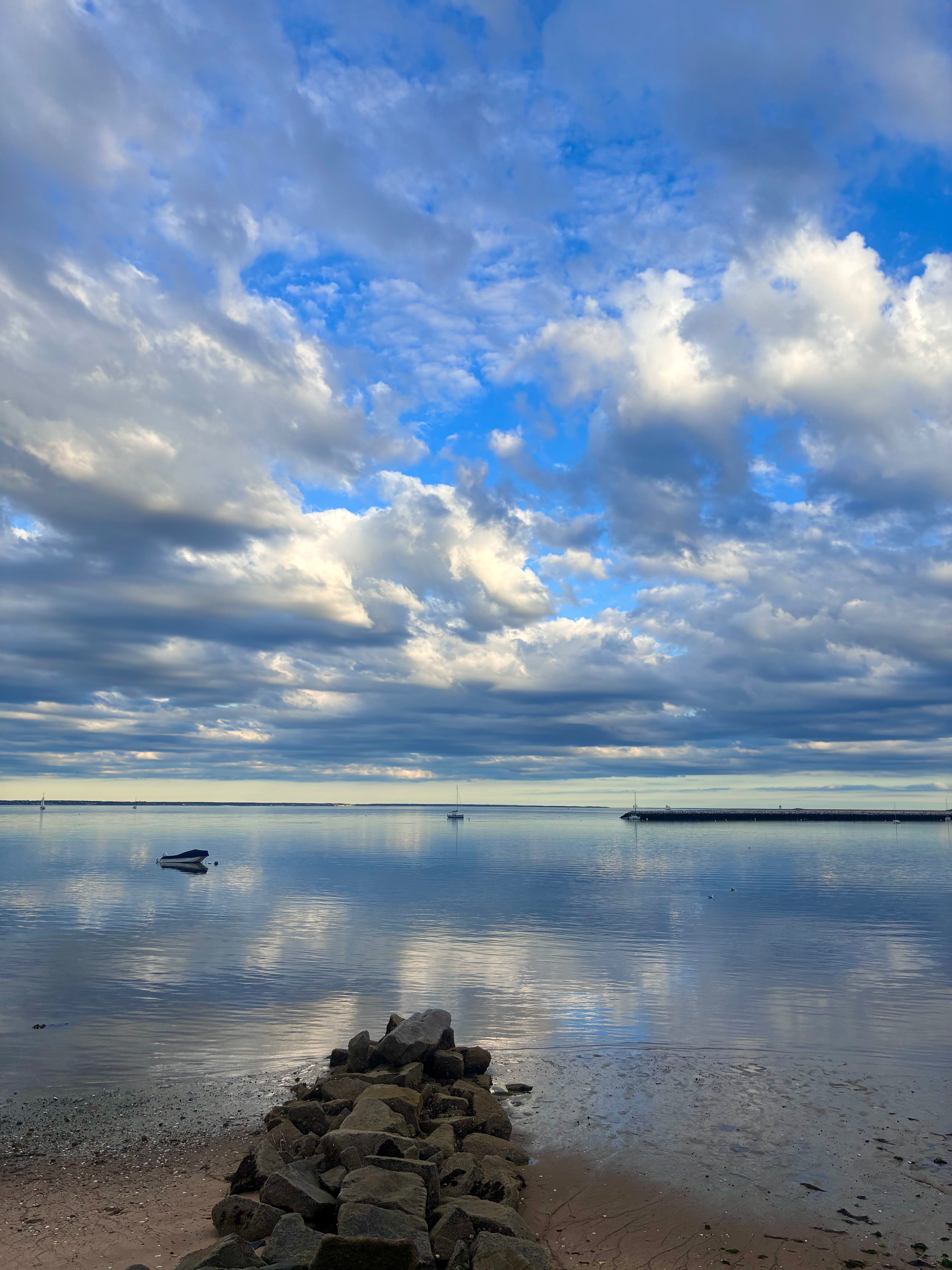
The bay across the street from where I’m staying at the Mary Heaton Vorse House. More bothness. More light.
3.
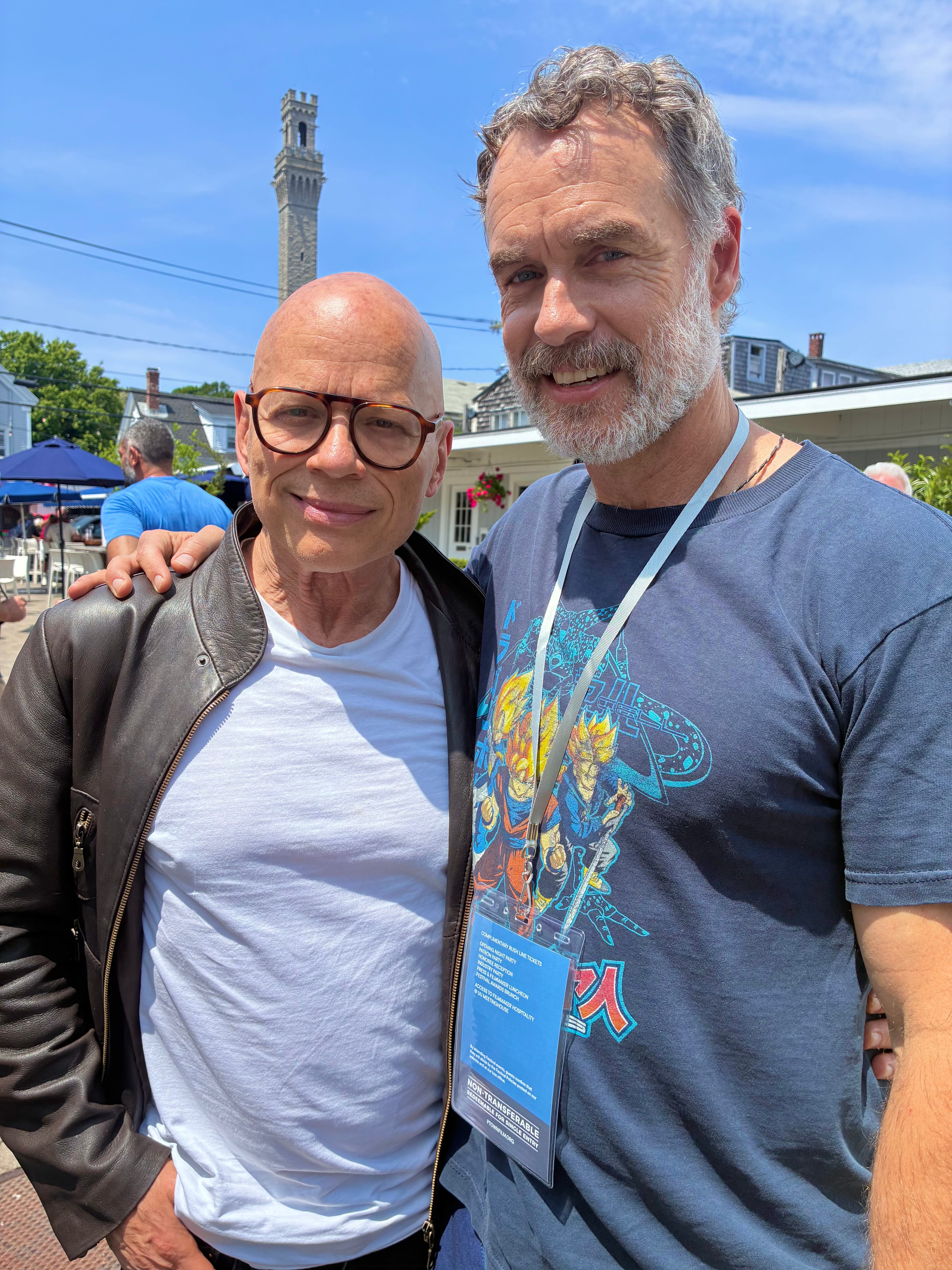
The night before the Christine, Jane, and Hannah conversation, I was bingeing the latest three episodes of AppleTV’s Maximum Pleasure Guaranteed in which Murray Bartlett is so creepily brilliant in the role of a sexy sociopath. I ran into him after the conversation and Christine took this photo of us so I could send it to a mutual friend with whom he costarred in another series. I knew our friend would get a kick out of it. He did.
I really liked the festival’s closing night film, Family Movie, starring Kevin Bacon and Kyra Sedgwick and their kids, Sosie Bacon and Travis Bacon. Bacon and Sedgwick co-directed it. Written by Dan Beers from a prompt by Kevin and Kyra, it was filled with more meta layers but the deadpan comedy of it all was delivered in a mainstream manner. The Bacon family was there for the screening at Town Hall and a question- and-answer session afterward. Travis wore a t-shirt that blared the message: TRANS RIGHTS or LEFT HOOKS.
Family Movie is gory, irreverent fun and owes a lot to Serial Mom which was written and directed by Ptown summer resident and countercultural elder John Waters. John has been pedalling up and down Commercial Street since the 1960s. He conducted another film festival onstage conversation, his with the festival’s Filmmaker on the Edge Award recipient, Ryan Murphy, who also has a home here, one of his many. John will be in Ryan’s next season, the 13th, of American Horror Story, the FX anthology series, playing the role of a phlebotomist named Mr. Phibes as an homage to Vincent Price, the person John has claimed he would often pray to become upon waking. I find it rather hopeful that John Waters’s prayers are answered but also bedevilling to think of him on his knees for that. He was leaving Christine’s party the other night as I was about to enter Poor Richard’s Landing. I went to give him a hug but he stopped me. “I don’t hug,” he said, his manner deadpan but never quite mainstream even though he’s about to appear in a Ryan Murphy series on a network owned by Disney. That too gave me a bit of hope: John Waters might pray but he’s still unhuggable.
That’s a selfie below I took with Robin Byrd after I did give her a hug, one of congratulations for the HBO documentary Bang My Box: The Robin Byrd Story that Sarah Jessica Parker spearheaded as its producer. That also gave me hope: Robin Byrd is still huggable. Her “huggableness” along with her exhibitionism based on the nakedness of her joy were the keys to her success. For those of us of a certain age who came of it in New York City, Robin was a weekly presence from 1977 to 1998 on Manhattan’s public access television station where she hosted a show filled with porn stars and celebrities and strippers, a variety show of show-offs of various sexualities, which she later used as a forum for safe sex advocacy during the height of the HIV/AIDS plague years without backing off the sex positive aspect of her show. Her libertinism was not only joyous, but unapologetic so she and her show became a political lightning rod for the moralisers who always curdle forth from the rightwing reaches of America. She fought their attempted censorship of her and the public airwaves all the way to the Supreme Court where she and Al Goldstein won a case against Time Warner Cable and its attempt to scramble their broadcasts which reinforced our First Amendment rights in their doing so. The documentary is also deeply sweet and a lot of that is because it also tells the love story of her 50-year relationship with her dear husband, Shelly, who now has dementia and to whom she’s still devoted. Robin couldn’t take a selfie with her own phone because Shelly was on a speaker call with her. I had just told him how much we all loved him and the movie before Robin and I took this photo.
I also went to see my old friend Sam McConnell’s film Test which was written by its lead actor, Brock Yurick. I knew Sam was a wonderful director based on his past documentary work and short films but I wasn’t prepared for what a mature artist he’s become. The film is based on Yurick’s semi-autobiographical story about a champion bodybuilder coming to terms with his demons and weaves in not only sexuality and religion and friendship and sports and guilt and the need to be seen and loved but also a deeply embedded sense of class in America’s own narrative. There is a feel of Elia Kazan’s films to Test just as there is a haunted and haunting quality to Yurick’s presence that reminded me of Brando if he’d been more open about his own sexuality during the early part of his career even as it was there to be sensed in his discomfiting sensuality. Tammy Blanchard plays the bodybuilder’s drug-addled codependent mama and part-time coach with the blousy heartbreaking aplomb of a latter-day Kim Stanley. I was familiar with her Emmy Award-winning work in 2001 as the teenaged Judy Garland in Life with Judy Garland: Me and My Shadows and as Louise in director Sam Mendes’s 2003 version of Gypsy on Broadway which starred Bernadette Peters as Mama Rose. Blanchard received a Tony nomination for that as she did in 2011 for her performance as Hedy LaRue in the Broadway revival of How to Succeed in Business Without Really Trying . But none of those performances, as great as they were, prepared me for her work in this, and a lot of that can be found in Sam’s direction of her. Here’s David Rooney’s rave of the film in The Hollywood Reporter. Test shared the Audience Award at the Ptown Film Festival with Trial of Hein. I saw Sam afterward and told him how relieved I was not to have to lie to him about what I felt about his film. I was truly impressed and moved. Bravo, friend. Bravo.
Another documentary I really liked - again I was impressed and moved - was Mary Oliver: Saved by the Beauty of the World. The poet, who died in 2019, was another longtime resident of Ptown and one of its elders. The film will be on PBS later in the year as part of its American Masters series. John Waters is also in this. He and Mary and her longtime partner, Molly Malone Cook, who died in 2005, were close friends and East End neighbors on the bay. John furnishes lots of needed irreverent laughs since Oliver’s poetry can be at times a bit too reverent for what she held to be so - women, love, grief, animals, plants, the sea, the sand, the sky, the senses, self.
And having referenced John and Mary and reverence and prayer and death and kneeling and all that Ptown can bring up for me when I stroll along its streets and on its beaches and through the forests of memories of my having lived here for all those days during all those summers, I feel that I have arrived here at these last lines of a poem she wrote which are always mentioned when you mention her in the context of a column like this:
“I don't know exactly what a prayer is.
I do know how to pay attention, how to fall down
into the grass, how to kneel down in the grass,
how to be idle and blessed, how to stroll through the fields,
which is what I have been doing all day.
Tell me, what else should I have done?
Doesn't everything die at last, and too soon?
Tell me, what is it you plan to do
with your one wild and precious life?”
4.
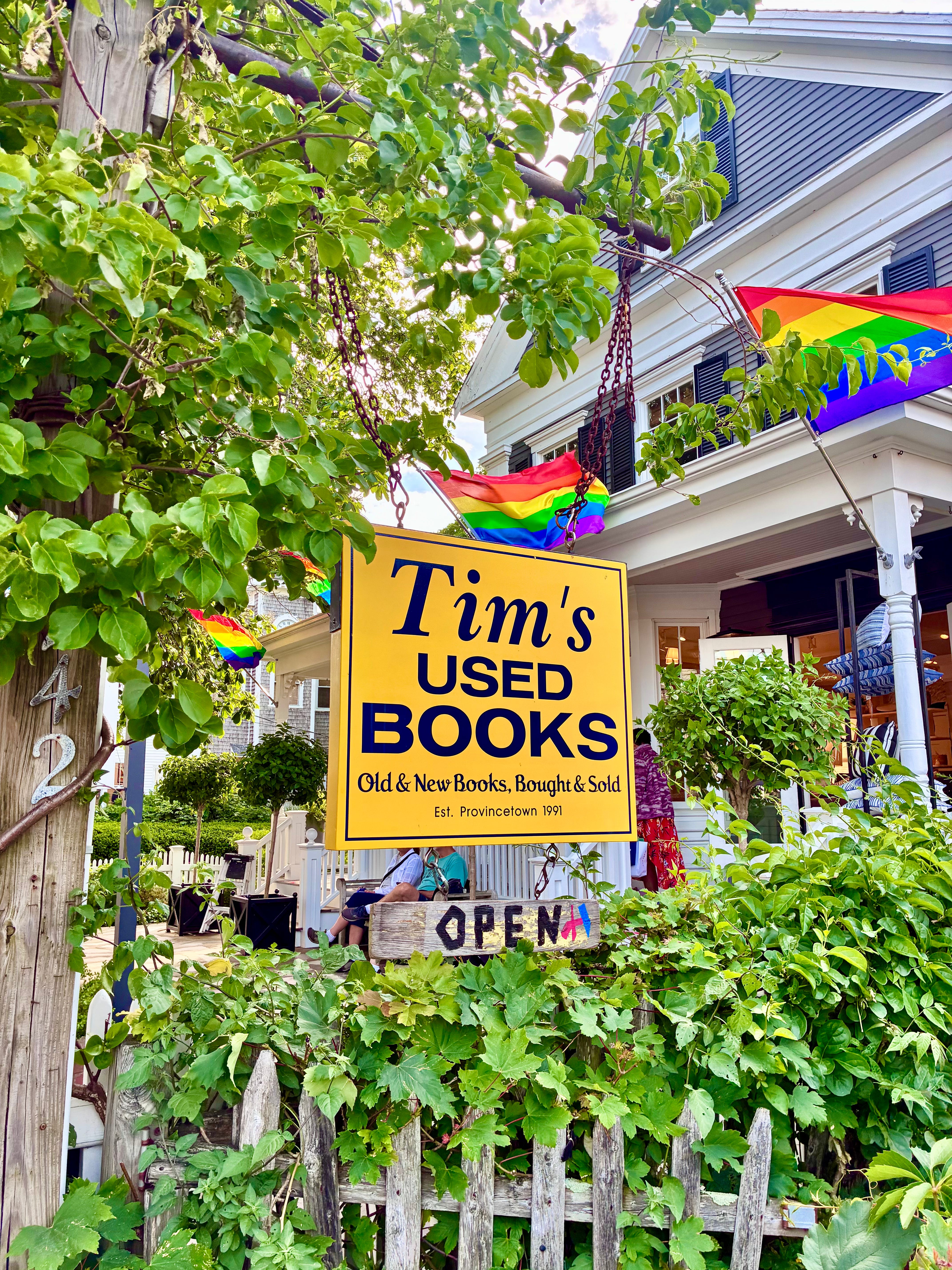
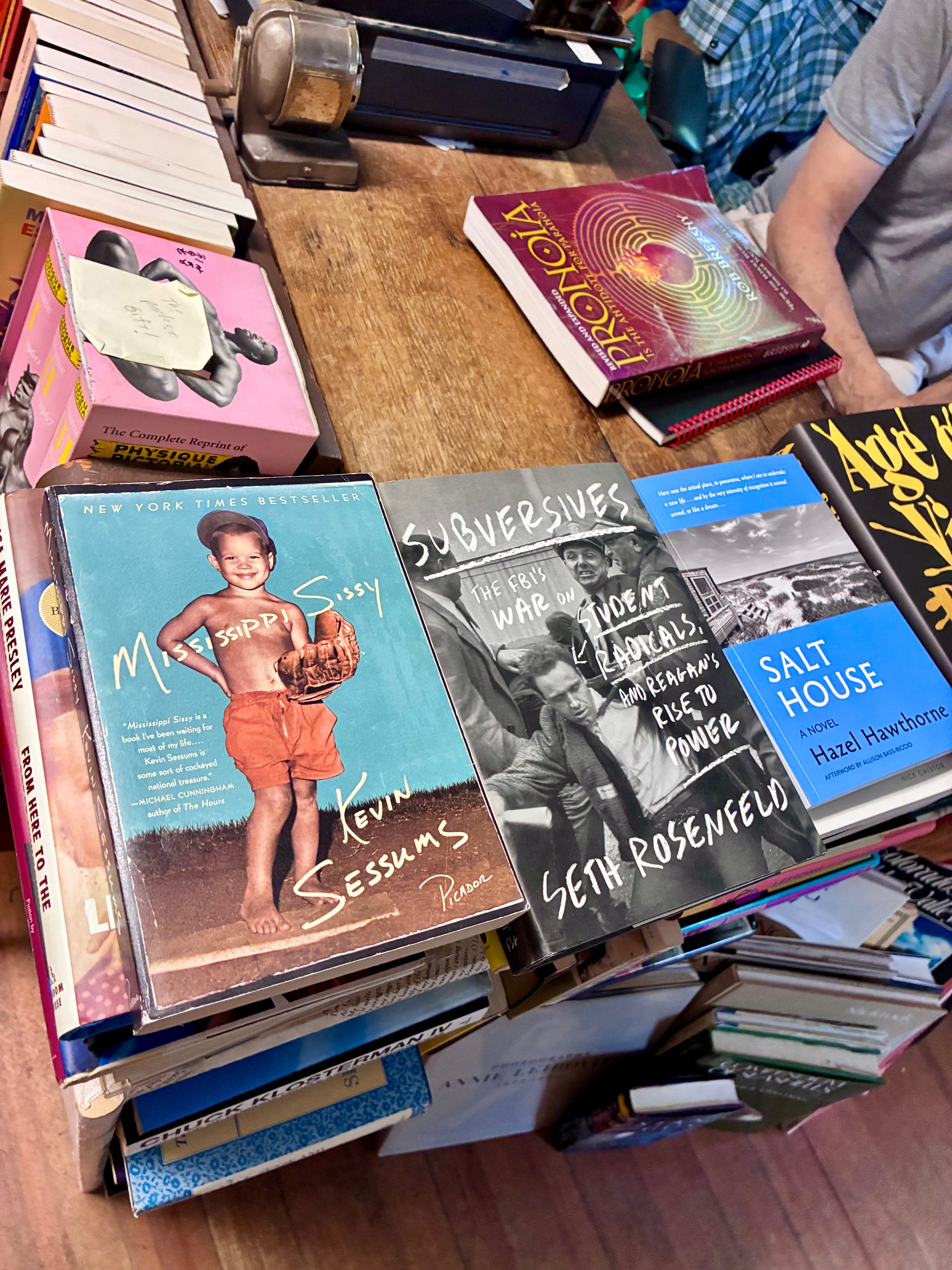
The first place I visited upon my arrival in town last Wednesday was Tim’s Used Books. I was stunned to walk in and see myself staring back at me. “Did you know I was here?” I asked Tim sitting at the desk. He told me he had no idea. “That book being there is just serendipitous,” he said.
Mary Oliver: “You can have the other words – chance, luck, coincidence, serendipity. I’ll take grace. I don’t know what it is exactly, but I’ll take it.”
The moment of seeing my book and its seeing me did feel more than just a serendipitous welcome to town. I didn’t know what it was I was feeling exactly, Mary, but it maybe - maybe - felt like what grace feels like when whatever that is arrives from wherever such a thing as that does so. It sure did feel as if a signal were being sent that I am still walking the pilgrim’s path I am supposed to be walking here where those folks we’ve come to call pilgrims indeed landed in November of 1620 at this end of the earth that did not end but began anew for them before they decided to reboard the Mayflower and sail down the shore a bit to Plymouth where they then set up their permanent outpost. But Provincetown was where they washed ashore trying to find a place to belong.
5.
Michael Cunningham’s quote there on the cover of my first memoir reminds me that he’s going to have an event at another great bookstore in town, Jeff Peters’s East End Books, on July 25th at 6 p.m. It’s for his new book, Unsayable, a meditative memoir about being a writer which is itself about realising that each place you thought of as an ending is really about setting out anew. Michael also claims in the book that there are no real qualifications for being a novelist but a candidate “should possess an unusually acute sense of mortality, which should not extinguish their availability to pleasure or beauty.”
Since my last time in Ptown, as I’ve stated, I have entered my 70s, or my eighth decade. When I turned 70 in March, I felt my already acute sense of morality deepen. My availability to pleasure hasn’t quite been extinguished yet but the pleasure I have experienced here in this town over the years has been complicated and heightened and sometimes even hurtful. There is a bittersweetness that buttresses the memories of it. The beauty though - oh, the beauty - still avails itself to me and I to it. There is a pleasure to that I feel differently now in my body where whatever it is that is a soul takes up the sensual space once cornered by the carnal.
Michael writes in Unsayable about a moment when he was a boy of about five or six bouncing a ball in the fall and realising, “I am a boy bouncing a ball on an afternoon in November.” He claims he remembers this moment “as vividly as I remember anything else that’s occurred throughout my life.”
I think he’s describing being mindful. Maybe that too is an arrival of grace. You can’t conjure it. But it can conjure you. It was the moment he became a writer. It is each moment we do, we who write. We reboard it, that moment, to set forth anew.
5.
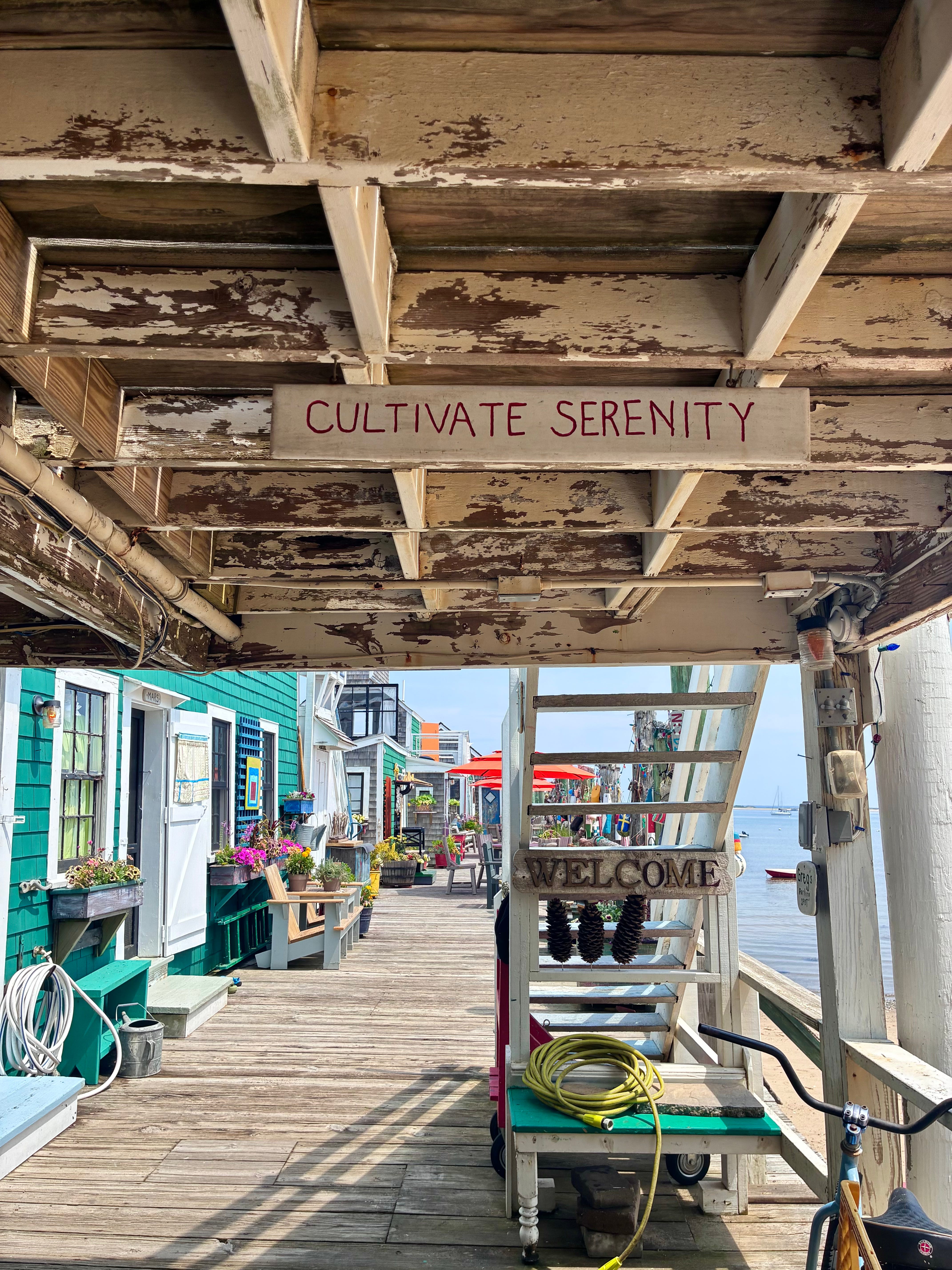
I visited Captain Jack’s Wharf on Thursday.
6.
“Instructions for living a life:
Pay attention.
Be astonished.
Tell about it.”
-Mary Oliver, from“Sometimes”
7.
I am a man writing a column on an afternoon in June.
8.
Everything connects.
9.
Onward …
*I didn’t put the last half of this week’s Pilgrim’s Progress gallery and captions behind a paywall. I’ll return to that next week. But if you enjoy reading these columns, please consider joining our Paid Subscriber Community for only $5 a month or $50 a year. It means a lot. Thanks.
Big beautiful world.
Soaking up the culture!