
PILGRIM'S PROGRESS: 7/30/26
A GALLERY OF MY LIFE IN TANGIER

1.
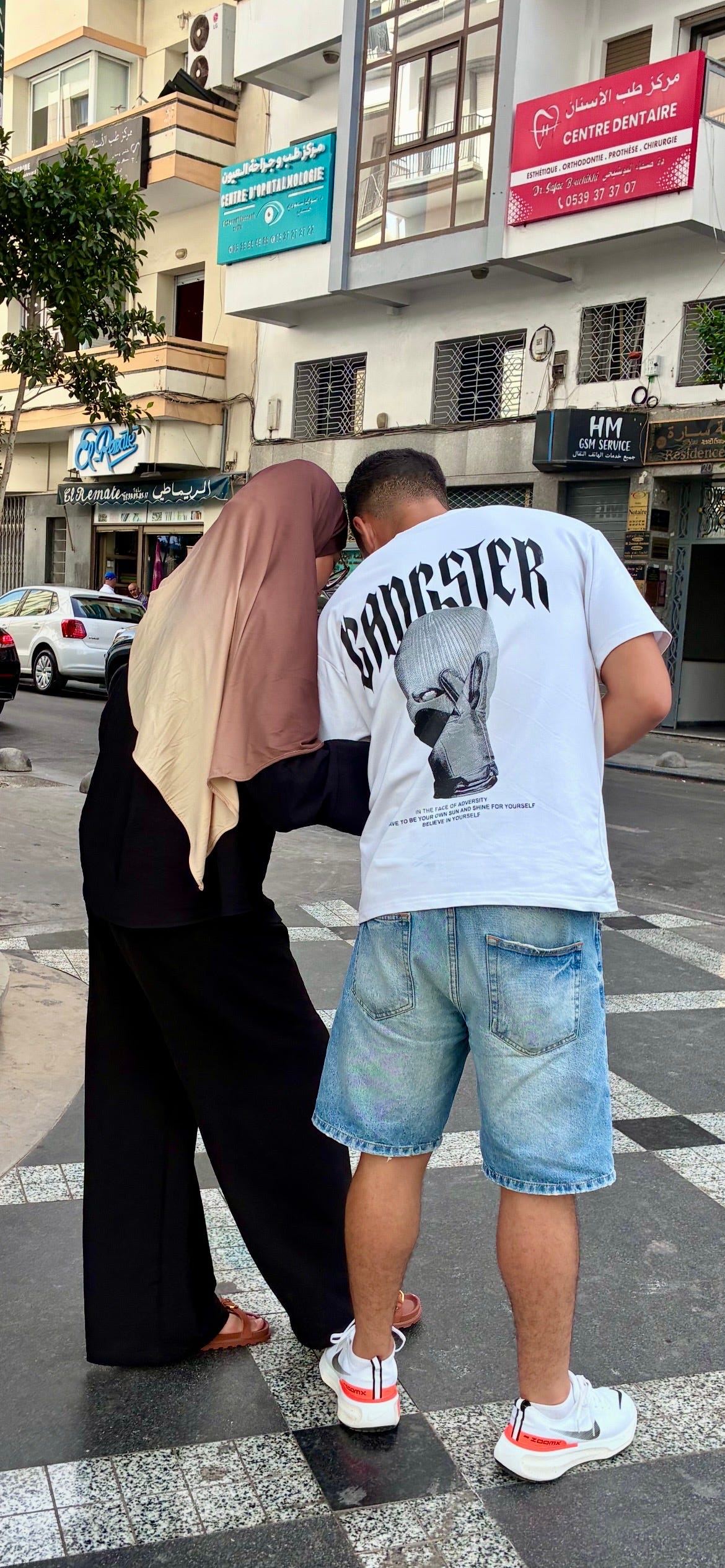
I was heading to see my dentist (not one of the ones in these two offices in this photo above) when I crossed the street to get some cash from a bank machine since my dentist only accepts cash and her assistant/bookkeeper pencils the amount you give her into a ledger much like my maternal grandfather must have kept in the 1940s when he owned the general store in a segregated small cotton mill town in Mississippi where both my mother and father were born and raised. I am now a pilgrim who is always aborning, always attempting to rise above that southern station by continuing to raise myself in the wider world even if, at the age of 70, I am no longer seeking wealth but only a welcome that won’t wilt away like magnolias in a shaded mason jar next to some sweet iced tea in a sweating tumbler of it atop a kitchen table or the mint in a different kind of sweetened tea, hot and held just so, they take to in these sidewalk-cafe-table parts which is sipped by a shady character with a one-eyed squint under a dusty awning in the Petit Socco by whom I stroll most mornings - he strangely reminds me of someone I can’t quite place - when I walk through the Socco to get to where I’m going.
I take such a route because I am living right around a corner from the pulsing, peopled heart of Tangier’s Petit Socco in this can’t-quite-place place, this something like a city in Morocco, a Muslim kingdom that Africa itself wears as its crown. Now in my third annual months-long residency here I have come to think of Tangier as tantamount to a city without really being such a thing, unless that is what you want it to be. Because in its port-town bones which it’s always used structurally to posture, it can manifest in any manner that is needed by those who inhabit it, so many of those bones broken then patched up then broken yet again over the centuries it has sat perched here on its rocky bluffs overlooking the water where we who are broken are taken in by its brokenness, its ability perpetually to be on the mend.
There will always be an essence of espionage about this dogged, cat-weary town where spies once set up shop and Matisse stripped the light down to its own essence then made way for Francis Bacon to muss it up again while visiting his lover Peter Lacy who lived here. That’s who, come to think of it, the squinting one-eyed Socco tea-sipper looks like: Bacon’s Pope which he finished painting here in 1958. But it’s the transgressive writers who snaked about only slightly detected like a few florid sentences sneaked into the flow of a potboiler’s blunt drive or a column’s inability to come to terms with curt, with whom I identify as I fling some floridity about and try my damnedest to be transgressive without feeling damned. It’s alas a lonelier endeavour than it was when Bowles and Burroughs and that lot were lurking around these same corners in the Petit Socco and looking for ways to define longing as desire and to divine the dare that deviancy kept whispering to them from the shadows. They were not certain if those shadows were part of the Socco’s darkness or their own as they took on the mantel of spies themselves but the kind who were sussing out who they were in the deepest reaches of those selves, their recesses, such surveillance resulting in an existence that could feel as if maybe they had infiltrated the enemy and were living behind its lines before realising the lines they had crossed were their own.
Living can sometimes be a furtive business but writing seems always to be one, especially here in Tangier where I so oft espy my loneliness, the recesses of it, its reaches. I entered it into my own ledger the other day as “solitary” which feels right but is finally a fudge that must be confessed in the context of such a Pope having been painted here. “I always think of myself not so much as a painter,” Bacon pushed back, “but as a medium for accident and chance.” Tangier is that, too. Always has been. But not the loneliness I can feel here. It is not accidental nor is it something I have come upon by chance. Tangier is its latest setting, not its cause. Loneliness is the company I have come again to keep. It whispers its own dare from these crowded streets where the light and the heat are shoved about then shoved together along with the shopkeepers who shout their entreaties and the beggars who bank on trust and the sandal-wearing women whose feet won’t strut, can’t. An accompanied loneliness is but a paltry part of the cauldron here, the tagine. And yet: my tell.
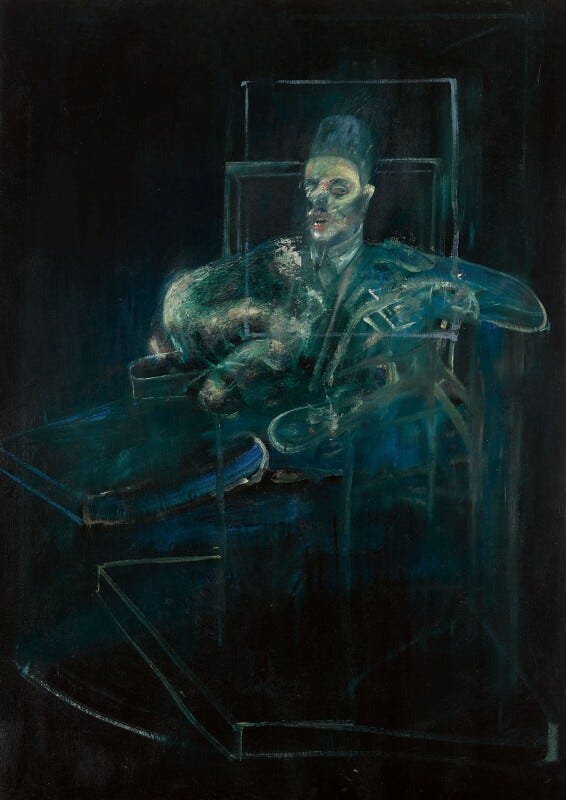
(Above: Pope by Francis Bacon, circa 1958. Executed in Tangier, Morocco. Oil on canvas. 78 1/8 x 56 in / 198.5 x 142. cm)
Tangier is tethered to duality, subtext, subterfuge, with the this-but-that which infuses it, underlies it all. When I crossed the street the other day to get that cash, I spotted the couple in the opening photograph. They embodied the duality of this ancient place threaded with tradition and throbbing with mosques yet always attempting to outfit itself in either modernity or an acceptance of it. Even the couple’s checking a mapping app on a cellphone mirrored not only how such opposing forces navigate each other’s company while together inhabiting the same streets and neighbourhoods but also how Tangier itself, such a tangible presence, has always had to navigate around those who live here, the natives and the newly arrived, an amalgam that doesn’t quite mesh but wouldn’t mind being woven together if it, you know, happened on its own. That’s what looms: the mindful indifference that can so easily meld into the watchful, the one-eyed squint as one passes by or passes through. A thread is pulled. The mosques begin their call to prayer, their throb. A photo is taken of such a couple trying to find their way in the midst of you, such as you are, trying to find yours.
2.
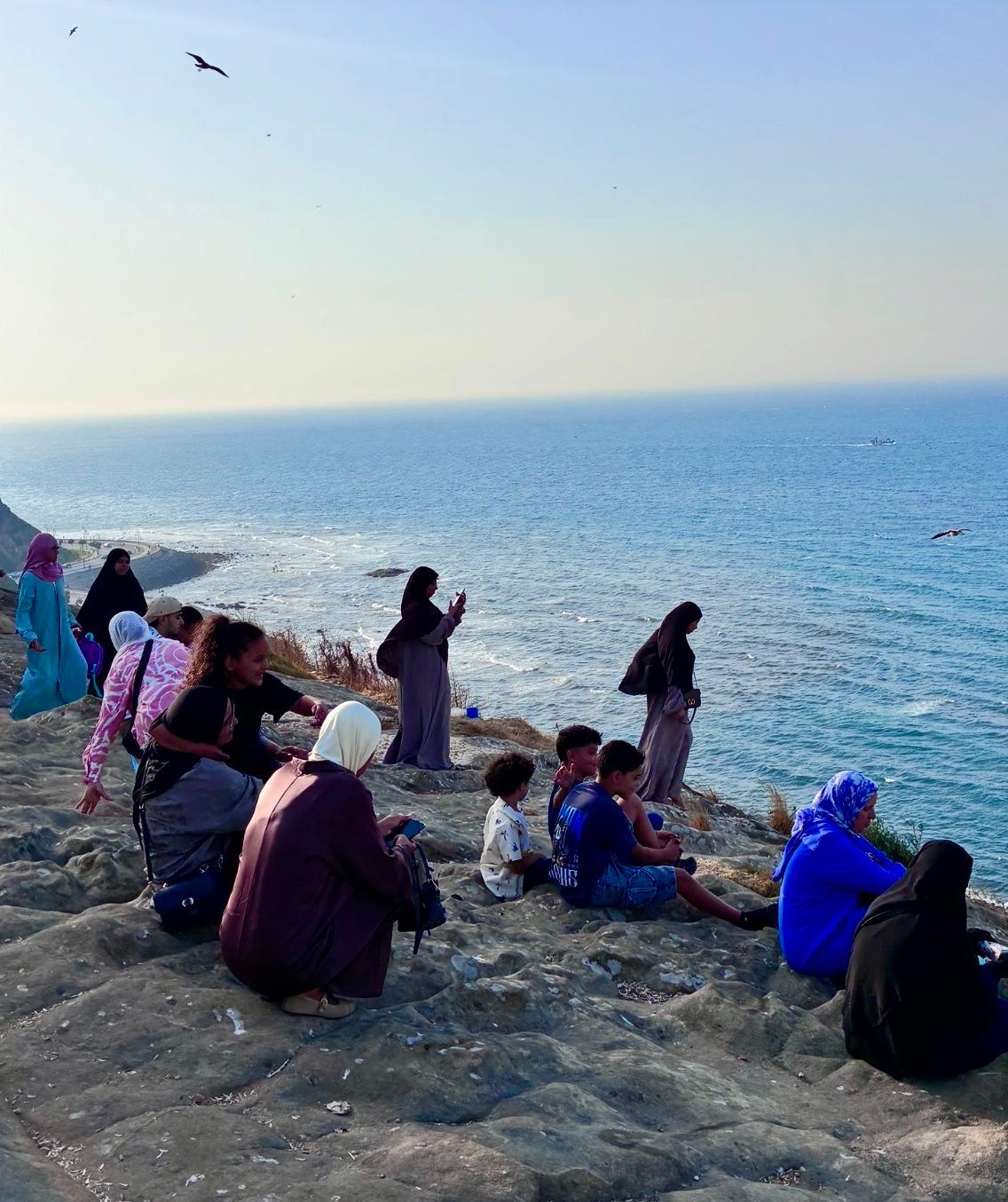
Another duality here are the two main beach areas and waterfronts. There is a wide white expanse of sand in front of the high-rises and fancy hotels and late-night clubs that make the Corniche look a lot like Miami or a Nice that’s not quite so naughty. I much prefer this promontory that the prominent here shun but those who aren’t sure don’t. In the evenings you can stroll down to it - it neighbours the touristy and legendary Cafe Hafa which I finally visited myself the other day - and sit with all these lovely families and stare too over at Spain and either ache silently to set sail there or whisper an “Alhamdulillah … ” in one’s Du’a that one has instead this point of view to, yes, spy such a faraway place that is so very close, yet another this-but-that, a duality that even redefines what distance is by a denial of it.
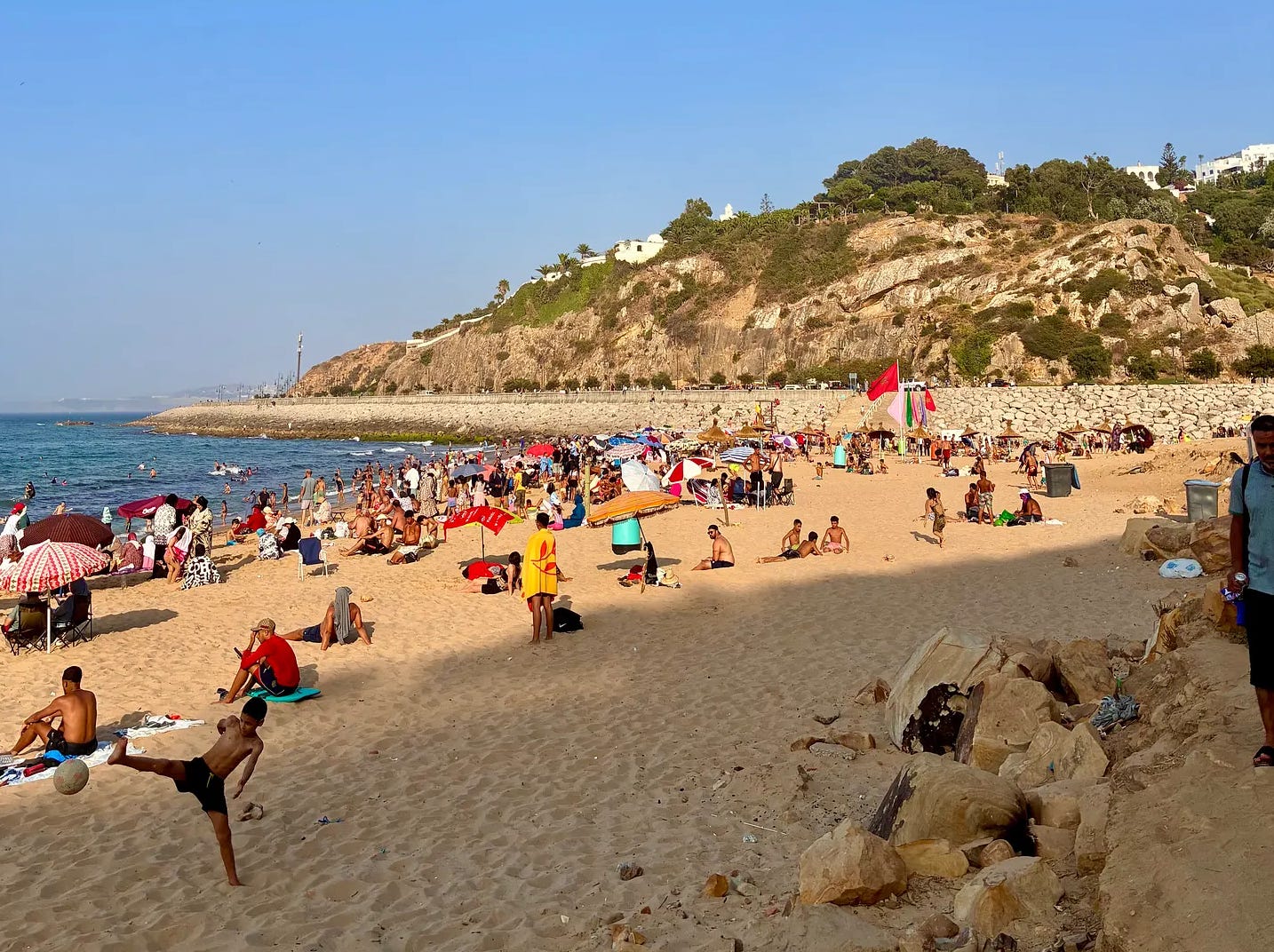
To the left around that curve of highway way down there below the promontory is Merkala Beach which is filled with locals. I took this photo the other evening around 7 p.m. and kept walking along a pathway cut into the foot of the mountain that overlooks it until I reached an outcrop of rocks where youths were yelling whatever the young yell at each other here before diving into such a sea then climbing out of it and back up onto these rocks that resemble gigantic fossils because maybe that’s what they are. I felt rather fossil-like myself because maybe that’s what I am, too, at this point in my life even though I still dive into each new day. My pilgrimage is built on stepping off such a contemplative precipice and into what awaits that catches not my fancy but all that no longer is.
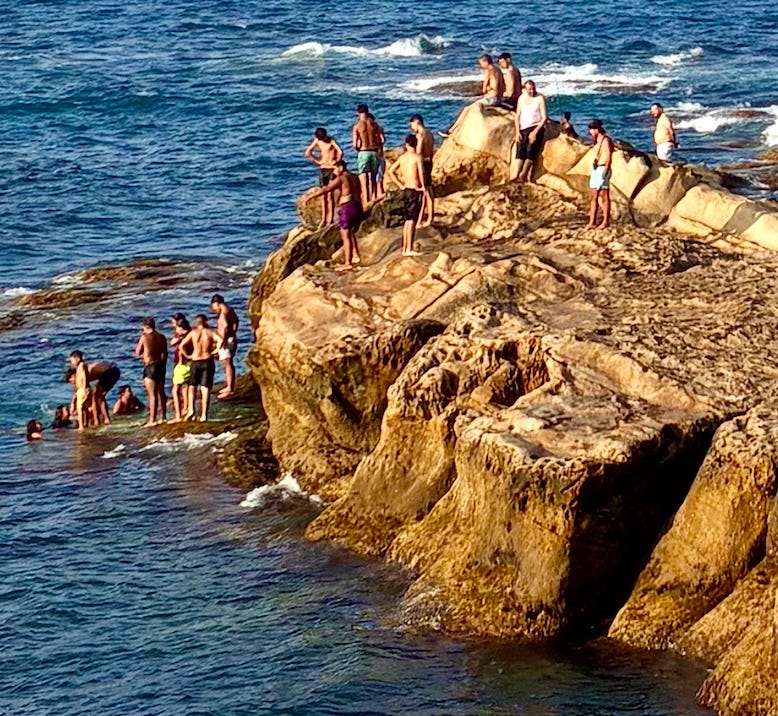
During the 40 or so minutes it took to walk out there to these rocks, I certainly stood out. My loneliness and I didn’t feel threatened so much as experiencing an even deeper dive into our difference. We became the watchful ones, the old man with the one-eyed squint and his curious companion staring past the setting sun into the freedom that all young people feel in their youth, a place almost geographic in its boundless lack of boundaries.
I texted a friend that photo of the youths having dived and getting ready to do it again. I wrote to him that I was feeling a bit like Sebastian during my saunter out there.
In Tennessee Williams’s Suddenly Last Summer, a play he wrote in the same year that Bacon painted that Pope, Sebastian’s mother says of him and all the metaphors from which Williams made him, “You see, strictly speaking, his life was his occupation. Sebastian was a poet. That’s what I meant when I said his life was his work because the work of a poet is the life of a poet and - vice versa, the life of a poet is the work of a poet, I mean you can’t separate them, I mean … well, for instance, a salesman’s work is one thing and his life is another … or can be … But a poet’s life is his work and his work is his life.”
But as I walked back to my place, I thought of another line from another Tennessee Williams play, Camino Real, which he wrote while living for a spell in Tangier and sitting under an awning in the Petit Socco: “When so many are lonely as seem to be lonely, it would be inexcusably selfish to be lonely alone.”
3.
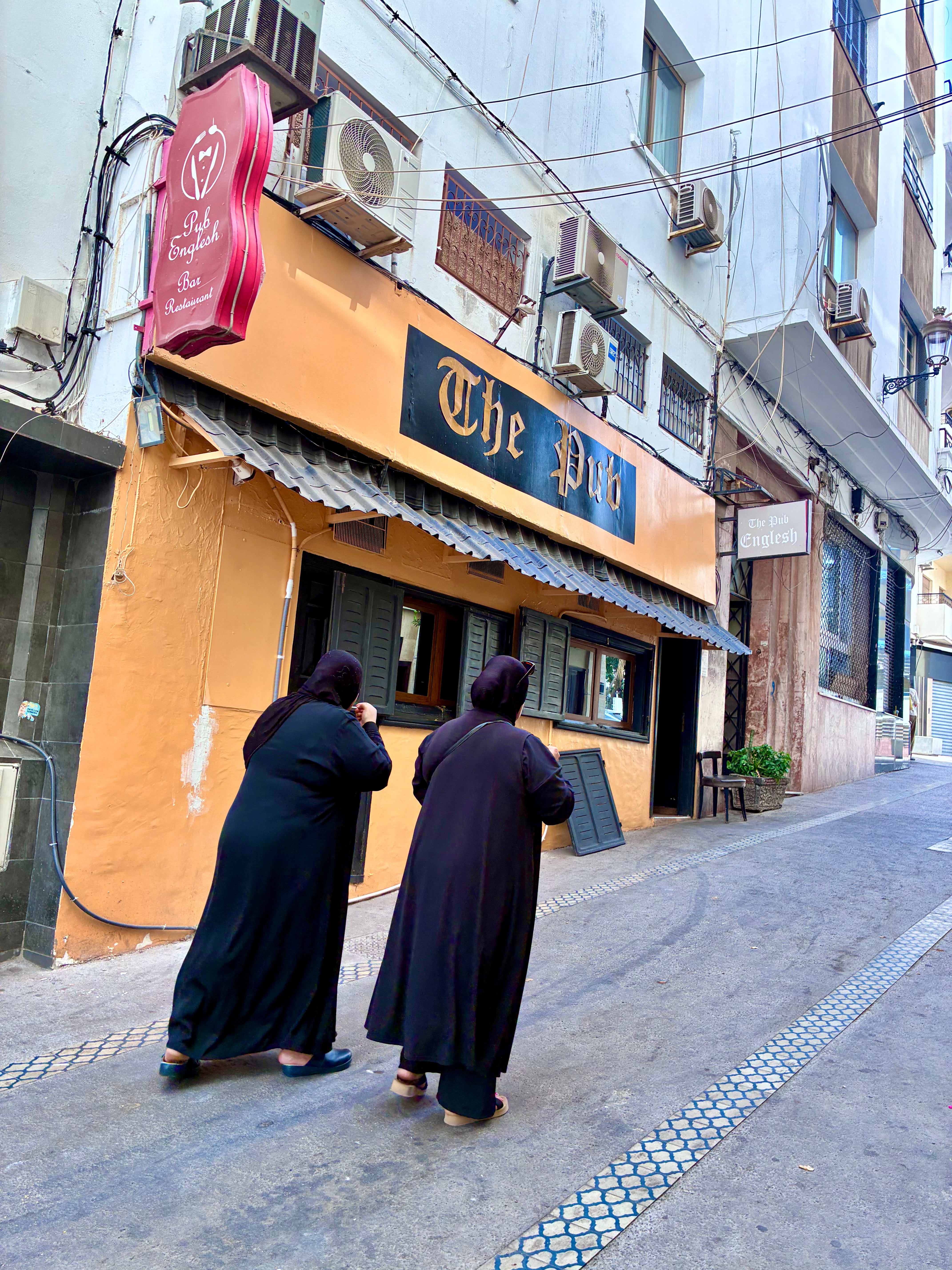
An “Englesh” pub I happened upon along with these ladies loving their ice creams. It made me long for London but didn’t. Yep: duality.
4.
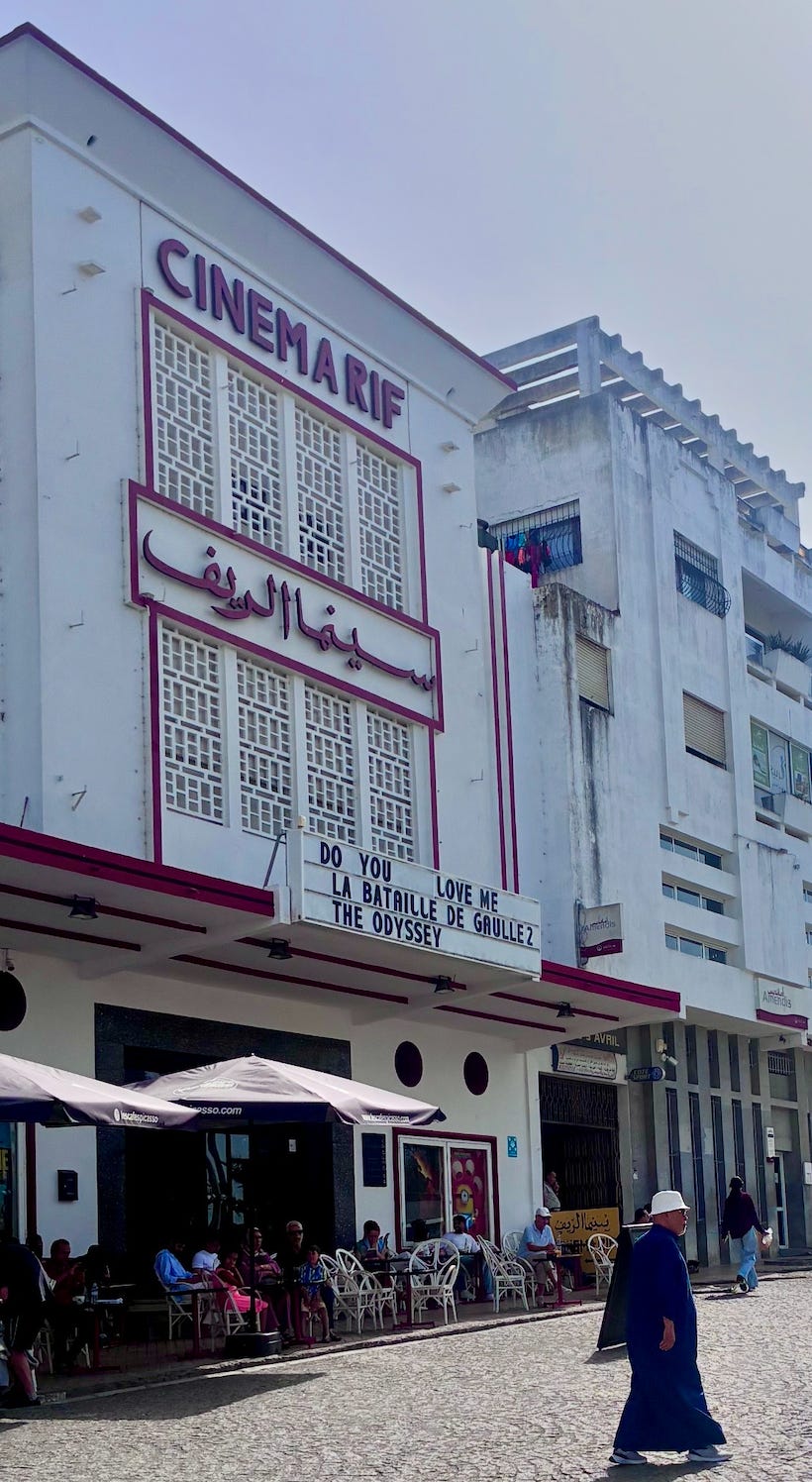
I saw The Odyssey here the other day. It felt like watching Maria Callas singing The Beach Boys catalogue. I might write more about it in my LETTER FROM TANGIER next week along with my thoughts about Disclosure Day and another film I saw here that I liked more than either of those two.
[TO SEE A FEW MORE IMAGES AND READ ABOUT THEM IN THIS WEEK’S GALLERY - INCLUDING THE TWO CATS I’M CAT-SITTING UNTIL SEPTEMBER NAMED SNOW AND MOTHER OF SNOW - JOIN OUR PAID SUBSCRIBER COMMUNITY FOR ONLY $5 A MONTH OR $50 A YEAR. AFTER 40 YEARS AS A WRITER, THIS IS NOW MY MAIN JOB. I LOVE WRITING THIS COLUMN AND I HOPE YOU LIKE READING IT. YOUR SUBSCRIPTIONS MEAN A LOT. THANK YOU.]