

1.
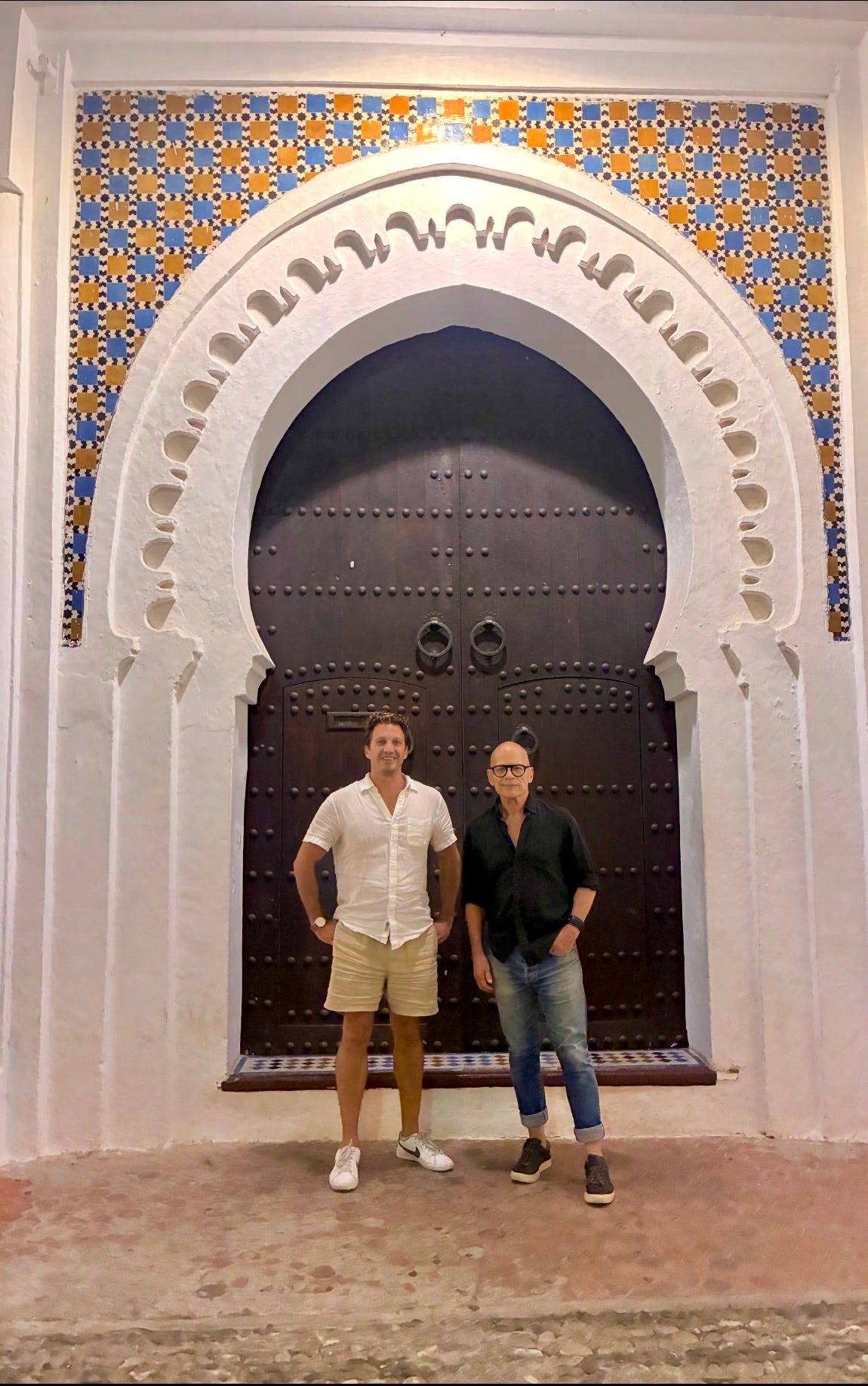
“The Angel,” above, arrived this week and “He Who is More Deva Than Diva,” below, departed.
In my LETTER FROM TANGIER back on July 11th, I wrote in its penultimate section about how I had written about “The Angel” in the first chapter of my second memoir, I Left It on the Mountain. In that July LETTER, I told you that “The Angel” was moving here the next month to work at a school in Tangier.
The next month has now arrived, and so has he. I cooked him a welcome-to-Tangier dinner on Monday night and then walked him home giving him his first tour of the medina and kasbah as I took him on a secretly lovely route to the place where he’s staying until his permanent place is ready. We stopped to pose at the doors here of the Kasbah Palace which was built in the early 1800s for the Sultan on his visits to Tangier. Around 1922 it became the Kasbah Museum for Mediterranean Cultures.
Below, I was saying goodbye last Friday to my buddy, Johnny Rozsa, who was heading home to New York City. He’s been here in Tangier for almost two months staying with Veere Greeney at Veer’e glorious mountain estate, Gazebo. They’ve been friends since they were whippersnappers whipping what was left of swinging 1960s London into shape back in the 1970s, or a shape more aesthetically pleasing to their exacting eyes. Rozsa had the premiere vintage clothing emporium for a time back then in London’s Covent Garden before turning to photography and now to painting. Greeney, dropping out of college in his native New Zealand, set out to travel the “hippie trail” of Southeast Asia and Nepal and India and Afghanistan and, yes, Morocco, but veered off once he finally arrived in London himself into manifesting his manifold talents into a design firm and became one of the world’s most revered and successful practitioner of the trade which he has furnished with a singular artistry. Johnny, also an expat, was born and brought up south of here in Nairobi where his Jewish Hungarian-Czech parents settled to escape the Nazis. The grandmother who ultimately helped to raise him, Selma Leibschutz, was, in fact, a survivor of Auschwitz and Terezin. In the 1960s, he boarded and studied at the Repton School in England. His portraits of celebrities are themselves celebrated and have appeared in Vogue, The New York Times and i-D Magazine, as well as in the collection of The National Portrait Gallery in London. One of his subjects, Tina Turner, nudged him through their friendship to become interested in Nichiren Buddhism which is now a central tenet of his life; he too is an artist who is a practitioner. His work can be seen in Tangier at Gallery Kent.
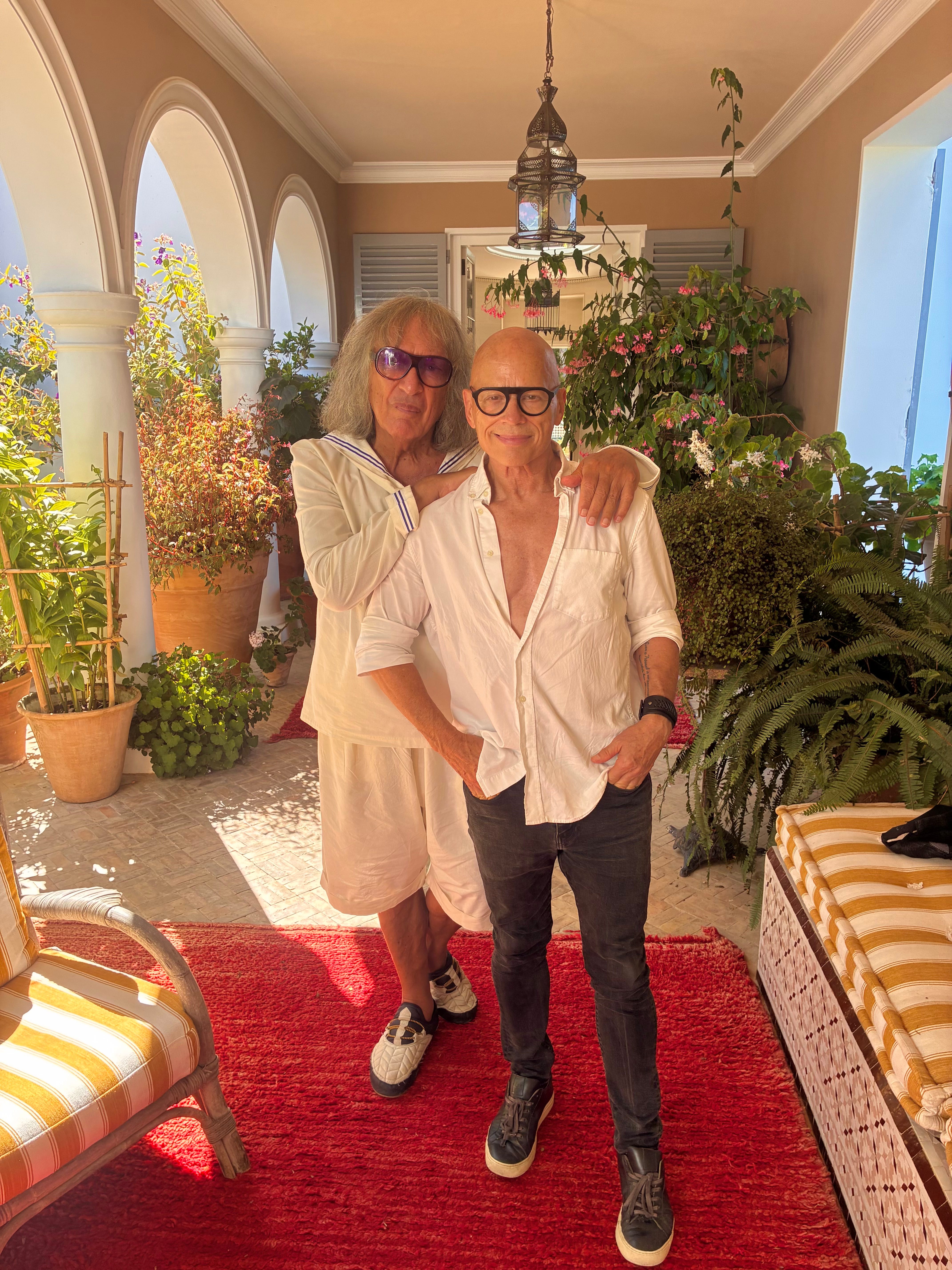
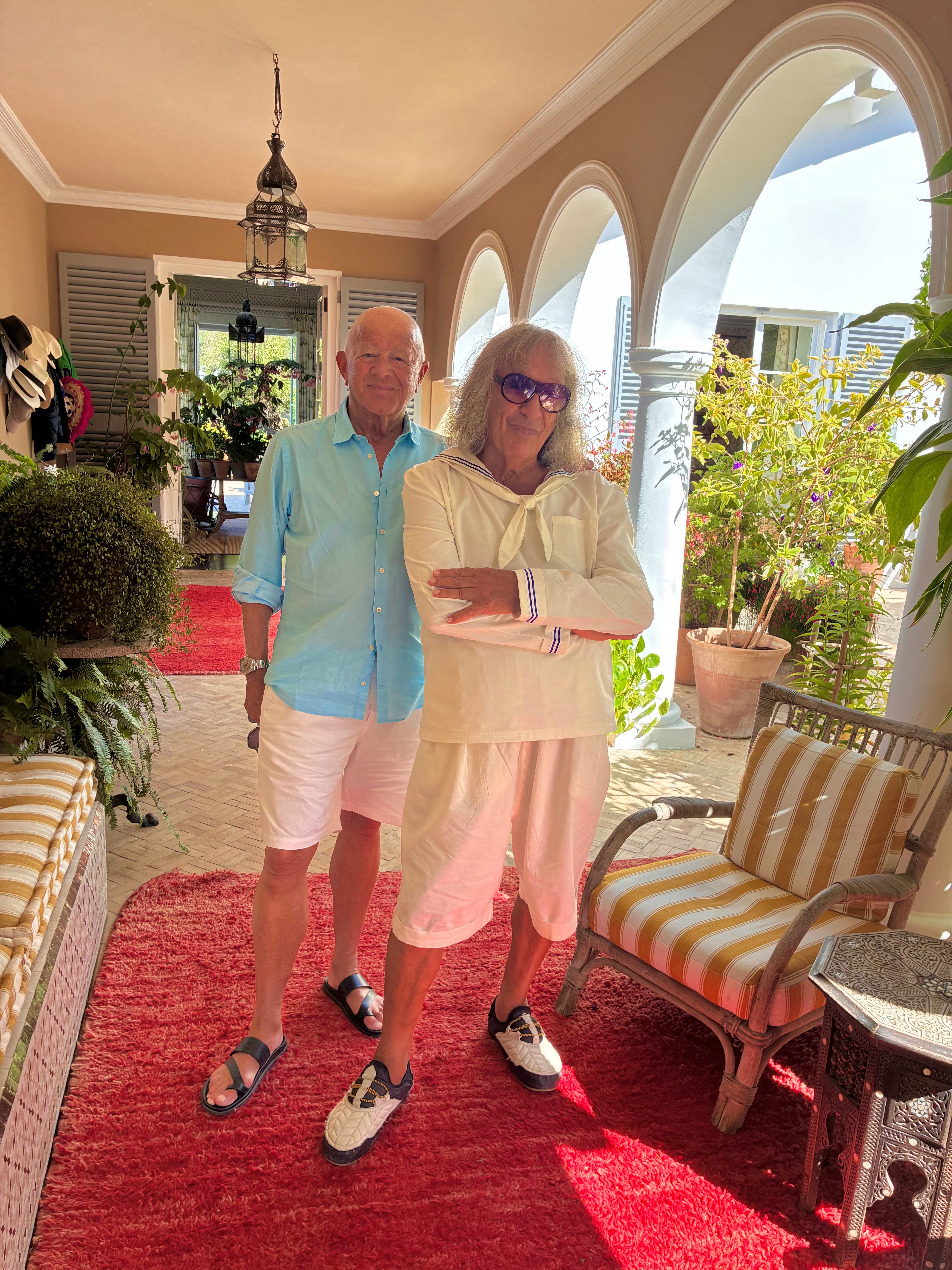
That’s Veere with Johnny above. Veere had to depart as well for some business in the The States and then in London this past week. So they missed viewing the eclipse on Wednesday night from Gazebo’s remarkable perch over the Strait of Gibraltar. “My home – Gazebo in Tangier – I think is the acme of my creative powers and the culmination of a life’s work in the business of understanding, knowing and making beauty,” Veere wrote in his book, Seeking Beauty. “At dawn, at dusk, in the brilliant midday glare of high summer, and in the cooler months of winter, my garden at Gazebo never fails to amaze me. Here is a realm of perfect geometry, subtle detail, flamboyant flourishes of beauty, and sensory delight.”
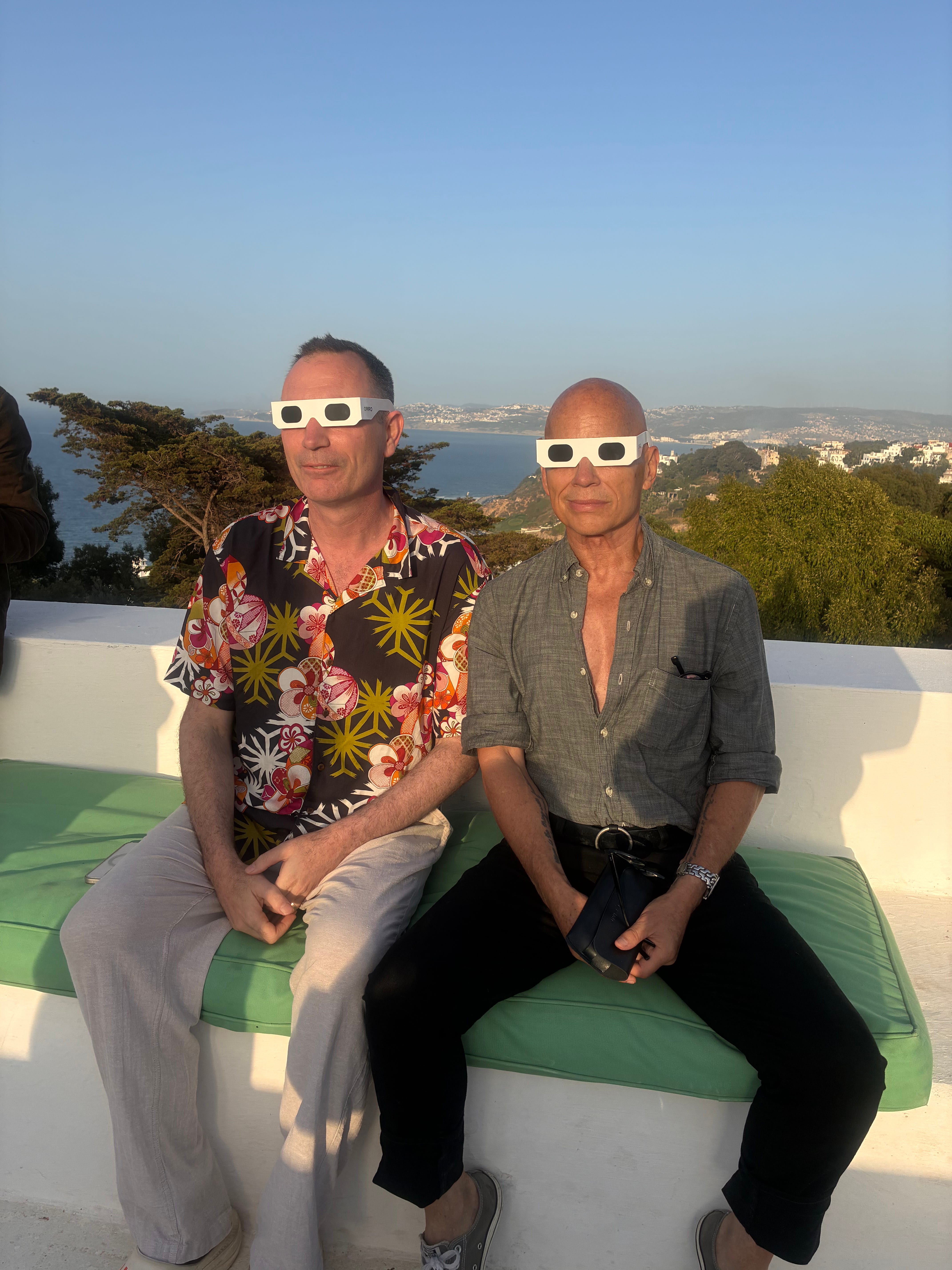
I witnessed the eclipse above with Tom Sykes who invited me to view it with his family and friends and him at the deeply lived-in enchantment of Le Foolk and its Chapelle, the two-home Tangier residence and grounds of the late Christopher Gibbs, another practitioner of design - he dealt antiques too, fashioned menswear - who swung artistically about in 1960s London giving it some needed swag and whose hedonism headed here to North Africa to calm down a bit, a collector who collected himself atop Tangier’s mountaintop where such homes are themselves grounded - Gazebo neighbours it as does Villa Josephine and others - like grand ladies of a certain bohemian ilk gathering their flowing skirts about themselves while behind their gates skirting tradition altogether, their transgressive natures, wily, idyllic, rooted in the once-wild , having become, after generations, embedded in the overgrown, lusher landscape nature allows before it is manicured by manners and those who labour over such things. The house once belonged to James and Marguerite McBey, so the place already had its own artistic bones and bent about it before Gibbs, who died here in Tangier at the age of 79 in 2018 after having moved full-time to Le Foolk a dozen years earlier and is buried at St. Andrews Church Tangiers, filled it all with gobs of marvellous stuff. There is a divine perfectly placed dishevelment that includes shelves of books and oddly shaped embroidered and hand-painted sofas and mementoes and camp and whatever struck his fancy that wasn’t finally all that fancy. It’s an amalgam of a life being assembled, not a semblance of one designed to be seen. It’s there to be examined, nosed about, acknowledged. There are narratives nestled all about nearby his own which itself still hovers among them all.
I was so grateful to Tom for inviting me over to view the eclipse and experience the place brimming with boho history. Check out Tom’s Substack column, The Royalist, one of the most successful on here, as well as his podcast of the same name produced by The Daily Beast. He’s one of the bad-boy good guys, a balance that takes talent and tenacity and even some of that kindness he showed to his other guests and friends and to me the other night. He’s also got a great family. I loved seeing him in father-mode.
Gibbs: “I'm not interested in creating a dazzling impression of richness. We can make do with surprisingly little in life … As life goes by, that's what I admire. Objects and people that are unmonkeyed with, that are themselves, not trying to be something else.”
2.
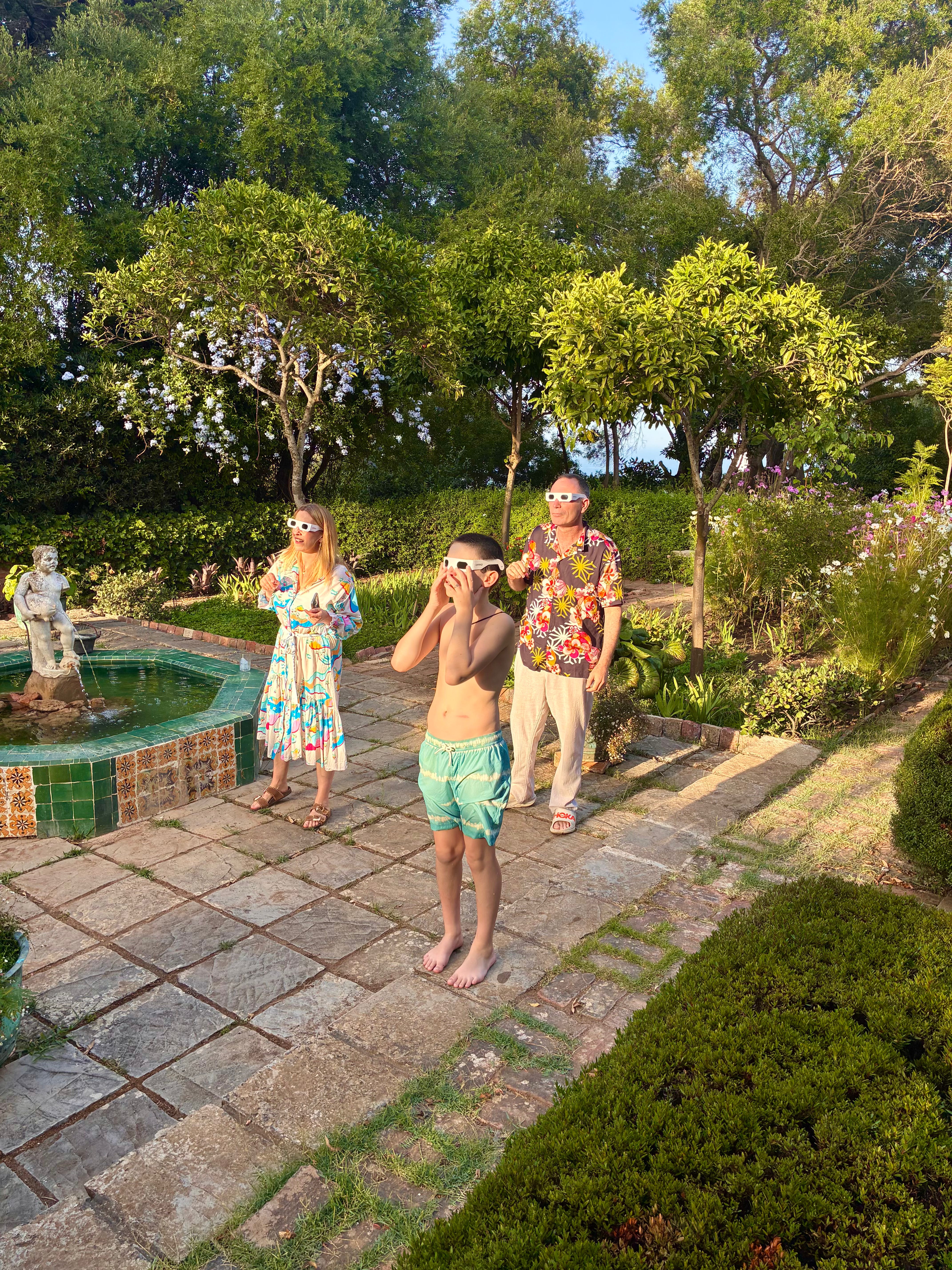
Above: My homage to photographer Tina Barney. Tom and his wife, the remarkable artist Sasha Sykes, and one of their children, Johnny, checking out the beginning of the eclipse at Le Foolk.
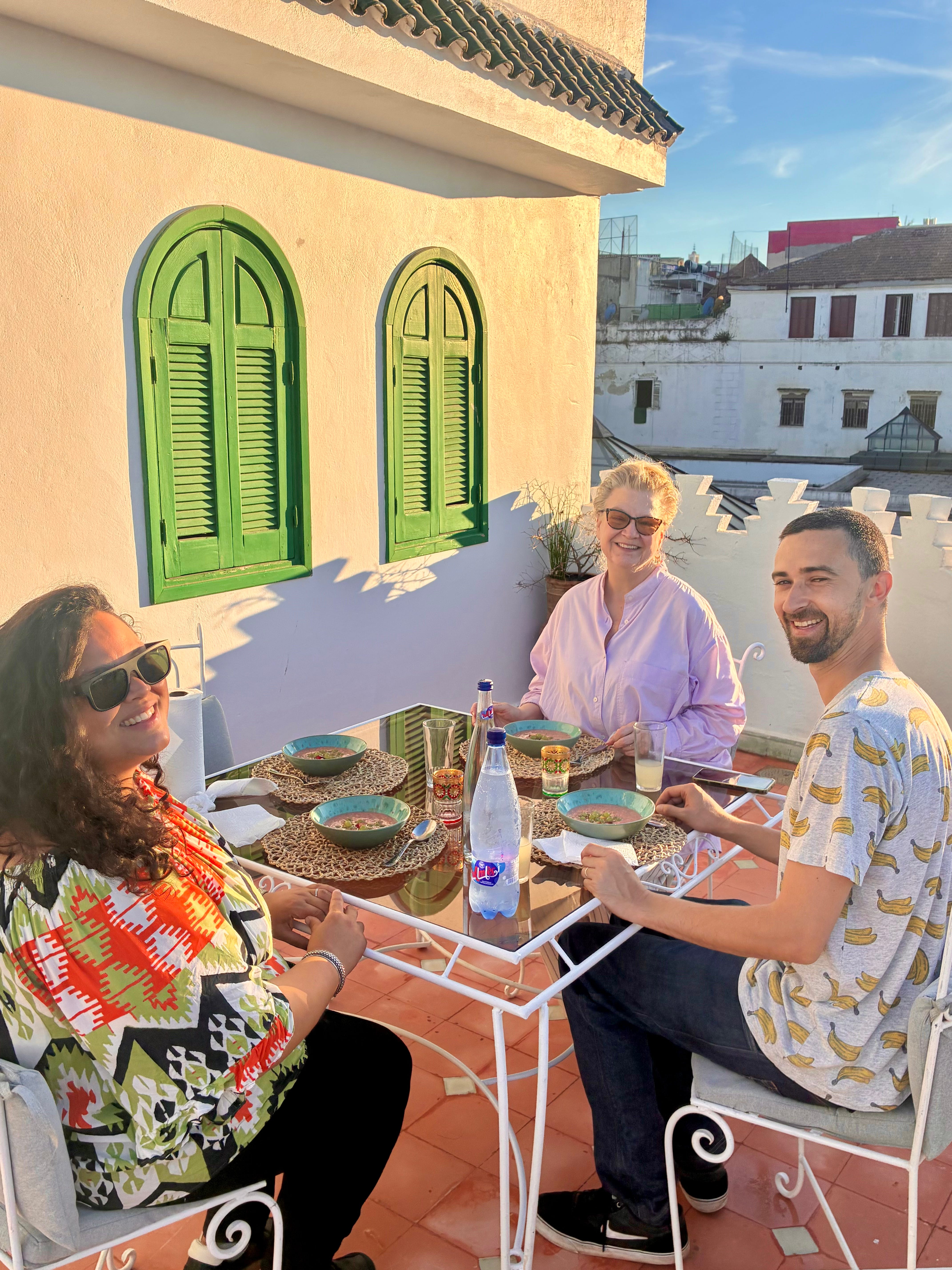
Below: I cooked dinner the other night and served it here on my terrace above the Petit Socco for Jane Stubbs, who heads up the library at the American Legation, and Yassine Rais El Fenni and his wife, Hanna Soussi Temli, who own the Kasbah Collective, one of the coolest boutiques in town. Yassine and Hanna were instrumental in helping me find the apartment so this was also a thank-you dinner for them. I adore them all.
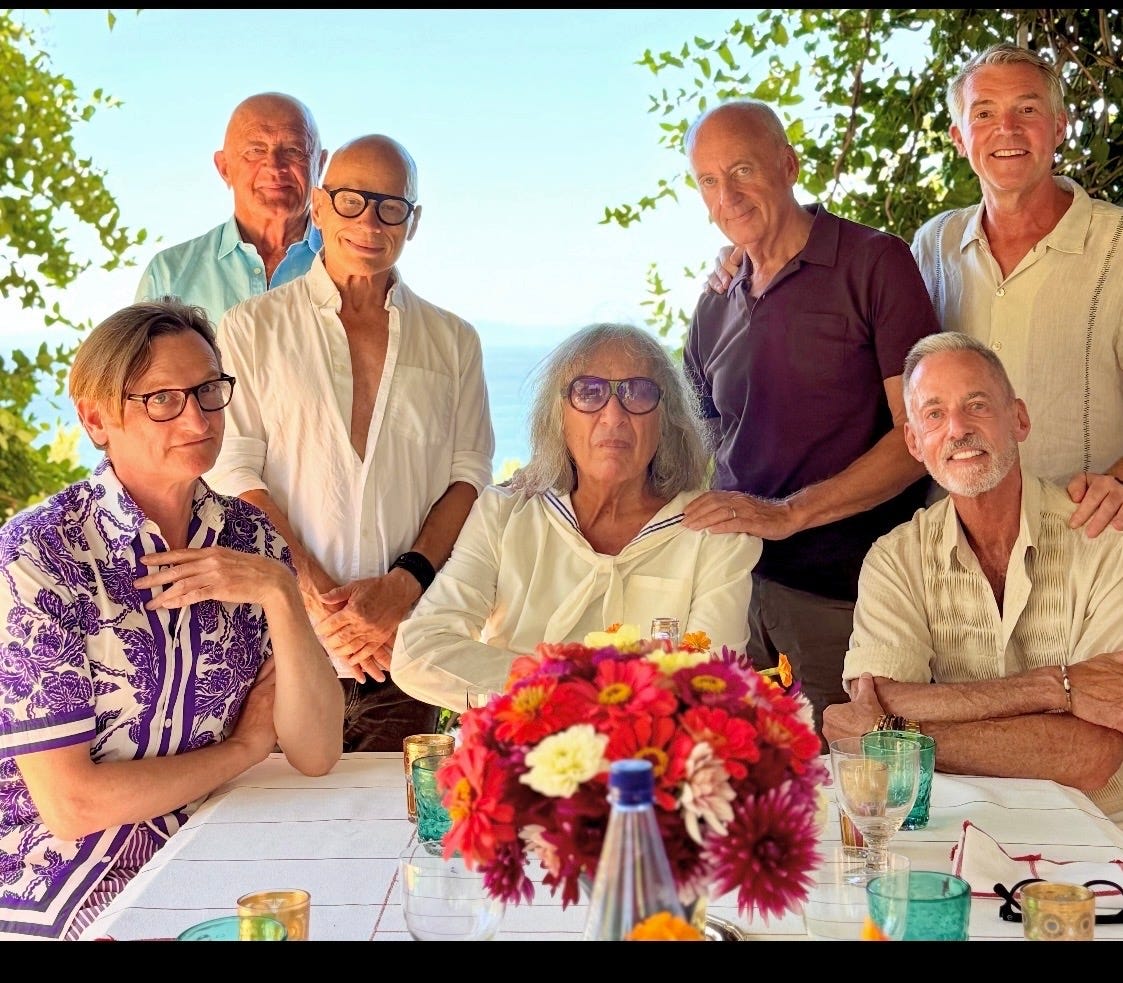
Below: It was Johnny’s 77th birthday last Friday and Veere gave him a lovely and delicious lunch at Gazebo. From left to right, Hamish Bowles, Veere, me, Johnny, Shaun Woodward, Luke Redgrave, and David Kleinberg.
3.
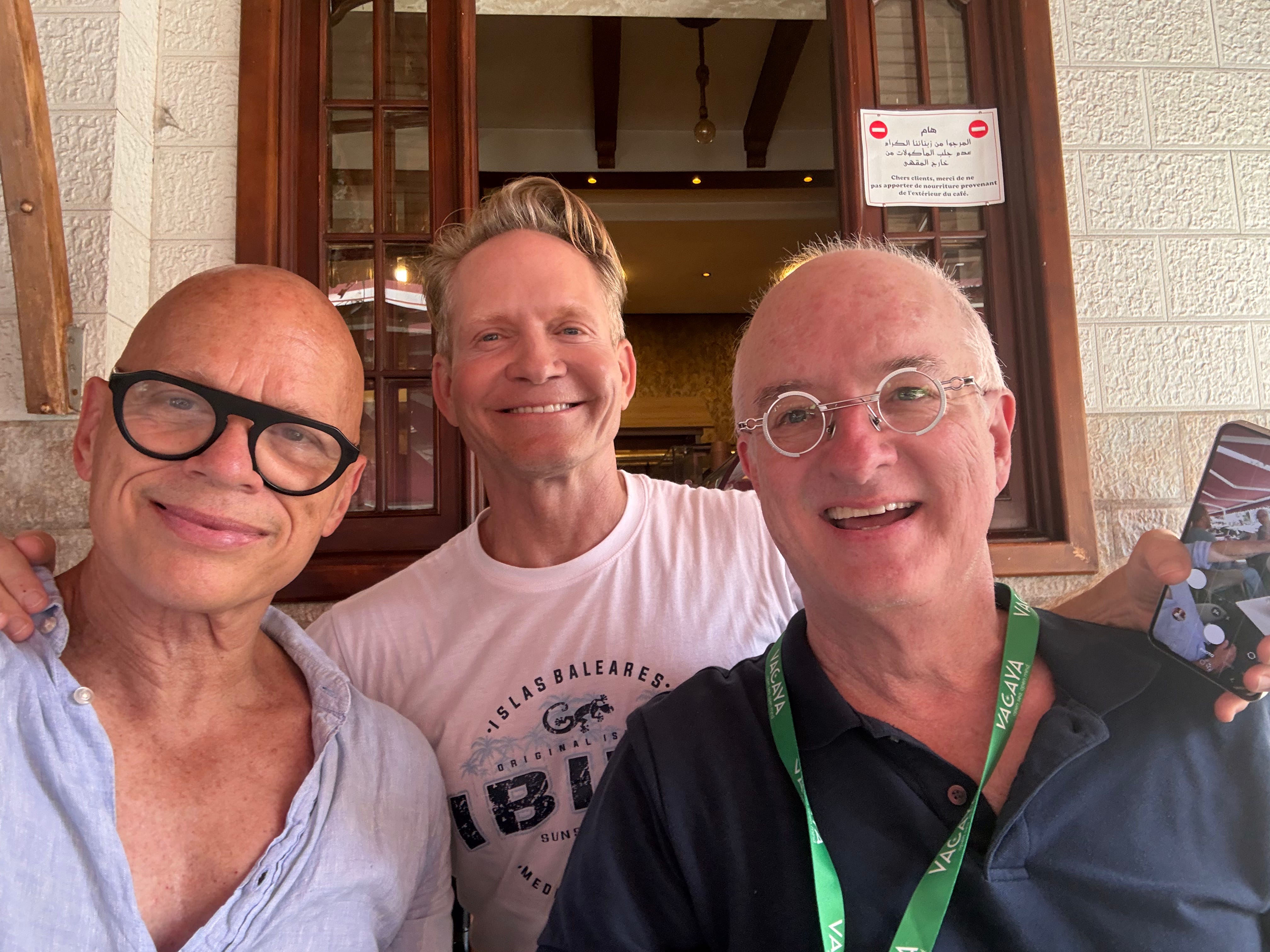
On Sunday, the VACAYA cruise ship full of LGBTQ passengers docked here in Tangier. Earlier in the summer other gay cruises were denied entries into Turkey and Egypt. So, thank you, Morocco, for welcoming this ship for the day. A couple of years ago, I met Paul J. Williams there on the right when he was sitting in the row in front of me at the Broadway production of Appropriate and had recognised me. We struck up a conversation and carried it over to social media once he got home to Dallas. His character Sister Helen Holy is part of the entertainment onboard.
I saw David Sexton, there in the middle, walking by us where we were having a coffee at Gran Café Central in the Petit Socco and called out his name. He’s the Production Manger for the ship’s many shows. David is from Miami and we met when I had a pied-à-terre there at the turn of the century.
I also called out Marti Cumming’s name when they walked by but I had to delete our photo because the image made this column too long for Substack’s standards. Marti is also a performer who serves as the ship’s cruise director. Last year, they were the Grand Marshal for the LGBTQ Pride Parade in NYC. And many years ago now they were part of a group of my people I met in Provincetown when I was at my lowest ebb who helped save my life and led me into the tenets of recovery. I am still that kind of practitioner even if I haven’t always been too artful about it.
But it is those tenets - to use the term in the way Auden used it in his poem “September 1, 1939” - which are my own “furniture of home.”
Everything connects.
Onward …
Having everything connect in far away Morocco proves your point.
Wonderful illuminated essay. Thank you for taking us with you.