
SPECIAL EDITION: 7/25/26
A CONVERSATION WITH KATHRYN GRODY

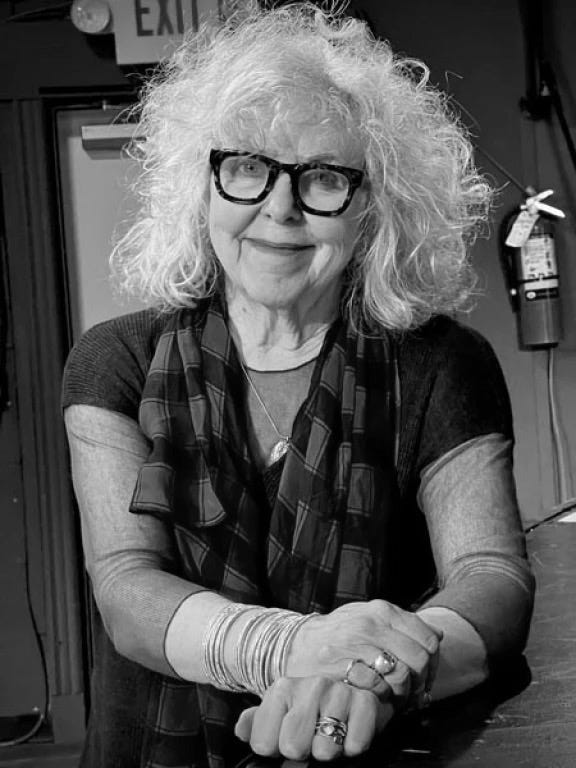
“The end is in the beginning and yet you go on.”
― Samuel Beckett, from Endgame
First I want to apologise to Kathryn. I saw her brilliant one-person show, The Unexpected 3rd, at New York Theatre Workshop when I was in New York last month. The Voice Memos recording app on my iPhone and I then had lunch with her so I could write a column about her but I am just now getting around to publishing it.
There are several reasons for that.
One of them is my late-life aversion to transcription that is part of the process of conjuring something like this. The act of transcribing can be drudgery. I have come to dread it. And yet, once I am ensconced in the aural cocoon of it, I can fall back into what my training after all these decades has taught me and still settle into the trance-like trudge that typing up a transcription demands. I only once, over thirty years ago when I was working on two or three stories at one time at Vanity Fair while concentrating too on my job back then as its Fanfair Editor and putting together that monthly section, allowed my own editor there to convince me to let a transcription service hand over what someone in its office had heard on a tape. I was appalled by the slapdash job that was done, the misunderstood passages, other important remembered ones left out, etc. I also realised that my hearing the conversation played back was an integral part of my process when getting to the next stage of writing a profile or mapping a Q & A from an interlocutory flow - the lapping to and fro, the lulls, the froth of laughter - since I never “conduct interviews” but instead engage in conversations.
I compare the way I write to composing - rhythms and sounds mean as much to me as meaning and expository posturing - so the chordal cordiality of a conversational mound of clay is the beginning of my musical sculpting when engaged in the genre that calls for such an approach. For all my love of run-on sentences because of the crescendos and diminuendos I can embed in them as they loop and lope and rope-a-dope brassily stringing readers along confusing them by how they - you - are able somehow to comprehend the mannered amalgam that’s maybe ending but then doesn’t before it finally does, it is also the cutting away at the clay of those conversations - the lessening - that fascinates me as I write in the negative space that is here along with the words you are reading. Reading is the activated space of the sculptural undertaking that writing is to me. I am grateful for your sharing in the shaping of it. Our different silences become somehow the same silence here in the sculpted sound of a sentence. There is more than incongruity to that. More than irony. There is alchemy. Writing is work. There is a dizzying exhaustion to it. That drudgery. But I keep coming back for the alchemic.
Another reason for the delay in getting this column done was the job I needed to honour in Provincetown which centred around the three onstage conversations I conducted there for the Provincetown Arts Society at its Mary Heaton Vorse House. That entailed a lot of rolling research and reading and preparation and focus during those three weeks last month.
Then there was my journey here to Tangier and the settling in on all the levels that takes when I’m arriving in another country located on another continent. This sort of settling in is more emotionally time-consuming than others might know who’ve never lived this kind of pilgrim’s life, one that involves different cultures that count on you inculcating yourself within them with some determined modicum of grace and discernment.
Determined grace and discernment were, in fact, the hallmarks of Kathryn Grody’s work onstage that night I saw her - so funny, so eloquent, so effortlessly elegant - in The Unexpected 3rd. This is, in fact, her third one-person show, all directed by her artistic collaborator, Timothy Near. The first, A Mom’s Life, was produced by Joe Papp at the Public Theatre 36 years ago. Her second, Falling Apart …. Together, was a coproduction with the Public and had its run at the Classic Stage Company in 2015. That second one was about navigating her later family life when her two sons, Isaac and Gideon, got older and her husband, fellow actor Mandy Patinkin, continued to work more than she did after her off-Broadway and other theatre successes as well as her film work in Reds and The Bodyguard and The Lemon Sisters. She has won two Obies as well for her performances in the off-Broadway productions of Christopher Durang’s The Marriage of Bette and Boo and Caryl Churchill’s Top Girls. A couple of decades ago, Charles Isherwood in The New York Times wrote about her performance in Samuel Beckett’s Endgame at the Irish Repertory Theatre in Manhattan, “Kathryn Grody's Nell is nicely tinged with a light pathos.” She got Nell. He got her.
Grody is now 79 and The Unexpected 3rd is a roundelay of reassessing what it means to approach 80 when you’ve been married since nineteen80 and had to create a life for yourself that included having seen yourself as a feminist who was and is rather radical in lots of realms of your life. Indeed, the ramble - a verbal gambol that pays off - is a rumination about redefining what being radical means in 2026 from the perspective of a singular woman who was approaching 20 in 1966 and dreamed of a different world and life unfolding before her. It is filled with rueful wit and a wisdom rendered from loss and the perplexity of pain and the longing that can still stir within you - she’s sexier than ever at 79 - even when 80 is no longer hovering out there on the horizon but here almost. There is grief in it. But there is proof that we are capable of real emotional growth even when we let the grey grow out, that time in life when we come to a couple of realisations: we never really heal but we never stop hoping that we might.
The Unexpected 3rd is a looping loping rope-a-doping run-on sentence itself filled with crescendos and diminuendos. It’s brassy. Knowledgable. Pulls knowingly on your heartstrings. There is, yes, an alchemy to it. But there is a deeper grit that underlies it all. And then there is that grace. It is finally more than determined. It is determinative, Kathryn Grody’s defining characteristic because I sense she senses herself that she is its vessel and not its owner. Grace has always guided her and it serves as our own guide into this wondrous work of art she continues to conjure in real time almost. She is grace’s stand-in. An artist, Kathryn Grody is a conduit - a nesting doll of nuance, the human matryoshka made of matter - it has chosen.
Most important to me, Kathryn has long used the word “onward” as the way she signs off when writing her emails. “Onward” has also become the one-word mission statement for this show. The Unexpected 3rd begins with its proclamation. In some way it is her mantra, as it is mine.
Talk about everything connecting.
The next production of The Unexpected 3rd, which is subtitled A Radical, Rollicking Rumination on the Optimism of Staying Alive, is scheduled from October 16th to November 1st at the George Street Playhouse’s Arthur Laurents Theatre in New Brunswick, New Jersey. If you’re around those parts, trust me: get a ticket. Do not miss it. I’m going to repost this column closer to that date to remind you about it.
I’m sure you’ll get reminders also on Mandy’s Instagram page which he shares with Kathryn and where in videos directed by their son, Gideon, they gained a huge following and a new kind of stay-at-home stardom during the COVID lockdown. They now can be seen as well on their YouTube podcast Don’t Listen to Us.
Below is some of the conversation Kathryn and I had during our long, lovely lunch on the Upper West Side in Manhattan at one of her favourite neighbourhood spots. Both that overarching grace and her underlying grit were present at the table with us. I began by telling her about my life as a pilgrim in the world and how I was headed here to Morocco after my time in New York City and Provincetown.
KATHRYN GRODY
I’m drooling. You have the freedom to have adventures. I mean it: drooling.
KEVIN SESSUMS
But you’re not lonely. Well … you could be …
It’s worse to be lonely with people than without. But, no, that’s true. When I come into my [big rambling Upper West Side] apartment and there’s nobody there, I can feel it a bit.
I live in a compound now upstate as well with my older son and his wife and two kids. It’s a town with a name but I don’t even consider it really a town. We’ve had the place forever. My husband is midwestern and when we had a kid he was like, yep, we have to own something and all we have is a rent stabilised apartment. He said we had to have a backyard. And I went, "Central Park. That’s a good one.”
So we got an upstate shack and over the years when we could we always improved it. But it was never predictable. We were those Jewish theatricals. And let me tell’ya, we were not welcomed with open arms back then up there. It’s hard to make community but that’s also on us because we are not predictable in our stays there.
You’re also “New York famous” so people probably don’t want to bother you.
It’s odd though because people just assume you don’t want to meet people I was like, “Please meet us.” Especially when the kids were little. “Oh, you’re the person down the road with all those kids. Please come be with us and be friends with us.”
Then the pandemic happened and that’s when we really went up there and stayed and we were like, oh, no, we’ve been here for 40 years and we really don’t know anybody up here.
I love incongruity. And the pandemic both constricted your life but because of the videos you made it expanded your life as well.
It did. It really did. My younger son is incongruous - both urban and rural - and deals with them both really well. My older son - you’d never guess he was raised in New York City. He is a nature person. Nature speaks to him. It thrills and excites him. If you want to hurt him, bring him to a Broadway show.
Your own show, The Unexpected 3rd, was amazing, Kathryn. So good. I didn’t know … well … what to expect. Either you’re a really good jazz singer or you’re a really great actress because it all seemed spontaneous and “improvised off the notes.” It seemed to be happening in real time. It felt like you were just riffing.
I write in a discursive way myself. I, too, like to ramble and find the everything that connects. This show has a through line like that, an energy. I like to plant something along the narrative way. I know when it’s happened because it feels different, that seeding of the narrative. It feels as if I’m planting something but not yet sure what it is until it sprouts, grows, appears.
I love that. Yeah, yeah, yeah. I’m so glad you picked up on that. Part of what I was afraid of cutting out too much was my way of jumping from topic to topic. It sometimes drives my kids crazy. Once Isaac asked me if we could go look at the cherry blossoms after they bloomed in Brooklyn.
And I went, “Absolutely but don’t ever get in a sweat lodge unless everybody knows what they’re doing because I just read about somebody dying in one.”
Isaac said, “Okay Mom. But how did you get from cherry blossoms to that?”
“Well because it’s spring and it’s warm and it’s moist out and that reminded me of sweat lodges.”
They used to do it on purpose to me -prompting me to watch me make my connections. They’d play this game: “How Can We Get Mom to Go Off on the Furthest Tangent.”
But I’m glad you saw that in the play and liked it. Because sometimes I worry that’s it’s not linear enough and it’s too connective.
I don’t like linear - not even temporally. I have two mantras. I even have one tattooed on one shoulder and the other on the other shoulder. One is “Everything Connects.” And the other one is “Onward.”
Oh my God.
When you began your evening with “Onward!” I actually gasped. People who read my column - people I don’t even know personally - have come up to me on the street to say to me “Onward!”
On my God. I sooooo love that. I so love these kind of connections.
Yep: Everything Connects.
I had such a thrilling experience the other night. Do you know who Amy Goodman is?
Yes, the journalist. The host of Democracy Now! She was at your show the night I was there.
I’m just remembering a note from my son about a section of the play that I have to work on.
I’m beginning to understand the “Tangent” game Isaac and Gideon play with you.
Yes. Well, you know, Amy Goodman is a hero of mine. I get this email the other day from Mandy telling me that Amy had asked him to moderate a discussion after a screening of the documentary about her, Steal This Story, Please! and he said I’m going to ask her if she’d like you to do it because I’m up in Vancouver filming. I told him, “Mandy that’s so embarrassing. Don't do that. She doesn’t have any fucking idea who I am. Don’t do that. I do not want you to do that.”
He doesn’t listen to me. Writes to her anyway. And she writes back, Fantastic. I went, “Are you kidding me? Amy Goodman knows who I am?” Kevin, it was so shocking to me.
On February 14th I was at this weird gathering at The New York Times. I thought it was an intimate office party Mandy and I had been invited to. But it was this big thing with 150 people, everybody who’s important who works for The New York Times. I’m standing at the food thing and I go, oh-my-god. It was M. Gessen!
I know M. Gessen. They’re an acquaintance.
Are you kidding me? Would you invite them to my play, Kevin? I went, “M. Gessen! Oh, my, god. Thank you for educating me and terrifying me and being on this journey with me.” And M. Gessen says to me, “Thank me? Thank you. My wife is going to be so upset that she didn’t come tonight so she could have met you.”
Kevin, I was like: what the fuck … I was blown away. I kept thinking how do you with your big brain have time to know who I am? Tell M. that I want to meet them again. Give them my email info. Oh, Kevin, this is bashert. Do you know what that means?
No.
It’s yiddish for “meant to be.” I’ve been on this kick to get M. Gessen to see my show. I’m such an admirer of theirs. I would really, really, really love for them to see it.
I sometimes get confused with the verb that goes with “them” and “they” when we are talking about a single person.
I do, too. Once I was railing about an aspect of this to Gideon and he calmly said, “Not your fight, Mom.”
Exactly. Good for Gideon. I don’t know why people get so worked up about fucking pronouns. It doesn’t affect their lives. It certainly doesn’t affect mine. I just want to get the grammar right.
But I do have some problems with some of the millennial rigidity. Gideon once told me that maybe I might want to think about asking someone if you can hug them before you hug them. I thought about that and I said, no. I’m human. I don’t hug everybody. But if I feel the urge to, I’m gonna hug’em. And they get to go, as a human, “Kathryn, you know, I’m not comfortable with that.” And I get to say, “Thank you for telling me that and I will remember that next time.” That’s a human exchange. I’m not going to presume that that person is something that I don’t know.
Two friends of mine - husbands - have a daughter who is now 11. But when she was around 18 months, I went to give her a big Aunt CrayCray hug - she calls me her Aunt CrayCray - and she stopped me and said, “Ask.” It changed my whole attitude about being a hugger. I hear her voice in my head now. And I ask.
I tell’ya, Kevin, I’d rather have the other exchange because it emphasises the human option and component. I bet that little girl’s family has read a book that I periodically hide. It’s one of those cardboard books for Under-2’s. “Some babies are born boys. Some babies are born girls. Some babies are born both. And you get to choose …”. Now this is what I feel. It’s probably the most conservative aspect of me.
You’re an M. Gessen fan and admirer, so be careful here.
And, yes, I love M. Gessen. But this is what I say. When you’re an infant and you’re trying to figure out what being human means - just human - you don’t know yet. I would rather have somebody figure that out and have it come from them instead of its being imposed from a political point of view.
If I listen to a little 4-year-old kid from The Middle-of-Nowhere, America, saying, “Why did God put me in the wrong body?” and he doesn’t have any pressure to ask that, I do hear that. I feel that. I believe that. But some of these aggressive types think they are so cool. They see a little boy playing with a doll and they start calling him Isabel instead of Isaac.
Now I’m thinking: am I going to get in trouble for what I’m going to say here, but the whole point of feminism to me - and that is why this bothers me - is that your gender doesn’t matter. Males can be sensitive. Girls can be strong. There’s no limitation.
But that’s a different issue. You’re not arguing, I don’t think, what you think you’re arguing. I agree with what you’re saying but you're conflating that with the issue of one’s intrinsic gender. I just keep coming back to this: if it doesn’t affect me personally why should I get so upset about something that is so personal to those to whom it matters.
Also people such as J.K. Rowling and Andrew Sullivan who are transphobic - the former couches it in a feminist stance and the latter in the .. ah … the concern-for-children loose change he finds behind the cushions on the bigoted sofa where he sits to pontificate - are also smart enough to know that they are running interference for some really awful people. So you have to be careful and be cognisant for whom you’re running interference, even if inadvertently.
Yes. I see that.
It is so complicated, being human right now. And it is why I feel sometimes “The Machine” might win out. We are having such trouble just loving the species and trouble with creativity and with inventiveness so that it’s easier just to be a part of “The Machine.” Do you remember that movie WALL-E?
And the film Her. To bring it back to pronouns.
I loved Her. Her is one of my favourite movies ever.
I think we’re the same person, Kathryn, except, you know, for the gender thing. Oh … oh .. oh .. you mention string-theorist Brian Greene in your play because of all the connectivity within the narrative and in your life and you go into this little treatise about the energy all around us that is parallel to us.
Yes.
Okay. Hold on. My former loft in Hudson was positioned, I believe, in a kind of vortex that kept revealing to me the possibility and then the reality of a parallel universe, a parallel reality. It was becoming overwhelming to me actually. At first I felt chosen and then I felt haunted and then I felt crazy. But it never didn’t feel real.
You talk of humanity a lot and how important being human is to you, but the parallel energy that forms this parallel reality - the unseen seen world - is deeply not human. Its systemic. It’s energy in another form or maybe a truer one. It has no interest in philosophy or religion or morality. It just is. The Great It Is instead of the Great I Am, though maybe it’s the same thing.
Some people believe in a sky God. I came to believe in this parallel energy because it seemed to believe in me in some way. It chose me to come to grips with it. I’m sure it’s chosen others. I know it has. I think scientists and physicists and mathematicians, in fact, deal with it in the form that belief takes in their fields of practice.
I know they do.
Here’s how I know.
When I was leaving my loft to set out to live this pilgrims’s life, I had a to-do list. Lots of mundane stuff - canceling accounts, donating my library of books, etc. One of those things was to get out of my lease. The building had just sold so I had a new landlord. One morning I woke up early to go down the list but the night before the energy in the loft - a guy who stayed there to watch my cats once called it the underground railroad for the spirit world - had been off the charts. I felt the need to write about it in some way on Facebook when I was still posting there but knew I couldn’t write about it metaphysically - people have trouble with that, it freaks them out - but maybe I could post something if there were a scientific way into it. So I googled “Parallel realities science.” The first thing that came up was an interview with the foremost world authority on the subject, Brian Greene, who was my new landlord. He was right there on my to-do list. I had no idea. None. Until that moment.
Oh my god. Oh my god, Kevin.
You can’t make this shit up.
I was recently at a lecture - a kind of conversation - between Brian Greene and Leonard Susskind. They are both the main characters of string theory. Susskind is known as a theoretical physicist, I think. A lot of quantum stuff. Brian Greene has a beautiful son who’s also quite an actor.
I know. He was with him when Brian first came to look at the building and visited my loft which I assume was the first time he sensed the energy there vibrating beside us.
Oh my god. This is kind of overwhelming. You’re right. Amazing.
I went to that lecture/conversation between Brian and Susskind because I was feeling, in fact, a little self-conscious about my attempt to talk about that aspect of energy in The Unexpected 3rd. I explained a bit of my understanding and asked Brian if it were okay as a lay person’s comprehension of it. I asked if it were acceptable and he said absolutely.
I sent him the Facebook post I wrote that morning and he wrote back that it was a beautiful way of describing how a parallel reality exists and can manifest.
Oh my god. You want any of my salad?
No, I’m fine. I think we’re each other’s parallel universe, Kathryn.
I want to make something very clear about the gender thing though, Kevin. I want people to find out who they are from the inside out as opposed to its being encouraged or their being preached to from assumptions made by others. Whether a boy plays with a babydoll or a girl plays with a football, I don’t want people to go: oh, therefore … I have some very, very butch lesbian friends who are beginning to feel like they are dinosaurs. There is this sort of movement to make you choose, which one are you. They, my butch friends, go, “I chose this. I chose to be a male-identified dyke, that’s who I am. Don’t push me to do or be something else.”
It’s like “Ring of Keys,” the song from Fun Home .
Yeah, yeah. And also, that’s never been my issue. I've had millions of others. But I am empathetic to finding out what someone’s full human self is.
I came of age during the Civil Rights Movement and was very involved with it. I was accepted to Carnegie Tech and was shocked to find out my parents couldn’t afford to send me. I got a work/fellowship for the following year but agreed to go to San Francisco State until then. I am so grateful that happened because sometimes I think who would I have been if in 1968 I had been in Pittsburgh at Carnegie, a cut-throat professional theatre school, instead of smack-dab in the middle of San Francisco with the Vietnam War raging and Civil Rights and the Women’s Movements happening. It formed me.
Was that a form of indoctrination though like little kids being preached to in political pre-K books?
I don’t think so. It was about a broader idea of humanity. It wasn’t about restricting the idea of it.
Look, I’m the child of Russian Jewish immigrants. My dad landed on D-Day in Normandy. He was one of the founders of Common Cause which was an answer to the John Birch Society. And, get this, Kevin. My dad had a 30-year real-life correspondence and a kind of friendship with California Senator Alan Cranston. And my dad didn’t have money. That’s the big difference with today and who gets to have these relationships with senators.
I moderated that screening of Amy Goodman’s documentary last night. I asked her, “How do you keep going? Where’s the hope?” She said it’s in people’s movements. She said we make four steps forward and then get pushed three back but you can’t take back all the four we make forward.
Look at those people who took to the streets in Minneapolis and took their city back from ICE. Look. At. Those. People.
There is devastating book by Jesmyn Ward called On Witness and Respair. Do you know her work? She’s from Mississippi like you. It’s all about racial justice and how she writes toward what hurts. But there is also joy intermingled in that hurt and all the injustices of racism.
As a Jew, I also find it essential also to talk about Palestinian rights. Because I am a Jew. Tikkun olam. We do not do harm in the world; we bring repair. “What is hateful to you, do not do to your fellow man.” If you want to argue about that not being Jewish, then go ahead.
In the old ACT UP days there was a slogan: Silence = Death. Too often I find myself choosing silence re: the Palestinian issue because I feel bullied and attacked from both sides. I will say this. I detest both racism and antisemitism, and it appalls me that so many people I know have chosen to traffic in racism to fight antisemitism.
It’s crazy. We need to be the top victim we cannot allow for any other suffering - that’s the attitude. But I’m sorry, suffering is suffering.
Last night, a young woman came up to me and thanked me as a fellow Jewish person for my speaking out on this issue and making her feel not alone in calling out the heinousness of this violence.
Have you seen the film The Voice of Hind Rajab? Oh, Kevin. I wasn’t going to see it but a friend asked me to see it. Let me tell you, it’s an extraordinary film. It’s an obligation for every single person to see this film. If the mother of Hind could have that film made, then I have an obligation to honour it.
Are you an elder activist?
Hmm. Am I an elder activist? I don’t guess from this play I am in the sense that elder could be used to dismiss or diminish. I don’t want to be thought of as irrelevant because I’m this age.
I think you’re sexier now than you’ve ever been.
Oh, bless you, Kevin. I’m going to do the show tonight with that attitude: Kevin thinks I’m sexy!
Well, you are. Own it. You have a great sense of style too. And it’s hard to know how to dress the older we get, how to present ourselves to the world with sensuality and dignity. I know that I personally have such internalised ageism. I can’t believe anyone would want to fuck me now that I’m 70.
So many of us have internalised that. I find you an extremely attractive human.
I don’t want to fuck another 70 year old. So maybe that’s the problem.
Well, yeah. That’s a problem.
I used to go out of the house when I was in my 50s - this used to be in the play but now I’ve cut it out - having put on some leggings and a big’ole man’s shirt or t-shirt and I'd feel fine. Now I know it’s going to take me around 30 or 40 minutes for me to prepare myself to go out because I have to think: where I’m going, who am I going to see, do I have the right makeup here with me, it’s 90 degrees so let’s see what I can wear. I don’t throw on the same clothes I once did without even thinking about it.
I was recently here at this restaurant sitting in a window with an 86-year-old friend of mine - a woman - who is elegant always. A woman walked by the window. Let’s just say she was askew. I was rather horrified. I told my friend that if I ever start to leave the house like that she has to tell me and put a stop to it. She said to me that I would never leave the house like that because that woman has decided to no longer be taken seriously by the world. When you are older you have to show the world that you see yourself whether it wants to see you or not. My kids have said to me sometimes that I can be snobby about it. But I think it is about self-respect. There is so much going on that is going to make people not see me that I do make that effort to see myself and to feel good about myself.
It’s so hard to be seen at a certain age. But all your three plays have been about the human need to be seen at different stages of your life.
I want people to take that away at the end of this latest play, I want that so much: you matter.
What was the initial impulse to write this piece? Was it the creative impulse of the artist? Was it an act of activism? Or was it on some basic level a way not to give up?
All of them. All of that. That is how I write, Kevin. I write about things I feel coming out of the zeitgeist.
But I do have a real issue with what happens to the human body. I’ve always had it. I don’t think I’ve worn a sleeveless shirt since I was 14 years old.
I don't feel comfortable wearing shorts as a man of certain age.
I have a rather conservative aesthetic. I think, why expose that. I get very Victorian. I like some mystery. When I was young and considered myself out of this world, I’d go to Mandy, Okay, eyes in or out? Meaning did he have his contact lenses in. If they were out, I'd go here I am, all of me. If they were in, forget it. Everybody has their own vanity issues.
I used to think why did the other person want the lights off when I’d have sex. Well, now I know - if, that is, I even have sex anymore. It barely happens now.
I think the emphasis on sex in this country - the over obsession with it - is exhausting and very defeating which is why I do that “touch … touch … touch …” part of my play.
I found affirmation in having lots of sex but now I have to try to find it somewhere else.
Wherever you find your affirmation has to come from the inside, it can’t come from the outside because that’s the kiss of death.
For me my public recognition came from being a celebrated off-Broadway and Public Theatre actress. Then for decades I was known as Best Friend of Diane Keaton and Wife of Mandy Patinkin. Fine. Neither Diane nor Mandy had what I wanted and what I wanted was my little off-Broadway theatre thing. I love them both and that friendship and this marriage were and are kind of lovely insider invitations to other kinds of life.
But now to be 79 and walk down the street and have somebody say to me, “Thank you for getting me through the pandemic,” is mind-boggling to me. Because when somebody stops me I always still think maybe I went to high school with them or they’re some relative I don’t remember.
Look, I already know who I am even though the unfinished idea of me appeals to me because I want more adventures. I want to surprise myself. I think I want to learn Spanish even though I’ve been saying that for a decade.
Part of your doing the play alone on the stage with all that line load is a way, I would think, to keep your mental acumen sharpened. I am scared of losing the functional abilities of two things - my knees and my mind.
Oh, I’m terrified of the latter even though the play itself in all its intricacies has become a metaphor for the mind. I've been working on this since I did a workshop of it at Berkeley Rep in 2022.
One of the most touching moments in the play is when your father dies. Do you think your connection with Mandy is that you both lost your fathers when you were young?
Very much so. You know our first date, Kevin, was very strange. First of all, I had no interest whatsoever of going out with an actor. And I never did. Ever. Maybe an older writer.
Which is now who you are. You could have dated this version of yourself.
Yeah. You’re right.
The play Mandy and I were doing ended and he gave me a gift. I could feel by the package that it was something soft. I thought, “Oh, this kid …” Because I really did think of him as a kid. I was six years older. A very big difference. I mean, the 1960s formed me and he missed it. He was doing milk commercials in Chicago as barely a teenager.
When we were in rehearsals for that Michael Weller play The Split at Ensemble Studio Theatre, Michael came up to me and asked me what I thought of Mandy. I told him I thought he was great and I had always wanted to work with him. And then it dawned on me that he meant for me personally. I said, “Michael, he’s a baby. He’s an actor. And he’s a little bit crazy. No, no, no. The next person I’m with is going to be the father of my children and he’s not it.” So: wrong there.
Mandy gives me this thing and I open the card which I still have because I'm a grotesque packrat. I’m trying to get a hold of that before I depart so my kids don't have to deal with all the shit. There was a card that said “to my hopes my dreams my wishes my fears my everything.” I had not even had coffee with the guy.
I got back to my little apartment and I opened the gift. I told him that I loved, loved, loved the shawl and I liked the blouse.
He gave you clothes?
Uh-huh.. He said, “Oh, you hated the blouse. I’ve never bought clothes for a woman before. I wasn’t sure about the blouse.”
That just sort of broke my heart so we met up and we talked for several hours. I even shared this very angry feminist poem by Marge Piercy, “Burying Blues for Janis.” Recited it. I still think it’s providential that he made it through that because knowing him now as who he was then I can only think there was some spiritual thing at work between us.
He told me, “ Oh, I have a poem, too.” He owned one book of poems by Wendell Berry called The Country of Marriage. He recited its title poem to me.
I had to tell him how to get to the Village where I lived. He never went below 72nd Street. That’s when he locked in, that very first date,. He even brought a camera with him and I have a picture of it. He took my photo after he told me he was going to marry me right there on that first date.
And get this. When I was home from college once, I remember seeing that milk commercial he made. He was playing a greaser in it from the 1950s. I noticed him and told my brother that the kid in it was really good.
Are you from Chicago, too?
No. Sherman Oaks, California. But when I finally arrived in New York, I went: home.
Me too. I tell you, we’re the parallel version of each other. I came up to go to Juilliard’s Drama Division - like Mandy. I talked to him for this column when he was in London doing his own one-person show on the West End.
He left Julliard after two years.
I left after one.
I think that shows a healthy sense of self.
He told me that he did Edmund’s “Thou, Nature, art my goddess …” speech from King Lear as his classical audition piece to get into Juilliard. In the first year you did “The Test” production - a Michel Saint-Denis pedagogic ploy - as the first thing you are thrown into as new students and ours in Group VIII in 1975 was King Lear. I was cast as Edmund and can still recite most of that “Thou, Nature …” speech. Everything yet again connects.
I think these heightened things - this connectivity, this energy, this parallelism - happens to everyone but only some are aware of it. That’s the gift: awareness.
Or not being afraid of it.
Or trying to control it - or anything for that matter. I once thought of myself as a pilgrim in search of something. I had already given up almost all my possessions but once I gave that up - the search - I began to be guided. Surrendering control was the cue for guidance to enter my life.
Your brother was a Buddhist monk.
Before his death, he resided in a monastery close to you in upstate New York.
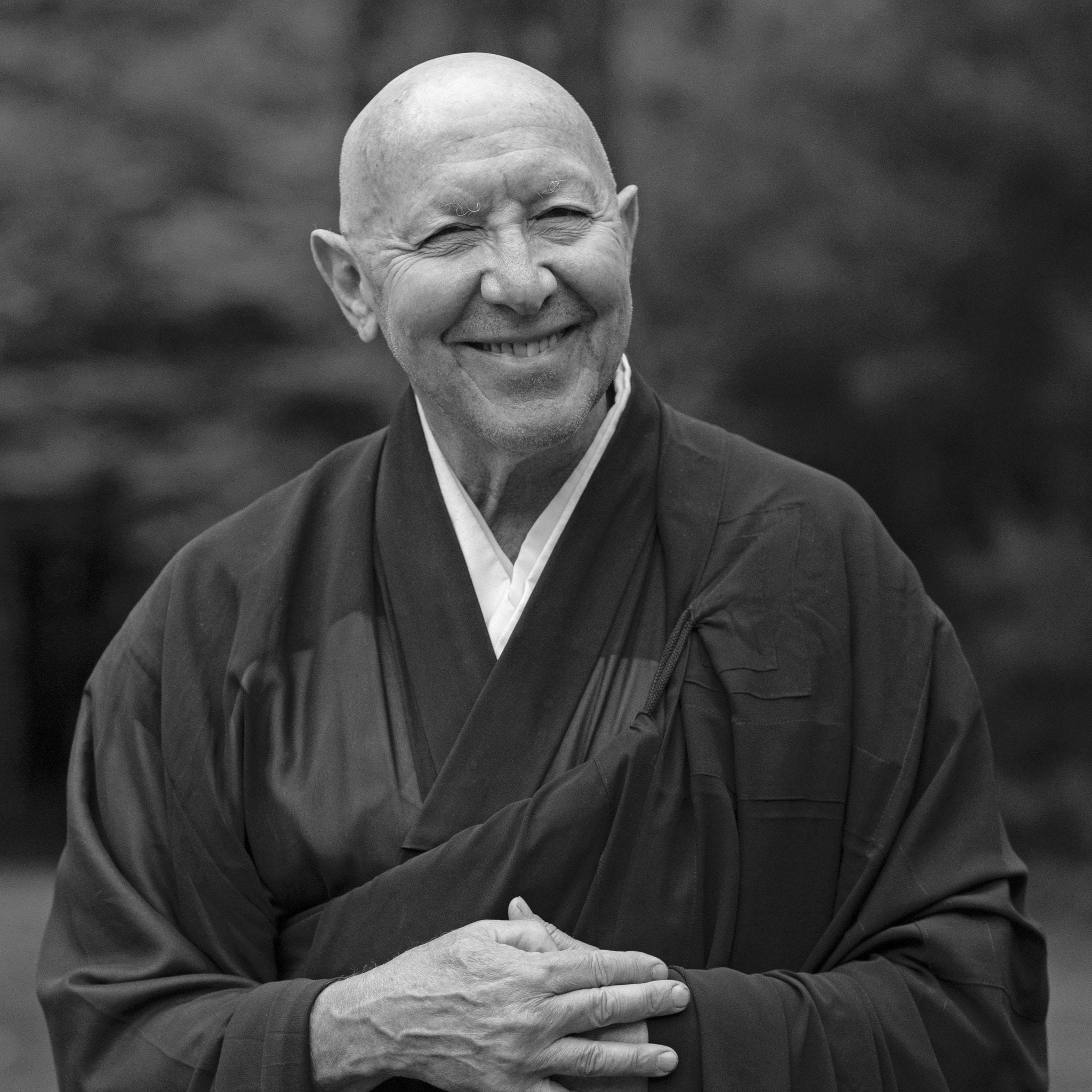
Yes. Michael Choke Yukon Grody.
He died in 2024. It’s never going to be okay. His ashes are interred at the monastery. He died of brain cancer. I never want to get over the connection I had with him. I ask in the play, “Would you rather have a broken heart or an unused one?”
What does Choke mean?
“Spirit of serenity …”
And Yukon?
“Playful perseverance …”
That sounds as if you’re describing The Unexpected 3rd, Kathryn. It’s playful. It’s about persevering.
What was Choke Yukon’s role at the monastery?
He fulfilled a few of them during his over 30 years there but he was finally for many, many years its gardener. Gardening became his ministry in many ways.
“Thou, Nature, art my goddess ...”
Everything connects.
Onward.
I think you two might be among the very few real people left in the world. Thank you for sharing your conversation.
Glorious! Thank you.