

STARS IN BLACK TURTLENECKS: Richard Burton
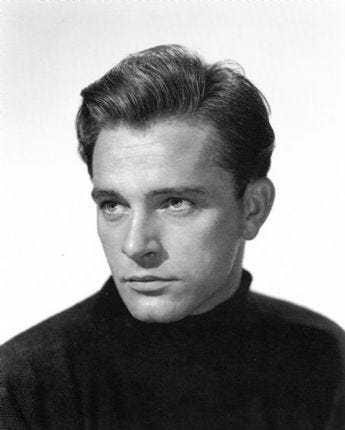
When I was a young actor in New York, having dropped out of the Juilliard School’s Drama Division, I made it down to the last few boys to play Alan Strang in Equus opposite Richard Burton when he took over the role of Dr. Dysart on Broadway from Tony Perkins. There were lots of auditions. Lots of callbacks. I began to believe my life was about to change and I was going to get the role.
John Dexter was the play’s director. I was invited to have lunch with him out at his home in Atlantic Highlands, New Jersey, and a few nights later to have a dinner with him at Sardi’s at which he made it clear if I slept with him the part was mine. I don’t know what he did with the other two or three boys, how he behaved with them. Keith McDermott who got the part was brilliant in it and, in fact, became a friend of mine. I only know of my own experience.
I chose to “play dumb” at the Sardi’s dinner and Dexter’s exasperation began to match my disgust at his putting me in that position. We even began to spar conversationally a bit. I may not have gotten the part but I learned how to hold my own at such a table with such a man - he was 51, I was still 19 - who was not just demanding of my body what I was not willing to give him but also making demands on my mind that was surprising us both by its proving to be up to the task. That was the part I remember becoming kind of fun as I turned the tables and began to toy with him.
I have been cat sitting the last few weeks here in Tangier and the other day I watched the two cats not exactly torturing the bee they were fiddling with as they passed it back and forth with their paws but being playfully indifferent to how they were making the confused bug feel, stung itself for not being seen as a bee, as their mischief replaced any fear of what the thing could do to them. Watching those two cats acting like a couple of strikers pouncing on that one stunned bee as if it were the ball they were attacking on the pitch, I thought of John Dexter and that dinner at Sardi’s and how my life had almost taken another turn here on this field of play where I am still grateful to find myself.
In many ways I ceased to be an actor at that Sardi’s table but I became a person who could bat some banter back and forth, stand my ground while staying seated, calmly dissect a discussion, deflect, comprehend, hold my space within the space other more celebrated artists command as their own. I became that night the person who doesn’t just interview celebrities but converses with them. Challenges them when needed. I became a writer that night sitting there at Sardi’s who is unintimidated by fame. I indeed became even more deeply just that, this, a writer, as I watched Dexter decide dessert wasn’t worth ordering. Because once again I was paying witness to a situation’s narrative heft, its subtexts and contours, which I had already begun to employ as a coping mechanism - a separating device - for the depths of my grief as an orphaned child only eleven years before.
I almost wrote “a decade before” but part of paying writerly witness is getting the details right not just the honing of an ability to realise a bee can be considered both a sentient being and ball-like bug by two cats whose sentience is measured not in expressive mews but an indifference even to that sound they make because they innately know it’s just part of their being used metaphorically yet again by one who expressly mews in other ways, mannered, semasiological, in a manipulation of sentience.
Several years ago I was invited to have a lunch with Daniel Radcliffe at the Algonquin Hotel. He wanted to know all about Dexter since he was then starring in his own production of Equus on Broadway which co-starred Richard Griffiths as Dr. Dysart and was directed by Thea Sharrock. As a side note, the highest priced “premium” ticket to that production in 2008 was $251.50. In 1976, legendary producer Kermit Bloomgarden caught flak for raising the price of the best orchestra seats for Equus when Burton took over the role of Dysart from $13.50 to $15.00. He did keep the ticket price of the 58 onstage seats at $4.00. “It's not a matter of being greedy; it's because our operating cost has gone up,” Bloomgarden told The New York Times. A whole chapter in my second memoir, I Left It on the Mountain, is dedicated to the many facets of that lunch that day with Daniel. It was a lunch at the Algonquin, like a dinner at Sardi’s, that also changed my life in many ways. It was more than just a side note.
The chapter’s title in the book is “The Role-Player.”
Here is an edited excerpt from the chapter that deals with Daniel and me discussing Dexter:
“I hear you once played the role of Alan in Equus, too,” Daniel said. “That must have been back in the 1970s when it was originally done on Broadway?”
“I played it with Tony Perkins in a production down in Philadelphia and on a tour or two,” I said. “I almost got the part on Broadway when Richard Burton took over the role of the psychiatrist but my experience with the show’s director John Dexter wasn’t the best.”
“What was Dexter like?” Radcliffe asked.
“Well, I was never directed by him except at my callbacks. I auditioned for him several times but finally had to deal with the ‘dirty old man’ side of him,” I said.
....
Radcliffe and I began to talk about our different experiences in having played the boy in Equus, whose sexuality had been warped by the rigors of fundamentalist religion. He raved about Richard Griffiths who was playing Dysart opposite him, an actor so entombed in flesh that an elegiac carnality was his appeal in the role because Dysart, as written, is stuck in a sexless marriage.
“That’s what I think is sort of fantastic about Richard as a piece of casting,” Radcliffe told me. “If you see someone like Richard Burton or Tony Perkins in that part - if they weren’t fucking their wife, if they had gotten to that point in their marriage - you’d have a hard time believing that they wouldn’t leave to find somebody else to fuck like a secretary or a nurse or whomever.” He paused. “But you almost got cast to play the part with Burton? What happened?”
“Keith McDermott, who did play the part, was amazing in it. I don’t know what his experience with Dexter was. I can only speak of mine,” I said, sipping at the ginger ale that had just arrived. “Dexter asked me to come out to his home in Atlantic Highlands, New Jersey, one Saturday for a lunch, with a couple of other boys. Keith wasn’t a part of that threesome for some reason. We were picked up at the stage door of what was then the Plymouth Theatre where Equus was playing. Dexter had sent his tall Black male secretary to drive us out to Atlantic Highlands but we got stuck in traffic.” I now paused. “Do you really want to hear all this?” I asked.
“Yes. Please. Carry on,” said Radcliffe, seemingly relieved not to have to keep up his part of the conversation just yet.
“Well, we were almost an hour late for lunch,” I said. “Dexter’s first words when we entered the house were, ‘You’re late, you black cunt!’ You Brits say ‘cunt’ more than we do over here, I take it.”
Radcliffe laughed. “Go on,” he said.
“Well, there were three huge goblets of red wine poured at-the-ready and, after a bit of conversation, Dexter asked me if I would be the first to accompany him into his study. He locked the door behind him and told me to strip because he said he needed see if I could pass for a naked seventeen-year-old boy. I was going to be 20 in a couple of months but I wanted the part more than anything I’d ever wanted in my life up to that point. So I took off my clothes. Stood there in my underwear. ‘No, no,’ he said. ‘I must see everything. You have to be comfortable being nude because you must be nude in the play. Do it.’
“I did it. Then watched him take a big gulp from his freshly poured goblet of Burgundy as he took me in. Blushing a color close to that Burgundy, I stared down at his desk. Atop it were the blueprints for the stage design of Leontyne Price’s upcoming production of Aida at the Met, which Dexter was also directing. I had placed my own goblet of wine next to the blueprints. I reached for it to take a few needed gulps myself. ‘No, no,’ he said again. ‘First turn around for me. Let’s see how hairy your bum is.’
“I did as I was told but, as I turned, my hand glanced my goblet spilling the wine all over the blueprints for Aida. I grabbed my underwear and was about to mop it up ‘Don’t worry,’ said Dexter, waving me away, though he was obviously pissed. ‘Whatever the wine blotted out, I wasn’t supposed to see. I’ll just pretend I didn’t approve these plans and demand the designer draw up a revised set.’
“I don’t know what happened when the other two went in there. But we had a mostly silent lunch.” I paused to take a breath. “This one sure isn’t, huh” I said. “You told me to carry on and I got carried away.”
“No. I loved all that,” said Radcliffe, laughing again. “Nothing like that ever happens to me. You should put that story in the sequel you’re writing to Mississippi Sissy,” he offered.
“I will,” I told him.
###
There’s Richard Burton down there below in a black turtleneck talking to Kenneth Tynan in 1967 about theatre directors in general. The complete interview taped for Acting in the 60s is here. One of my favourite books to dip into late at night as I was falling asleep back when I had a library before I donated it all to Time & Space in Hudson, New York, was The Diaries of Kenneth Tynan edited by John Lahr.
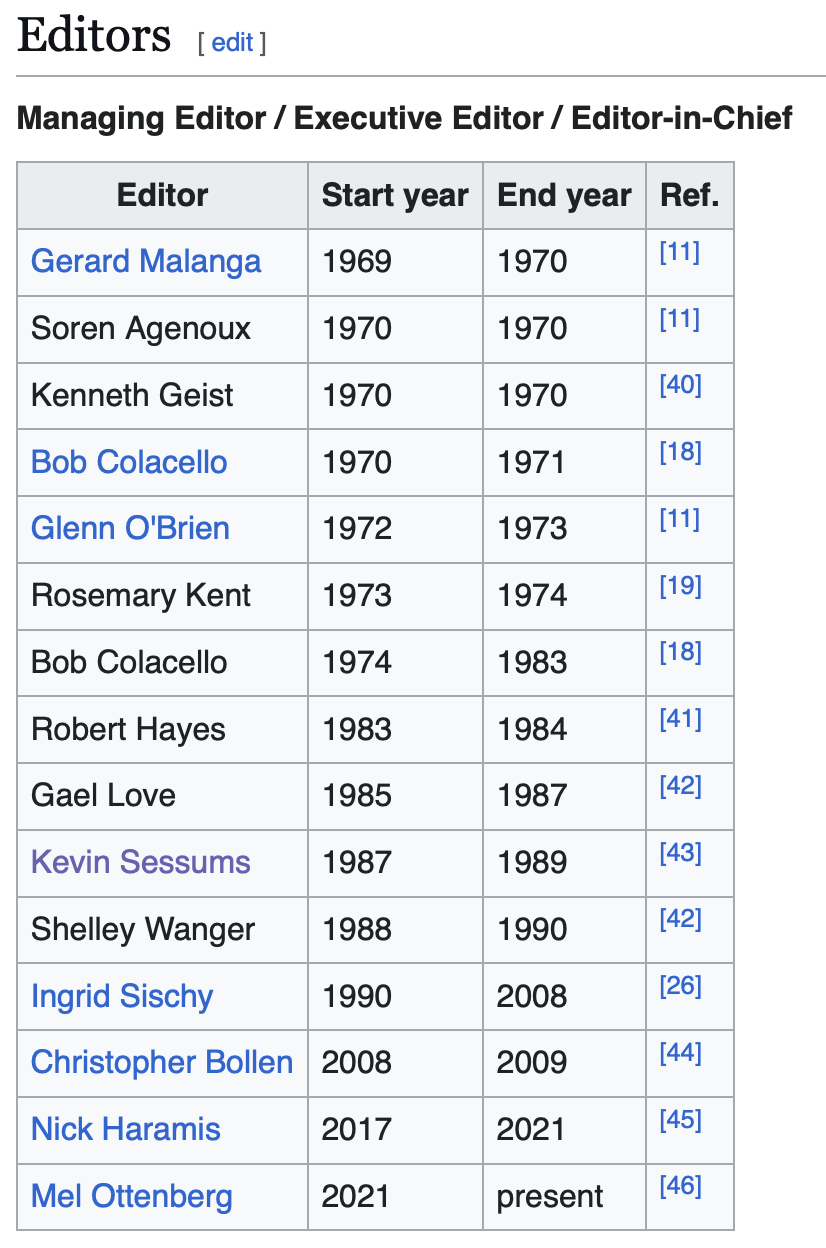
In another bit of everything connecting … when I was the Executive Editor of Andy Warhol’s Interview magazine, I attended a dinner out in Los Angeles. I think its purpose was to welcome our new Editor in Chief, Shelley Wanger, and was thrown by our West Coast Editor, Lisa Love, after I had run the place for a few issues between Shelley’s tenure and that of Gael Love. I also think it coincided with the February 1988 issue I had put out with Divine on the cover after I had put Anjelica Huston on the December 1987 one and Michael J. Fox on the first one in 1988. Hal Rubenstein interviewed Divine and Joan Juliet Buck had a conversation with Anjelica. They both now have columns here at Substack - check them out. I talked to Michael myself. Eamonn J. McCabe photographed Divine. Anjelica was photographed by Matthew Rolston. Michael was shot by Philip Dixon.
I just Googled Shelley’s name to see when she began her time at Interview because I was trying to get that detail correct and for the first time saw that my own tenure heading up the magazine had been documented at Wikipedia. Kind of shocked me honestly. I had no idea there was this list. Honoured to be on it.
After the Divine issue, I put a college football player on the cover - because I could. Remember the Oklahoma Sooners’s Brian Bosworth? Few do. He certainly had a moment that I helped him have. I even gave him a dinner at Odeon. Dixon photographed him and I did the story.
Shelley’s time as Editor in Chief began with the April issue in 1988. She put Isabella Rossellini on her first cover. Peter Stone interviewed Rossellini and Rolston did the photographs. Shelley brought an exacting sense of class and a clarifying intellect to her pages that cleared the content of its vulgar cobwebs and muted the Warholian wow - Andy had died the year before - which a reader could still hear being muttered, flattening the tone between the lines, somehow both jaded and jejune, while trying to finish yet another article fixated on fame.
I did a few more big stories.
One on Yoko Ono.
Another on Sam Shepard.
And a transcribed conversation I had with Brigid Berlin led off an issue honouring Andy’s memory. Andy Warhol was on that cover of Andy Warhol’s Interview.
I then moved on to my years at Vanity Fair.
Ahh … the good old days …
Kathleen Tynan, Kenneth Tynan’s widow, was in that February issue with Divine on the cover. She was interviewed by John Heilpern - Joan Juliet Buck’s first husband - to coincide with the publication of the paperback edition of Kathleen’s biography about Kenneth who had died in 1980 from emphysema. She was then dating the film director Barbet Schroeder whose film Barfly had made quite a splash around that time. I later wrote a cover story on its star Mickey Rourke for Vanity Fair. In fact, the dinner might have initially been for Barbet as well as for Shelley and he decided he didn’t want to come at the last minute. Or something like that. It’s all a bit hazy in my everything-connecting synapses. Somehow I ended up at Kathleen’s side for most of the evening - or maybe even as her enlisted date. We had an instant rapport that felt more like an innate bond. I also had an inscrutable crush on her which somehow originated - okay, I’ll confess it - somewhere down there in my scrotum. I remember saying to her that if I had not been gay that I would have attempted to tempt her to cheat on Barbet that very night. She said that she was known to give in to temptation and not just to furnish it. It was one of the few times I regretted not being straight.
Kathleen died of cancer in 1995. Joan Juliet Buck wrote her obituary in The Independent. In it, she described her as “one of the most seductive women of the 20th Century …. She was a romantic with a classic mind who lived for the strongest feelings and then tried to knit a logic out of her emotions.”
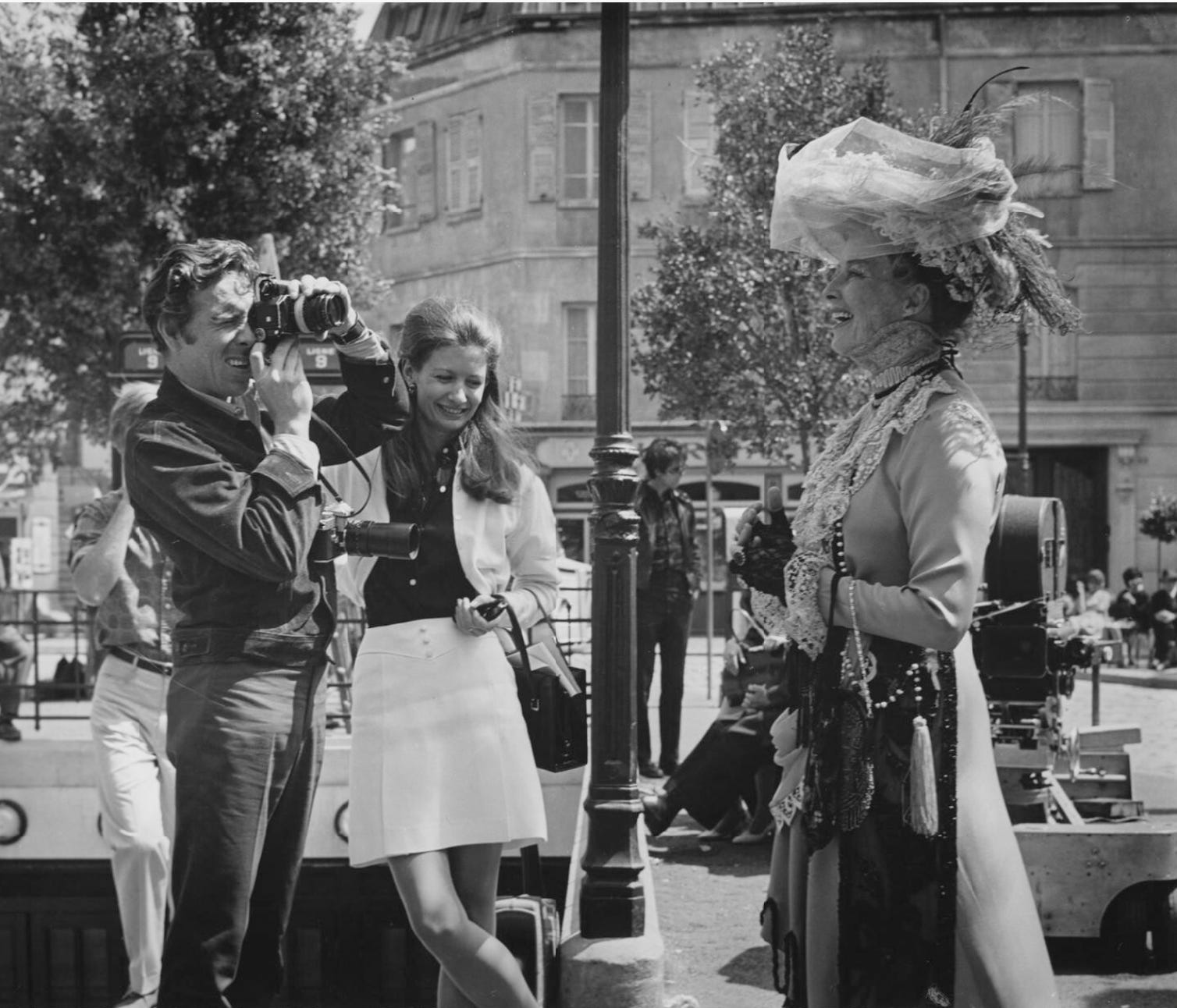
That’s Kathleen above with Lord Snowdon and Katharine Hepburn in Nice on the set of The Madwoman of Chaillot. The photo, from 1968, is in the collection of the National Portrait Gallery in London. She and Snowdon were doing a story for American Vogue about “The Great Kate” which ran in the April 1969 issue. Kathleen was freelancing at this point having quit her full-time job writing for The Sunday Times after marrying Tynan in 1967.
Elizabeth Taylor was twice Richard Burton’s wife. I wrote in a previous column about my time spent with her in Bel Air at her home and even embedded some recordings of excerpts of our conversation so you could hear them. Burton was in the last throes of that second marriage with her when he was appearing in Equus on Broadway and about to marry his next wife, Susan, who had left her husband, the race car driver, James Hunt, for him. They ended up divorcing in 1982 and Suzy settled for a time right here in Tangier. There was even a story in The Sunday Times about it. Kathleen didn’t write it.
But back to her. Heilpern wrote in his 1988 Interview piece that he had met her at a book party when the hardback edition of her book about Kenneth was published. The party had been given for her by my future boss, Vanity Fair’s then Editor in Chief Tina Brown. The guest list had included Joan Didion, Diane Sawyer, and Susan Sontag. “I have to tell you, I was the only person there whose name I didn’t know,” Heilpern told her in the story. Kathleen: “It was impressive. My friend Phyllis Newman said that as she walked in, a stranger came up to her, thrust out his hand and said, ‘May I introduce myself. I’m Donald Trump.’ She said later, ‘I knew then he was running for office.’ ”
In her follow-up obituary in The Independent - Kathleen Tynan was the kind of woman whose life required two obits - Allegra Huston wrote about her time helping Kathleen edit Kenneth’s letters as she was dying. "After we had worked together for about a year, and when the final selection of letters was complete, I learnt that Kathleen was ill,” wrote Huston. “She swore me to secrecy. She had only agreed to tell me in order to explain why our work was behind schedule - she disliked unprofessionalism of any kind. Despite the pain, the frequent visits to hospital, she worked as if nothing were wrong, with an army of helpers to track down every mysterious reference. I don't know how many notes there are in the Kenneth Tynan Letters, but they must number in the thousands. Kathleen was determined that the book should be a model of its kind. Through a forest of Post-It notes we tracked down flagpole-sitters, ‘Walter Winchell, a nun,’ the early career of Tony Blair's father, the stripper Gypsy del Rio, and the great cricketers of the 1940s. Once, when we were defeated by a line which the 16-year-old Ken attributed to Marlowe - which was very definitely not to be found in the works of Christopher Marlowe - Kathleen smiled at me and sighed, ‘How I hate clever young men.’”
Here are Burton, 42, and Tynan, 40. Still cleverly finding ways to sound like the young men they always longed to be.
“A diamond set in lead,” Marlowe did write, “his worth retains.”
[TO READ AND VIEW THE REMAINING RUBRICS THIS WEEKEND, PLEASE CONSIDER JOINING OUR PAID SUBSCRIBER COMMUNITY FOR ONLY $5 A MONTH OR $50 A YEAR. AFTER 40 YEARS, THIS IS NOW MY MAIN JOB AS A WRITER. SO YOUR SUPPORT FOR THIS WORK MEANS A LOT. THANK YOU.]